


LAS VEGAS · CRATING GUIDE
Trade Show Crates for Booth Displays and Equipment in Las Vegas
A booth shipment can contain large panels, fragile graphics, screens, furniture and small but essential hardware. A useful trade-show crate keeps those different items organized and supported through repeated setup, teardown and transport.
Begin with the exhibit inventory and the event's receiving instructions. The crate should be designed around what the team needs to unpack, how it will handle each piece and how everything will return after the show.
Group the contents by protection and access needs
List the dimensions, weight and vulnerabilities of each component. Do not combine items merely because they fit in the same enclosure. Heavy parts and delicate surfaces need a packing arrangement that prevents damaging contact.
- Panels and graphics: identify finished faces, edges and surfaces that must remain separate.
- Electronics: supply manufacturer packing instructions and keep accessories identifiable.
- Furniture and fixtures: record removable parts and safe support locations.
- Hardware: use a labeled inventory that matches the installation instructions.
- Demonstration equipment: confirm transport locks, orientation and handling requirements.
Make the packing order match the setup
Discuss which components need to come out first and whether a side-opening or removable-panel arrangement would make access easier. Keep opening instructions distinct from exhibit assembly instructions.
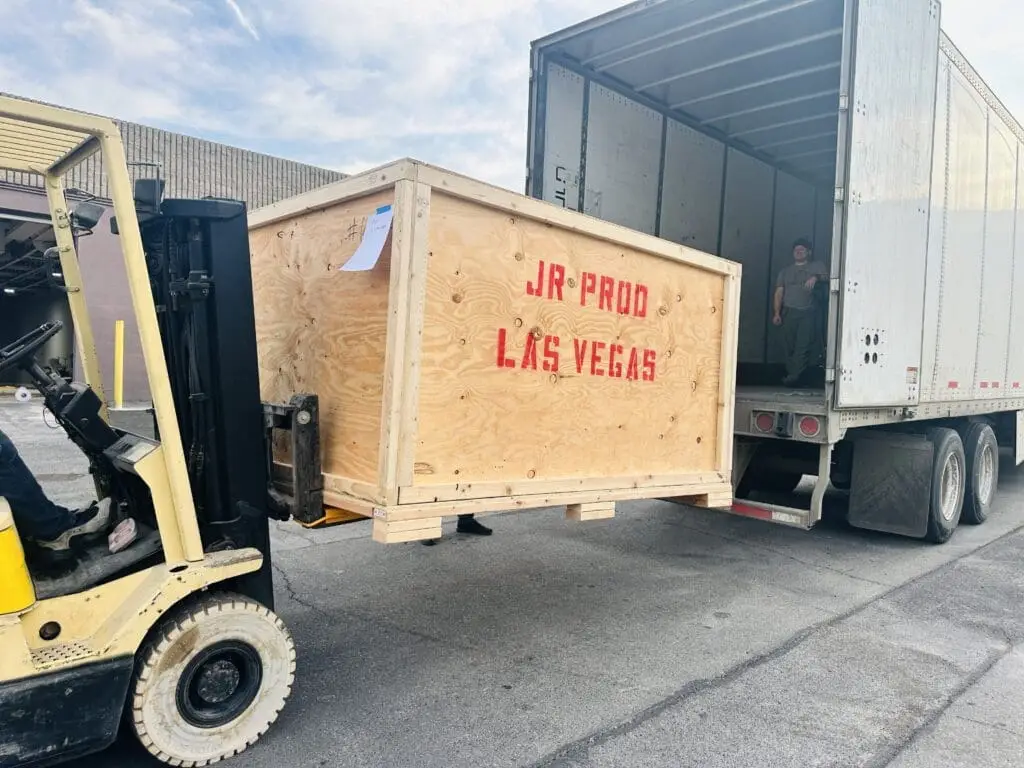
Photograph the completed interior before closing it. A packing diagram can help a different team replace supports correctly at move-out. Identify the crate and its components consistently so the layout remains useful across repeated shows.
Match the base and enclosure to the handling plan
Ask the builder how the crate will be lifted, whether any stacking is permitted and what equipment is required to open and unload it. Give the carrier the finished external dimensions and gross weight.
A crate does not establish weatherproofing or vibration isolation by appearance alone. Specify the protection needed for sensitive contents and confirm any specialized material or feature in the proposal.
Use the show's actual logistics instructions
Confirm whether freight goes to an advance warehouse or directly to the venue, and use the corresponding labels and receiving window. Avoid assuming a convention center can accept your shipment whenever a carrier arrives.
The GES freight and material-handling guide distinguishes transport to the event from on-site freight handling. Check the specific show manual for rates, restrictions and responsibility for booth delivery.
Plan reuse before the first trip
Reusable crates need inspection between events. Check closures, base members and internal supports, and assess the packing plan again if the booth changes. Saving a crate is only useful if the next load still fits the design.
Include empty-container return, repacking labor and outbound release paperwork in the move-out plan. Compare total repeat-use costs, including storage and return freight, rather than assuming every reusable design will save money.
PLAN YOUR CRATING
Prepare a booth-crating brief
Contact Crates of Las Vegas about custom exhibit crates. Share the component inventory, event instructions, setup sequence and return destination so the proposed design supports the team at both ends of the show.
Discuss your crating projectMORE CRATING GUIDES




