
LAS VEGAS · EQUIPMENT RELOCATION
Professional Crating for Sensitive Industrial Equipment Relocation
Industrial relocation brings together equipment preparation, lifting, packaging, transport, and installation. Whether a business is upgrading a production line, moving facilities, or reorganizing a workspace, damage to a critical machine can affect the wider operation.
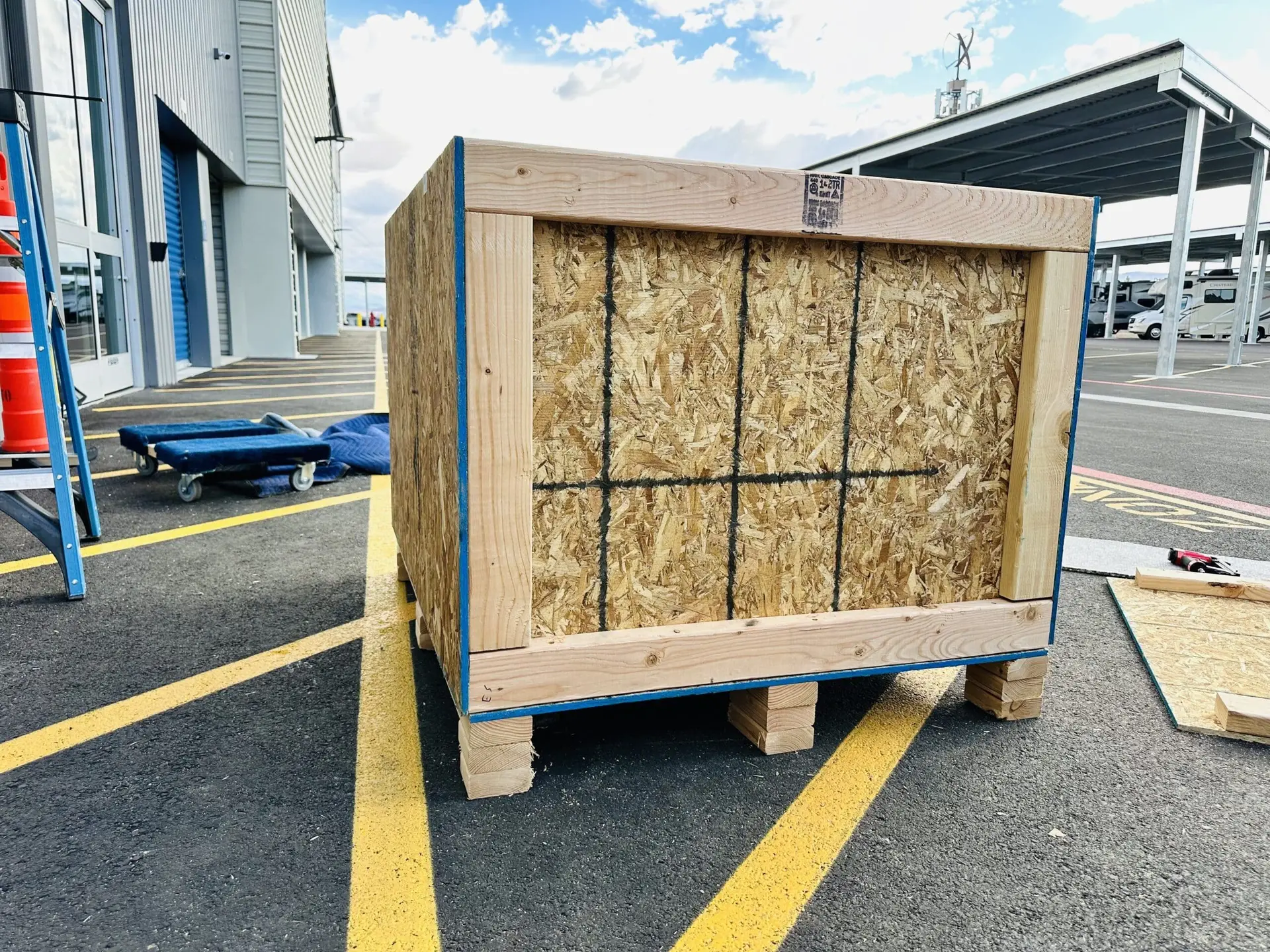
Heavy equipment can also contain delicate parts. CNC machines, automated assemblies, medical equipment, and precision tooling may be sensitive to impact, vibration, moisture, contamination, or incorrect support. A crate should therefore be designed around the particular equipment and its moving instructions, not its weight alone.
Professional crating can help reduce relocation risks when it is coordinated with the equipment owner, manufacturer, riggers, and transport team. For Las Vegas projects, site access, outdoor loading, heat, and dust also belong in the planning discussion.
Assess the Equipment and Plan the Move
A relocation plan begins with verified dimensions, weight, weight distribution, and center-of-gravity information where available. Identify structural support points, lifting provisions, fragile components, removable accessories, and limits on orientation or tilt.
Document the machine's condition before it is prepared for transport. The owner or qualified technician should identify any functional checks, servicing, calibration records, or manufacturer-specific preparation needed. Crating should not be assumed to include equipment diagnosis or decommissioning.
Follow the Manufacturer's Preparation Requirements
Moving assemblies may need model-specific shipping brackets or other restraints. For example, Haas documents shipping brackets for particular spindle assemblies. That is a reason to consult the correct manual, not to apply the same restraint method to every CNC machine.
Qualified personnel should handle disconnection, stored energy, fluids, and service work under the applicable procedures. OSHA's hazardous-energy guidance explains why unexpected startup or release of stored energy is dangerous during servicing and maintenance. Do not improvise those steps as part of packing.
Check the Site and Receiving Conditions
Narrow corridors, door heights, overhead obstructions, dock access, floor capacities, and turning space can determine whether a proposed crate and lifting method are practical. Check both the origin and destination using the finished packed dimensions and weight.
Map the handling and environmental risks: vulnerable pressure points, tilt limits, loading exposure, storage duration, and changes in climate. Agree on the sequence of work with riggers, forklift operators, transport crews, and the receiving team. Include contingency time and clear contact responsibilities instead of treating the pickup appointment as the whole relocation schedule.
Design a Crate for Heavy and Sensitive Machinery
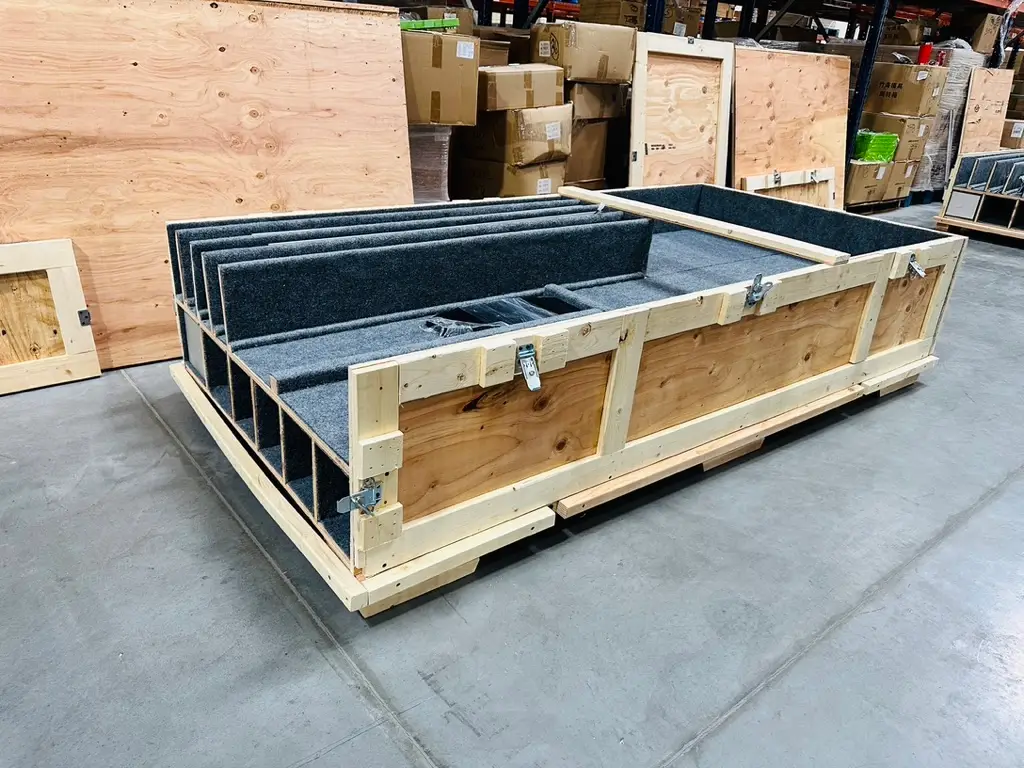
Custom industrial crates combine a load-bearing base, a protective enclosure where appropriate, and internal supports suited to the cargo. Timber, plywood, metal reinforcement, cushioning, and barrier materials serve different functions and should be selected for the actual load and route.
Heavy machinery may require a reinforced base and engineered restraint to avoid shifting or concentrated stress. Sensitive controls or instruments may need protection from contact and vibration as well as suitable static-protection materials. Contact points must not load fragile covers, piping, wiring, or components that were not designed to support the machine.
Allow the clearances required by the cushioning and handling design. A precise fit does not mean eliminating every gap or forcing rigid contact against every surface. The crate must protect the equipment while permitting safe closure, inspection, and unpacking.
Agree on Validation and Inspection
Some projects may warrant specialist calculations, prototype evaluation, or testing. Confirm the required scope, acceptance criteria, and deliverables before describing a crate as tested or validated. Detailed modeling, load testing, and transport simulation are not automatic features of every custom-crating job.
ASTM D4169 describes laboratory evaluation of shipping units against a selected distribution test plan. Applicable test methods should be chosen for the shipment; mentioning the standard does not establish that a provider has performed the tests or that every route has been covered.
For export, confirm the applicable wood-packaging requirements separately from structural design. In Las Vegas, also plan protection during exposed loading or storage rather than assuming the crate controls heat or humidity.
Stabilize the Equipment and Control Handling
Handling sensitive machinery requires equipment and personnel suited to its weight, shape, and support restrictions. Rigging methods, cranes, hydraulic lifting devices, and dollies must be chosen for the specific move by qualified personnel. A general crating description is not a lifting plan.
Inside the crate, blocking, cradles, brackets, and restraints should act through suitable structural points. Cushioning or vibration isolators may be appropriate for selected components, but their performance depends on load and design. A package can reduce exposure to shock; it cannot make equipment shock-free under every condition.
Secure loose items and protect separately packed parts so that they cannot strike the main unit. Label parts and retain removal and reinstallation instructions. Any temporary shipping restraints should be clearly identified for the qualified receiving team.
Moisture barriers, desiccants, compatible protective wraps, and corrosion inhibitors can be considered where the equipment and route require them. The design must account for the planned storage or transit period. If temperature or humidity limits are critical, arrange suitable transport and storage conditions as part of the move.
Coordinate Transportation and Delivery
Loading equipment must suit the completed crate, including its base, packed weight, and center of gravity. Confirm fork access or lifting provisions and give the carrier clear handling instructions. The cargo's restraint within the crate and the crate's securement on the vehicle are separate requirements.
The carrier should apply the relevant FMCSA cargo-securement rules for the road movement. Oversize permits, route restrictions, and access limitations should be checked for the actual vehicle and load before the move is scheduled.
For sensitive equipment, discuss whether fewer transfers, a particular suspension arrangement, environmental controls, or monitoring would address a documented risk. These services should be confirmed in the transport scope rather than assumed from the crate specification.
Provide the receiving team with the packing list, handling instructions, equipment details, photographs, and necessary shipment documentation. Confirm delivery appointments and how the crate will be opened. Plan inspection, reinstallation, and recommissioning with the responsible technicians before promising when production can restart.
Reduce Risk and Support Operational Continuity
Professional crating is most useful when it clarifies the full chain of responsibility. Preparation, packaging, loading, transport, unloading, and installation need to fit together so that a protective measure at one stage does not create a problem at another.
Reusable crates may help with equipment that moves regularly, provided their condition is checked and the packing method remains suitable. Keep inspection and packing records, review any damage or handling difficulties, and use those findings to improve the next move.
Cost savings, shorter downtime, and fewer damage claims are potential benefits of better preparation, not guaranteed outcomes. ISO management-system references also do not prove that a crate has been tested or that a particular company holds certification; request evidence when such requirements matter to the project.
PLAN YOUR CRATING
Plan Your Industrial Equipment Crating
Crates of Las Vegas can discuss custom crating for sensitive machinery and industrial relocation projects. Share the equipment specifications, manufacturer instructions, photographs, origin and destination access, and intended schedule so the packing scope can be defined.
Contact Crates of Las Vegas to discuss the crate, on-site requirements, and coordination with your relocation team.
Request an equipment crating quoteMORE CRATING GUIDES