

LAS VEGAS · CRATING GUIDE
Do You Need a Custom Crate for Air Freight, LTL, or Ocean Shipping?
Shipping valuable equipment is not just about getting it from one location to another. The real challenge is making sure it arrives without damage, delays, or costly insurance claims. Whether you are moving industrial machinery, medical devices, trade show displays, hotel artwork, electronics, or oversized equipment, the packaging method matters as much as the transportation method itself.
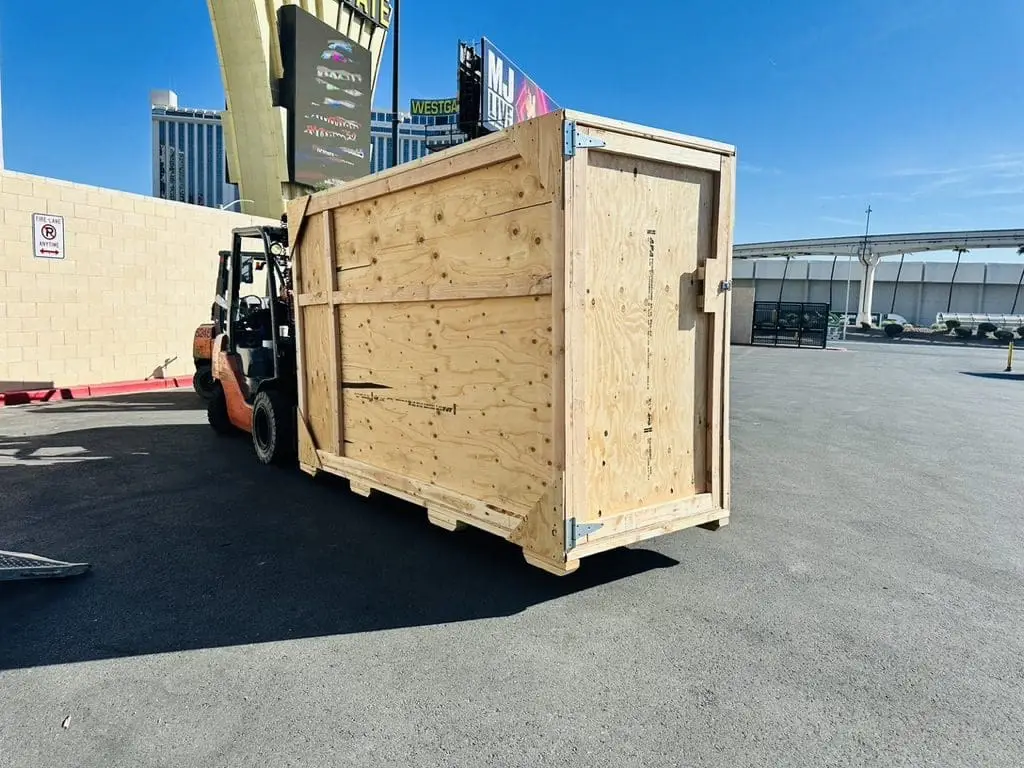
Businesses across Las Vegas, Henderson, North Las Vegas, Summerlin, and the greater Clark County area often ask the same question: Do I really need a custom crate for air freight, LTL, or ocean shipping?
The answer depends on the value, weight, fragility, and destination of the shipment. A properly designed crate can be a useful risk-control measure, but some shipments are adequately protected by a pallet, engineered carton, or reusable transit case.
In this guide, we will explain when a custom crate may be appropriate, how it differs for air, LTL, and ocean shipping, and why professional crating services can help businesses avoid hidden transportation costs.
Understanding Why Custom Crating Matters
A custom crate is designed specifically for the dimensions, weight, center of gravity, and fragility of the item being shipped. Unlike generic pallets or off-the-shelf boxes, custom crates can combine structural support, secure anchoring, and selected protective materials. Moisture control and cushioning must be designed separately; they are not automatic properties of a wood enclosure.
For companies shipping from Las Vegas to destinations across the United States or internationally, custom crating becomes especially important when handling:
Industrial machinery
Medical and laboratory equipment
Electronics and servers
Artwork and hospitality fixtures
Aerospace and defense components
Trade show exhibits
Fragile glass or stone products
The right crate is designed around the shipping environment, not just the product itself.
When a Custom Crate Makes Sense for Air Freight
Air freight is often chosen for urgent, high-value, or time-sensitive shipments. While it may seem gentler than ground transport, air cargo goes through multiple handling points, conveyor systems, forklifts, and aircraft loading operations.
A custom air-freight crate is typically engineered to minimize weight while maintaining strength. This is critical because dimensional weight charges can significantly increase shipping costs.
Key considerations for air freight crating
Lightweight plywood or engineered wood construction
Internal foam or shock-absorbing protection
Secure blocking and bracing
Compliance with airline and export requirements
Easy forklift and pallet-jack access
If you are shipping medical equipment from Las Vegas, electronics from Henderson, or trade show materials from Summerlin, a fitted crate may reduce damage risk. Compare its finished dimensions and weight with alternatives before assuming it reduces freight charges.
One common mistake is using an oversized crate. Excess empty space allows movement during transit, which increases the chance of impact damage. A properly fitted crate keeps the item immobilized while using the minimum practical dimensions.
Why LTL Shipments Need More Protection Than Most People Think
LTL (Less-Than-Truckload) shipping is one of the most demanding environments for packaged goods. Your shipment will likely share trailer space with freight from many other companies and may be transferred between terminals several times.
This means your crate must withstand:
Repeated forklift handling
Stacking pressure from other freight
Vibration during long-distance transport
Sudden braking and shifting loads
Terminal cross-docking operations
For businesses in North Las Vegas and Clark County, LTL is often the most cost-effective option for shipping equipment regionally or nationwide. However, it is also where inadequate packaging causes many freight claims.
A suitable LTL crate needs a load-rated base, secure internal support, and handling features appropriate to the carrier’s network. Confirm stacking limits rather than assuming a closed crate can carry other freight.
The cost difference between a generic pallet and a properly built custom crate is often small compared with the cost of replacing damaged equipment, rescheduling installations, or losing customer confidence.
Ocean Shipping: Plan for Transit Time and Moisture
Ocean freight can expose shipments to extended transit times, condensation, and changing environmental conditions. Salt air, humidity, condensation, and container movement can damage equipment even when there is no visible impact.
If you are exporting from Las Vegas to international destinations, ocean-ready crating should include much more than a wooden box.
Essential features of an export crate
Compliant treatment and official marking for regulated wood packaging when required by the destination
Moisture barriers and vapor protection
Desiccants to control condensation
Heavy-duty blocking and bracing
Corrosion protection for metal components
Many exporters underestimate the effect of container condensation. Temperature changes between day and night can create moisture inside the container, which can lead to rust, electrical damage, mold, or warped components.
Ask the carrier, freight forwarder, equipment manufacturer, and insurer for the requirements applicable to the shipment. An ISPM-15 mark addresses wood-pest treatment, not structural strength, moisture control, or insurance coverage.
Choosing the Right Crate for Your Shipment
Use the shipping mode as one input to the packaging decision. Confirm the exact product and carrier requirements before selecting the final design.
- Air freight: balance protection with finished dimensions, weight, access, and carrier acceptance limits.
- LTL freight: plan for transfers, nearby freight, handling access, and any agreed stacking restrictions.
- Ocean freight: assess container conditions, transit and storage duration, internal restraint, and moisture protection.
- Fragile electronics: specify cushioning and any manufacturer-required ESD protection.
- Heavy machinery: design the base and restraint around weight, center of gravity, and approved lifting points.
The crating provider should also review fragility, route, destination, storage conditions, and receiving-site access. For every option, price the finished package rather than the bare item.
Conclusion
If you are shipping valuable, fragile, oversized, or mission-critical equipment, the question is not whether a custom crate costs more than a pallet. The real question is how much risk you are willing to accept during air, LTL, or ocean transport.
Air freight packaging should be secure and dimensionally efficient.
LTL packaging should account for repeated handling and any agreed stacking conditions.
Ocean packaging should address the product’s moisture risks, restraint, and applicable export requirements.
A professionally engineered crate helps reduce damage, avoid delays, lower claim risk, and protect your investment from the moment it leaves your facility until it reaches its destination.
Further Reading
PLAN YOUR CRATING
Plan Your Shipment
Share the item’s dimensions, weight, photographs, destination, shipping method, and handling requirements when requesting a quote. Review shipping services, custom crating options to discuss the packing approach that fits your shipment.
Request a Crating QuoteMORE CRATING GUIDES



