

LAS VEGAS · CRATING GUIDE
How Much Does a Custom Shipping Crate Cost in 2026?
One of the first questions businesses ask before shipping valuable equipment is simple: How much does a custom shipping crate cost?
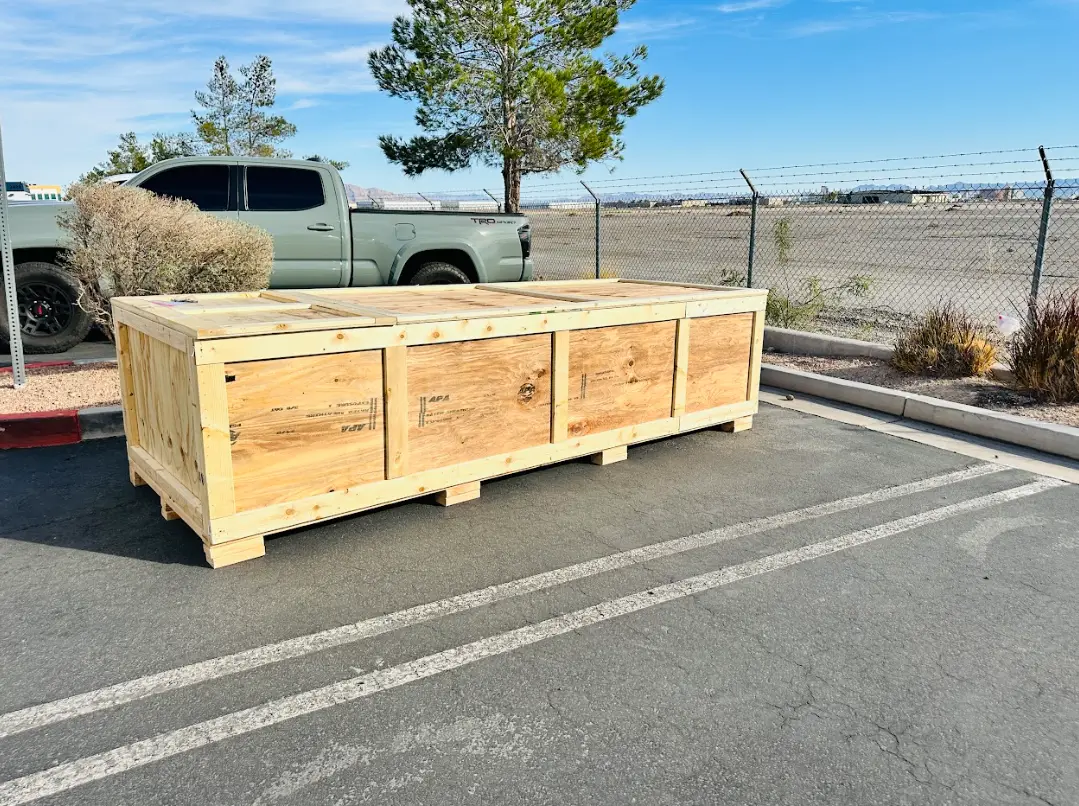
The honest answer is that there is no single price for every custom crate. A small open crate for durable equipment can cost dramatically less than a large, reinforced export crate with custom foam, moisture protection, and specialized handling features.
In 2026, the cost of a custom shipping crate is determined primarily by size, weight, materials, construction complexity, internal protection, destination, and shipping requirements. A Las Vegas-based crating provider may also need to account for on-site packing, pickup, freight coordination, or special requirements for trade shows and international shipments.
For businesses in Las Vegas, Henderson, Summerlin, and North Las Vegas, understanding what actually drives the price can make it easier to budget accurately—and avoid paying for protection your shipment does not need.
At Crates of Las Vegas, custom crate pricing is based on the specific shipment rather than a one-size-fits-all rate. Share those specifications before requesting a quote so the estimate reflects the work your shipment requires.
What Is the Average Cost of a Custom Shipping Crate in 2026?
There is no reliable universal average price for a custom shipping crate. A simple enclosure and a reinforced transport system for heavy or fragile equipment are different products, even when their outside dimensions are similar.
For budgeting, request a written quote based on the item’s dimensions, actual weight, fragility, destination, and planned freight service. Ask for crate construction, internal protection, packing labor, pickup, and freight to be shown separately where applicable.
Raw lumber and plywood costs do not represent the finished price of professional crating. Measuring, design, fabrication, hardware, loading, and protective materials can all contribute to the total. A current, project-specific estimate is more useful than an unsourced online price band.
What Determines the Cost of a Custom Crate?
The dimensions of the crate are only the beginning when determining the final cost of custom crating. Several factors can significantly affect the price, starting with the size of the shipment. Larger crates require more lumber, plywood, fasteners, structural reinforcement, and fabrication labor. A small crate designed for electronics will generally require fewer materials and less labor than one large enough to accommodate industrial machinery.
Crate size can also affect transportation costs because larger packages occupy more freight space and may increase dimensional weight. Equipment weight is another major factor because heavier equipment requires stronger structural support. Lightweight equipment may only need a standard base and protective enclosure, while heavy machinery may require reinforced skids, heavy-duty runners, structural blocking, additional bracing, stronger plywood, specialized lifting points, and forklift access. A crate engineered to safely support thousands of pounds requires considerably more material and structural planning than a lightweight shipping container.
Open versus closed construction also affects the overall cost. Open crates generally use less material and may be suitable for durable machinery, construction equipment, and products whose exposed surfaces can tolerate the planned transport conditions. Closed crates require additional panels and structural components to fully enclose the shipment and are typically preferred for fragile or valuable equipment, medical devices, artwork, electronics, and export shipments. When an open design provides sufficient protection, it may help reduce packaging costs; however, when full enclosure is necessary, the additional investment can provide substantially better protection throughout transportation.
Custom Foam Can Increase the Price But Reduce Risk
One of the most valuable upgrades for fragile equipment is custom foam protection. Rather than filling empty space with generic packing material, custom foam can be precisely cut or fabricated around the equipment to keep it securely positioned inside the crate and reduce unwanted movement during transportation. This approach is particularly useful for medical equipment, laboratory instruments, electronics, diagnostic devices, artwork, mirrors, precision machinery, and trade show displays.
The additional cost depends on factors such as the equipment’s size, shape, fragility, weight, and required level of cushioning. For high-value equipment, however, custom foam should be viewed as an important part of the overall protection system rather than an unnecessary add-on. At Crates of Las Vegas, custom crating solutions can incorporate foam inserts, blocking, bracing, cushioning, and other protective features based on the specific requirements of the shipment.
Does ISPM-15 Increase the Cost?
If your shipment is traveling internationally, ISPM-15 compliance may affect the packaging requirements and therefore the cost. ISPM-15 applies to certain solid wood packaging materials used in international trade. Export crates may need appropriate treatment and official marking to satisfy applicable destination requirements. The additional cost depends on the crate design, treatment requirements, and provider. This is one reason businesses should tell their crating provider about the final destination before the crate is built.
A domestic crate and an export-ready crate should not automatically be assumed to have identical specifications. For a business shipping machinery from Las Vegas to an international customer, identifying export requirements at the beginning can prevent costly changes later.
Moisture Protection Can Affect Your Crate Price
A standard wooden crate may be sufficient for some domestic shipments, but sensitive equipment traveling long distances may require additional environmental protection to reduce the risks associated with humidity, condensation, and changing conditions during transit. Potential upgrades include vapor barrier bags, desiccants, heat-shrink wrapping, moisture-resistant liners, corrosion protection, and sealed crate construction. These protective measures can be particularly valuable for medical equipment, electronics, precision machinery, and metal components that may be vulnerable to moisture or environmental exposure. Ask which moisture-control materials are appropriate for your item and included in the quote. A wooden enclosure or shrink wrap alone should not be treated as a waterproof or humidity-controlled system. The appropriate combination of moisture-control measures depends on the equipment, shipping method, transit duration, and environmental risks associated with the destination.
Reusable Crates Can Cost More Upfront—and Less Over Time
A reusable shipping crate may have a higher initial price than a disposable crate because it is designed for repeated handling and transportation. However, for businesses that regularly ship the same equipment, reusable packaging can significantly change the long-term economics. Instead of purchasing new packaging for every shipment, the same crate can potentially be returned to the facility, inspected, repaired when necessary, repacked, and used again.
This approach is especially useful for businesses that frequently move equipment between Las Vegas facilities, trade shows, warehouses, hospitals, job sites, and customers. Reusable crate systems can reduce the effective packaging cost per trip because the original crate investment is distributed across multiple shipments. Actual savings depend on the crate design, number of trips, labor requirements, return logistics, maintenance, and storage. For businesses with recurring transportation needs, evaluating the total cost over the crate’s expected service life can provide a more accurate picture than comparing only the initial purchase price.
The Cheapest Crate Isn't Always the Cheapest Option
It is tempting to select the lowest quote. But when comparing custom crating estimates, businesses should look beyond the crate’s initial price. Consider the total cost of the shipment: Crate + packing + freight + handling + potential damage + downtime + replacement or repair. For example, a lower packaging quote may offer little value if damage would require repair work, another freight shipment, and a postponed installation. For expensive equipment, the objective should not be finding the cheapest possible crate. The objective should be finding the most cost-effective level of protection for the actual risk.
What Does a Custom Crate Quote Usually Include?
When requesting a custom crating quote, it is important to ask exactly what is included in the estimate because providers may offer different levels of service. A professional custom crating estimate may account for measuring the equipment, crate design, lumber and plywood, fasteners and hardware, fabrication labor, blocking and bracing, foam or cushioning, moisture protection, ISPM-15 treatment when applicable, loading, on-site packing, pickup, and freight coordination.
Not every provider includes all of these services, so comparing quotes based solely on the listed crate price can be misleading. Ask whether the estimate includes local pickup, packing, freight coordination, or any destination handling you need. Confirm availability and the responsible provider for each service. This distinction matters because two quotes with the same “crate price” may provide very different levels of packaging, handling, transportation, and logistical support.
Asking for a detailed breakdown of what is included can make it easier to compare quotes accurately and avoid unexpected costs later.
How to Get an Accurate Custom Crate Quote
The fastest way to receive an accurate custom crating estimate is to provide the crating provider with as much information about the shipment as possible. Start with the equipment dimensions, including the exact length, width, and height of the item. Provide the actual equipment weight whenever possible rather than an estimate, as weight directly affects the crate’s structural requirements, handling equipment, and material selection. You should also explain the equipment’s fragility, including whether it contains glass, electronics, precision components, sensitive optics, or other vulnerable parts that require specialized protection.
The destination is equally important because domestic and international shipments may have different packaging and compliance requirements. Be sure to identify the planned shipping method, such as LTL freight, dedicated truck, air freight, ocean freight, local delivery, or white-glove transportation. Finally, communicate any specific protection requirements, including custom foam, blocking and bracing, vapor barriers, heat-shrink wrapping, reusable construction, forklift access, or ISPM-15 export compliance. The more complete the information provided upfront, the more accurately a professional crating provider can design the appropriate protection system and calculate the final cost.
Conclusion
How much does a custom shipping crate cost in 2026? The answer requires a shipment-specific quote. Dimensions, weight, fragility, construction, internal protection, destination, and handling all affect the price.
For businesses in Las Vegas and the surrounding area, a complete quote request is more useful than a generic online average. Compare the same specifications and service scope, then choose a design that addresses the actual transport risks without unnecessary features.
Further Reading
PLAN YOUR CRATING
Plan Your Shipment
Share the item’s dimensions, weight, photographs, destination, shipping method, and handling requirements when requesting a quote. Review custom crating options, custom packaging services to discuss the packing approach that fits your shipment.
Request a Crating QuoteMORE CRATING GUIDES



