

Crating locations
When to Choose On-Site Crating vs Warehouse Crating
The choice between on-site and warehouse crating usually turns on one practical question: how should the item be protected before its first move? Size, fragility, access, quantity and the shipping schedule all affect the answer.
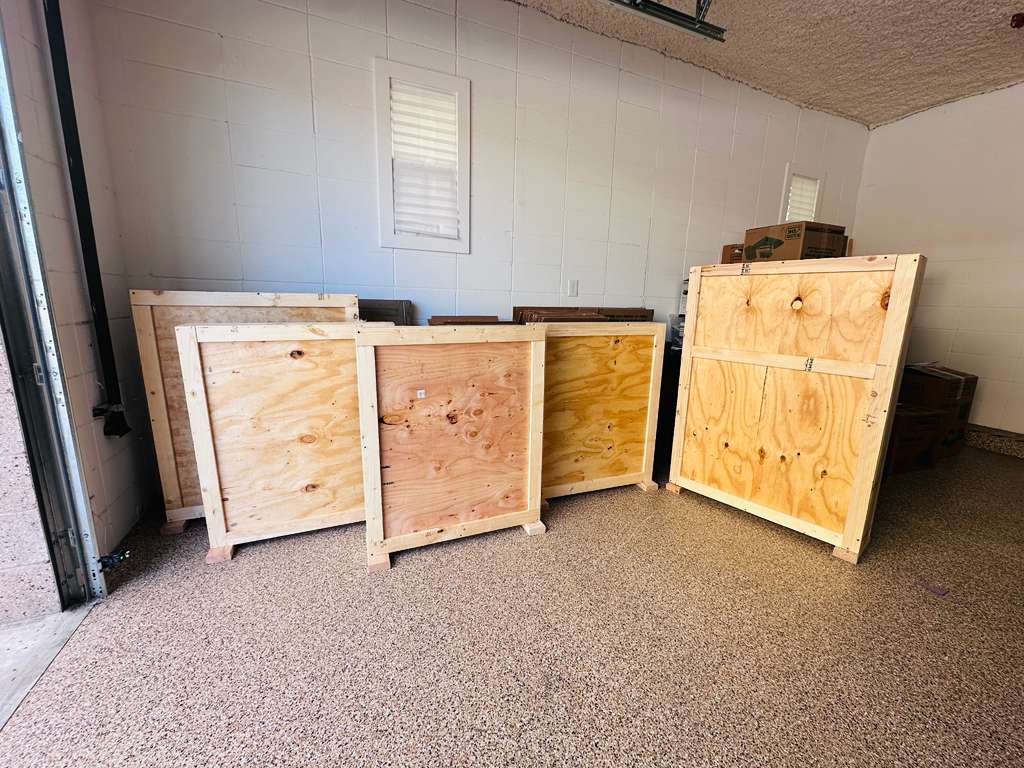
For Las Vegas businesses moving equipment, artwork or trade show displays, either approach can work when its requirements are planned properly. Compare the complete sequence from the item's present location to collection by the carrier.
What Is On-Site Crating?
On-site crating means packing and assembling the shipping enclosure where the item is located. Some crate components may be fabricated beforehand and brought to the site for final fitting.
It can avoid an uncrated transfer to a packing facility. That is useful for fragile, oversized or awkward items, but the location must be suitable for the work.
Check:
- Access for materials, staff and handling equipment
- Clear workspace around the item
- Doors, corridors, lifts and the eventual exit route
- Permitted work hours and any site restrictions
- Safe arrangements for loading the completed crate
The finished crate can be larger and heavier than the item. Its route out of the building should be checked before assembly.
What Is Warehouse Crating?
Warehouse crating takes place at a packing or fabrication facility. The item is brought there, packed and prepared for onward collection.
This approach may suit:
- Goods that can be transported safely to the facility
- Several items requiring coordinated packing
- Repeat orders with consistent specifications
- Jobs that benefit from materials and fabrication equipment in one place
A warehouse may support an efficient workflow, but available equipment, storage and turnaround depend on the provider. Confirm them in the quote. Include collection and protection for the initial transfer when comparing costs.
When to Choose On-Site Crating
On-site work is worth considering when the unprotected move would be difficult or add avoidable risk. Examples include an assembled display, a large sculpture or equipment with sensitive protruding components.
It may also help when several transfers would otherwise be needed. However, a tight deadline does not establish that a mobile crew is available or that on-site work will be quicker. Accurate measurements, suitable workspace and scheduled access remain essential.
For machinery or medical equipment, identify any service preparation, disconnection or rigging that must be completed by other qualified personnel before packing starts.
When to Choose Warehouse Crating
Warehouse work may be the better fit when items are straightforward to collect and the project involves multiple crates, repeated dimensions or extensive fabrication.
Ask about:
- Protection during the trip to the facility
- Receiving and collection appointments
- The equipment available for the load
- Storage arrangements if packing and carrier pickup occur on different days
- Responsibility for confirming dimensions, weight and packing instructions
Neither the location nor the use of specialized tools automatically guarantees a faster job. Compare the proposed sequence and confirmed availability.
Combining On-Site and Warehouse Work
A project can use both approaches. A large assembly might be packed at its current location while smaller components are prepared at a facility. Alternatively, crate panels can be built in advance and assembled around the load on-site.
Keep the measurements, crate labels, inventories and collection plan consistent. Decide which team is responsible for each handover so components are not omitted or packed twice.
For international shipments, discuss applicable wood-packaging treatment and marking before fabrication. APHIS describes the U.S. compliance process. The packing location alone does not determine compliance.
Frequently Asked Questions
What is the main difference?
On-site crating is completed at the item's location; warehouse crating requires bringing the item to a packing facility.
When should I choose on-site work?
Consider it when an uncrated transfer is difficult, especially for large, delicate or assembled items, provided the site can support the work.
When is warehouse work better?
It may suit safely transportable items, multiple crates or jobs that benefit from a centralized fabrication and packing workflow.
Can I combine the two methods?
Yes. Confirm the scope, component inventory and handovers for each location.
Can either method support an international shipment?
Potentially. Ask how the actual packaging will satisfy the destination's material, treatment and marking requirements, and arrange the cargo documentation separately.
PLAN YOUR CRATING
Compare Crating Locations for Your Shipment
Share the item's dimensions, weight, photos, site access details and collection deadline with Crates of Las Vegas. Discuss on-site and warehouse options and request a quote that includes the relevant transfers and handling steps.
Discuss your shipmentMORE CRATING GUIDES



