

LAS VEGAS · CRATING GUIDE
Custom Wooden Crates vs. Cardboard: Choose for the Shipment
Custom wooden crates and corrugated cardboard boxes can both be useful shipping packages. The right choice depends on the load, protective design, handling conditions and intended number of journeys.

A heavy or awkward item may need a purpose-built base and enclosure. A lighter product may travel appropriately in a specified corrugated package with suitable interior packing. Compare complete designs rather than treating either material as universally superior.
Compare load support and handling
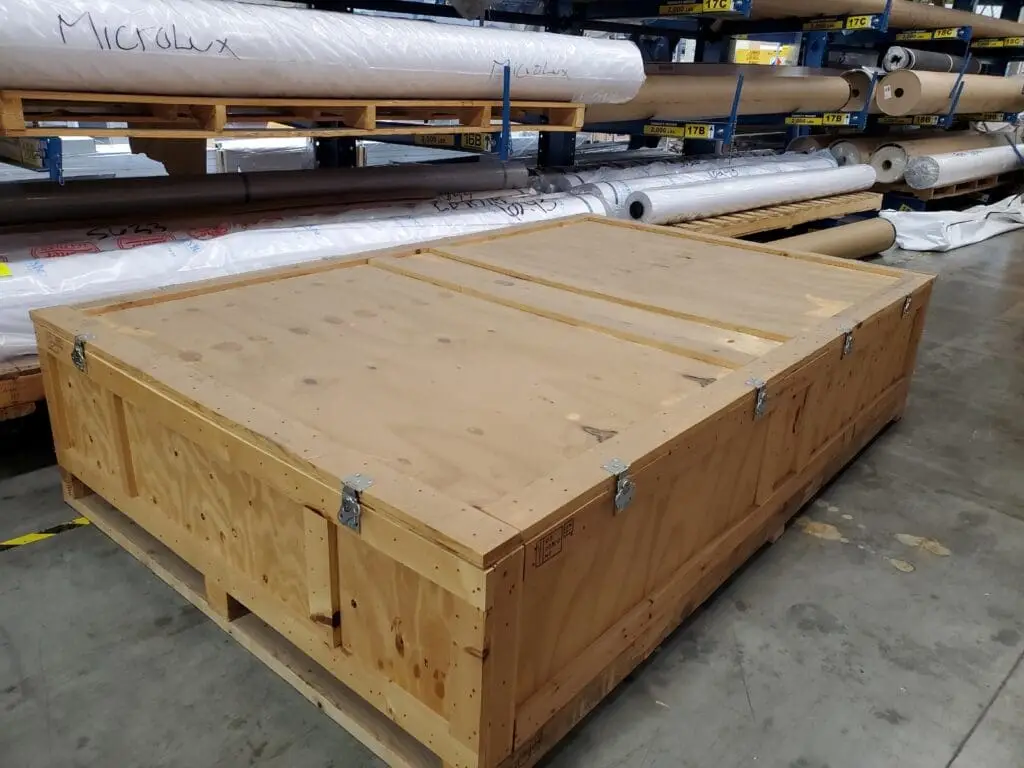
Wood construction can accommodate structural bases, framing and item-specific restraints. That can be useful when freight must be lifted mechanically or supported at particular points.
Corrugated packaging comes in different constructions and specifications. A suitable box cannot be judged by comparison with a weak, reused or incorrectly sized carton. For either option, establish the applicable load, handling and stacking requirements.
| Decision | Wood crate considerations | Corrugated package considerations |
|---|---|---|
| Load and size | Can incorporate a purpose-built base and framing; design must match the load. | Choose an appropriate construction and size for the product and distribution conditions. |
| Interior protection | Supports, cushioning and contact layers remain necessary where the item requires them. | Interior packing and restraint must also be designed for the item. |
| Handling | Finished weight and lifting access may require equipment. | Package limits and any palletization requirements still need checking. |
| Reuse | Inspection, closures, return transport and storage affect repeated use. | Reuse depends on the package's condition and continued suitability. |
Address weather exposure separately
Neither an ordinary wood crate nor a corrugated box is inherently a complete waterproof or climate-controlled system. Moisture exposure can affect packaging and contents, so specify the required protection for the route.
USDA's wood-moisture guidance explains that wood exchanges moisture with its environment. Do not rely on wood's appearance as proof that sensitive electronics or artwork will remain dry or within a temperature limit.

Evaluate reuse and material recovery honestly
Both wood and paper-based packaging can derive from renewable resources, and both may have reuse or recycling options. Sourcing, coatings, contamination and local facilities affect the actual outcome.
For repeated shipments, assess whether the package can be returned, stored and inspected economically. An enclosure that is technically reusable but discarded after one trip has a different practical result from a functioning return system.
Compare total costs for the same journey
Include purchase, packing labor, freight size and weight, handling equipment and any storage or return freight. Use equivalent protection requirements in each quote.
A wooden crate can carry a higher initial and freight cost. A corrugated option may be unsuitable for a particular load. The comparison should reveal those tradeoffs rather than assume either the cheapest purchase price or the longest theoretical life is decisive.
PLAN YOUR CRATING
Choose packaging around your item
Discuss your shipment with Crates of Las Vegas and ask whether custom crating addresses a defined need. Provide load details, route and reuse plans so the recommendation can be compared with suitable alternatives.
Discuss your crating projectMORE CRATING GUIDES




