

Crates of Las Vegas Journal
Custom Crates for Electronics and Technology Equipment
Servers, audiovisual equipment and other technology products can need different protection depending on their construction and sensitivity. A useful crating plan starts with the manufacturer’s shipping instructions, not a general assumption that every electronic device should be packed the same way.
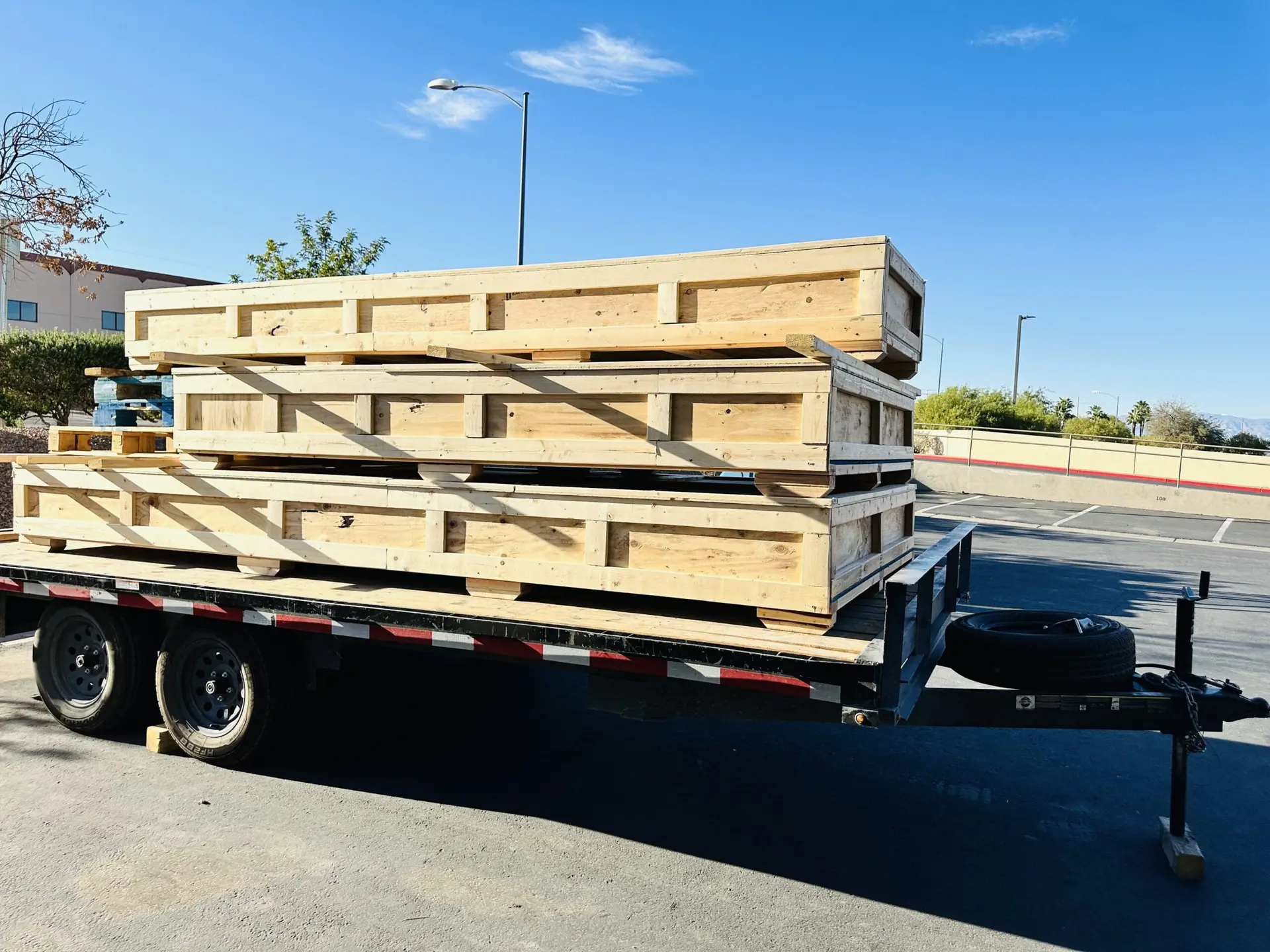
For a Las Vegas business or exhibitor, document the equipment and its accessories before choosing the crate. Coordinate physical protection, environmental requirements and the receiving checks as separate parts of the shipment.
Establish the equipment’s transport configuration
Provide the model, dimensions and weight in the condition it will actually travel. Identify removable stands, modules, cables and other accessories. Follow the manufacturer’s instructions about orientation, securing internal parts and preparation before packing.
Ask where the equipment may safely be supported. A server rack, display and exposed component board have different requirements. Keep accessories in secured, labeled locations so they cannot strike screens, connectors or other vulnerable parts.
Design cushioning and restraint together
The crate’s base and interior should hold the equipment in the intended position while providing the protective arrangement specified for the load. Cushioning must suit the equipment’s weight and fragility; adding more foam is not an automatic improvement.
Discuss expected handling and the receiving team’s unloading equipment. If a particular shock or vibration performance is required, define how it will be specified or verified. Avoid promising that a crate alone ensures the electronics will arrive calibrated or ready to operate.
Separate ESD protection from environmental control
ESD-sensitive equipment may require protective packaging with particular electrical properties. The EOS/ESD Association’s guidance explains that packaging requirements depend on the device and handling environment. Ordinary padding or a general “anti-static” label is not proof of complete protection.
Moisture barriers and insulation address different issues. Define any storage or transport limits with the manufacturer, including time spent waiting between transport legs. A lined wooden crate does not by itself maintain a fixed temperature or humidity.
Prepare the export packaging and documents
For international shipping, check the destination’s requirements for regulated wood packaging and arrange any required ISPM 15 treatment and marking. That requirement applies to the wood packaging rather than certifying the electronics.
Ask the forwarder to review the commodity’s separate documents and restrictions. Provide accessible opening instructions in case inspection is needed; no crate design can guarantee that it will not be opened or that customs clearance will be immediate.
Plan reuse and receiving checks
For equipment that travels to demonstrations or conventions, a reusable crate may support a consistent packing method. Retain the interior layout, hardware inventory and closure instructions. Inspect the crate before each trip and reassess it if the equipment changes.
Confirm who will check the equipment after delivery and what the manufacturer requires before use. Medical devices need their own qualified preparation and receiving process. Include recovery, storage and maintenance costs when deciding whether reuse is worthwhile.
PLAN YOUR CRATING
Discuss a crate for your technology shipment
Contact Crates of Las Vegas with the equipment details, manufacturer instructions, route and receiving arrangements. Ask the team to confirm the crating scope and the information needed to select appropriate supports and protective materials.
Discuss Your Crating ProjectMORE CRATING GUIDES




