

Crates of Las Vegas Journal
Custom Crates for Art, Technology, Machinery and Exhibits
Different industries can use similar-looking wooden crates for very different reasons. The useful specification comes from the item’s weight, vulnerable parts, handling requirements and transport route.
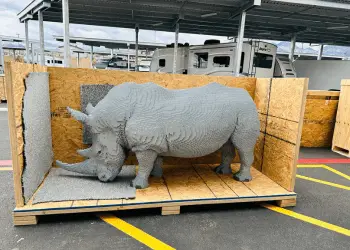
For Las Vegas businesses and collectors, a custom crate can bring those requirements together in one packing plan. The examples below show the information to gather for common shipment types, rather than assuming that every crate or provider covers every possible industry need.
Fine art and antiques: condition and contact materials
Paintings, sculptures and antiques need a current condition record and a clear understanding of where they may safely be supported. Supply dimensions including the frame or base, photographs and any lender or conservator instructions.
Materials touching an object should be appropriate to its surface and condition. An “archival” or “museum-quality” label is not a complete specification. If temperature or humidity requires control, coordinate the transport and storage plan with the responsible specialist instead of assuming the crate provides it.
Electronics and technology: manufacturer-led preparation
For audiovisual gear, servers and precision equipment, provide model information and manufacturer transport instructions. Identify removable accessories, screens, connectors and any orientation limits.
Separate components should have assigned, secured locations. ESD-sensitive parts may require protective packaging beyond ordinary cushioning; EOS/ESD Association guidance explains that the required properties depend on the handling environment. Confirm who will check operation after delivery rather than promising that packing alone preserves functionality.
Heavy equipment: load support and qualified handling
Machinery and oversized components need verified weights and approved support or lifting points. Obtain manufacturer drawings where available and identify preparation that must be completed by a technician.
The crate base, restraints and handling access should be developed for that load. Have qualified handlers confirm the loading and unloading arrangements. Medical devices may also require separate specialist preparation and recommissioning; a crate’s design does not establish clinical readiness.
Trade shows and retail displays: repeatable organization
An exhibit can combine bulky panels with fragile graphics, electronics and loose hardware. Start with a complete inventory and the booth’s assembly sequence. Discuss accessible compartments and opening panels that make sense for the crew.
Confirm current event receiving instructions and empty-crate storage arrangements. Wheels, modular sections or other features should be proposed only when suitable for the load and venue. Keep a packing diagram for teardown and the next event.
Reuse and export requirements across industries
Reusable crates need a recovery route, storage space and inspections between trips. Their financial and environmental value depends on those practical details, so include them when comparing packaging options.
For international shipments, determine whether the wood packaging needs ISPM 15 treatment and marking. That requirement concerns pests in regulated wood; it does not certify artwork conservation, electronics performance or machinery load capacity. Separate the packaging check from any rules that apply to the commodity.
PLAN YOUR CRATING
Discuss your industry-specific crating needs
Contact Crates of Las Vegas with the item specifications, photographs, route and relevant specialist instructions. Ask the team to confirm the available crating scope and any preparation or receiving work that needs another qualified provider.
Discuss Your Crating ProjectMORE CRATING GUIDES




