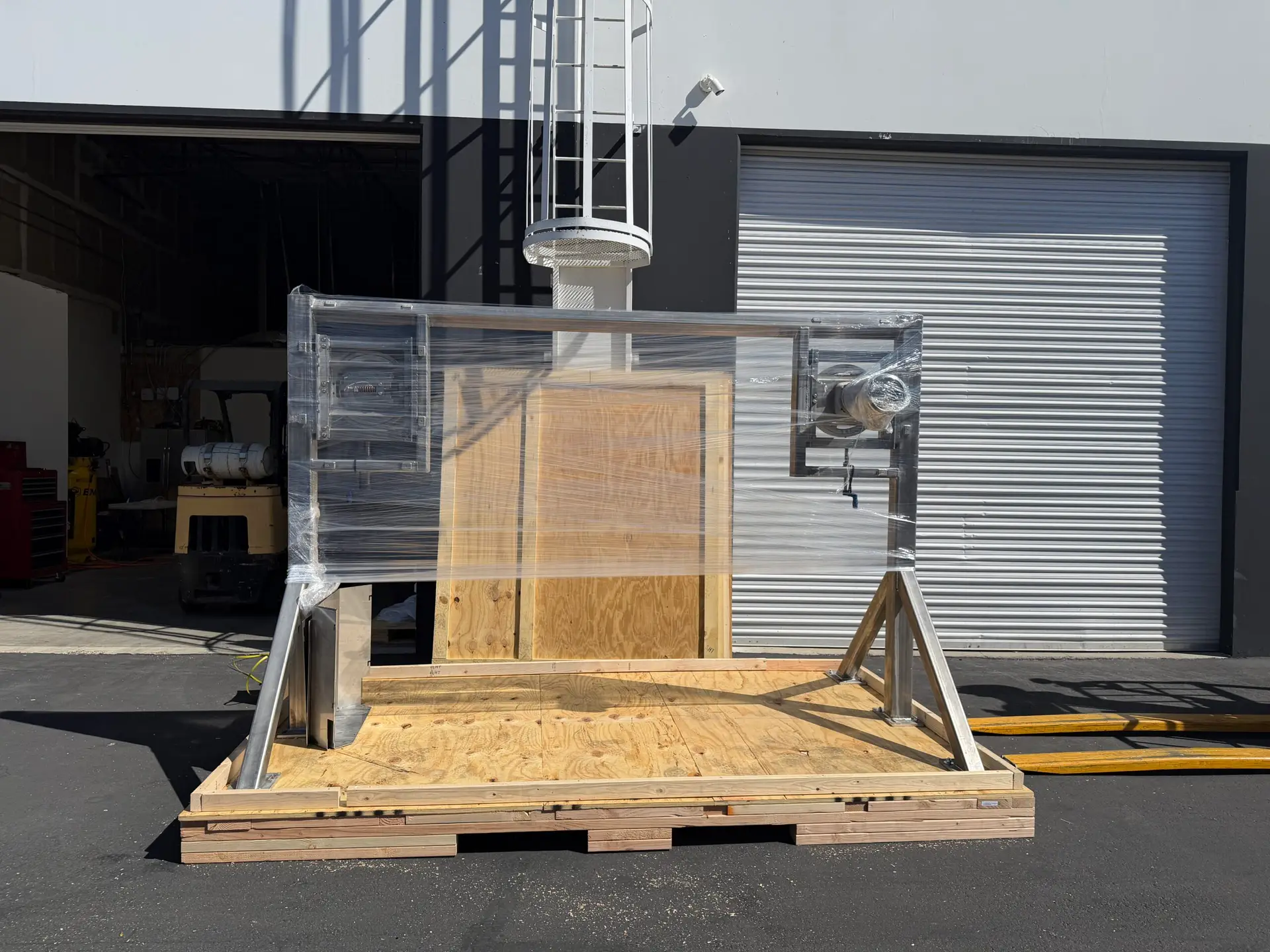
CRATING & PACKAGING GUIDES
Wooden Crates vs. Cardboard Boxes for Las Vegas Shipping
Wooden crates and corrugated boxes are different ways to build a protective packaging system. The better choice depends on the cargo, supports, handling, and route. A well-specified carton can travel internationally; a poorly designed wooden crate can still fail. Compare the complete package rather than the material alone.

Start with the shipment requirements
- Maximum dimensions, verified weight, and any concentrated load points.
- Fragile surfaces, approved orientation, and manufacturer instructions.
- Carrier handling, transfers, stacking expectations, and delivery access.
- Moisture exposure, storage periods, and other environmental needs.
- Whether the packaging returns for reuse or makes a one-way trip.
Value and distance matter, but neither decides the package by itself. A small delicate product may be suited to a tested carton-and-insert system, while a heavy machine may need a designed skid, anchoring, and enclosure.
Compare the complete protective systems
| Factor | Wooden crate | Corrugated package |
|---|---|---|
| Structural design | Can incorporate a rigid frame, base and attachment points | Select box construction and supporting system for the load |
| Internal protection | Needs appropriate supports and cushioning | Also needs fitted protection and restraint |
| Handling | Can incorporate suitable skids or lift access | May need a pallet or additional handling protection |
| Exposure | Wood and joints still need suitable protection | Moisture can affect paper-based packaging performance |
| Reuse | Can be designed for serviceable parts | Depends on design, condition and intended number of trips |
A crate’s rigid walls do not automatically isolate vibration. Likewise, corrugated packaging is not restricted to low-value, short-distance domestic parcels. Ask for a design appropriate to the cargo and the expected transport hazards.
Work out total cost before deciding
Compare packaging purchase, packing labor, freight based on the completed package, delivery requirements, returns, storage, repair, and disposal. Ask which costs are included in each quote. A lighter package may affect freight charges, but dimensional and carrier-specific rules also matter.
For reuse, spread the build cost over a realistic number of completed trips and add the costs of keeping the container in circulation. Do not assume a fixed break-even trip, a lower insurance premium, or a guaranteed reduction in damage.
Use documented shipment outcomes when estimating risk costs. A theoretical saving from avoided damage is not the same as a measured saving in your operation.
Consider environmental trade-offs
A repairable crate can reduce replacement purchases when it is actually reused. A suitable corrugated package can offer low material weight and an established recovery option where accepted. Either system may perform poorly environmentally if it causes unnecessary freight, damage, or disposal.
- Check material sourcing and any verified recycled content.
- Include empty returns and storage in reusable-system comparisons.
- Separate inserts, hardware and panels where practical at end of life.
- Confirm which materials the receiving recycler accepts.
The FTC environmental-claims guidance favors specific, supported claims. Avoid declaring one material universally greener or using a percentage carbon saving without a valid comparison.
Match the decision to art, equipment, or exhibits
Art needs supports and contact materials suited to its condition, with conservation guidance where necessary. Medical and technical equipment should follow manufacturer relocation instructions. Heavy machinery needs a suitable base and approved restraints. Repeated exhibit shipments benefit from an inventory and a reliable repacking layout.
For equipment shipments, our industrial packaging selection guide connects cargo requirements with support, handling and receiving arrangements.
These applications often justify custom design, but “custom” does not always mean wood. Discuss a suitable case, carton, crate, or combined system with the packer and carrier. Identify specialist handling and receiving work separately.
Check export requirements and quote scope
Regulated raw-wood packaging used internationally is subject to phytosanitary measures under ISPM 15. Processed panels such as plywood are treated differently, but solid-wood pallets, runners, or dunnage in a mixed package still need attention. Corrugated packaging does not remove requirements for wooden components used with it.
Crates of Las Vegas lists custom crating and packing services. Ask whether the proposed job includes an empty crate, professional packing, on-site work, or shipping coordination. Confirm required dates and responsibilities before comparing prices.
PLAN YOUR CRATING
Compare packaging for your actual shipment
Share dimensions, weight, photos, handling instructions, route, and expected reuse. Ask for an explanation of the proposed package and the complete quoted scope. Contact Crates of Las Vegas to discuss the scope, availability, and quote.
Review our custom packaging services when discussing the packing scope for your shipment.
Discuss your crating projectMORE CRATING GUIDES