

LAS VEGAS · INDUSTRIAL SHIPPING
Choosing the Right Crating Solution for Industrial Shipping Needs
Industrial packaging is part of a shipment's risk-management plan. Heavy machinery, fragile electronics, and oversized components each need protection that reflects their dimensions, weight, sensitivity, and transport route.
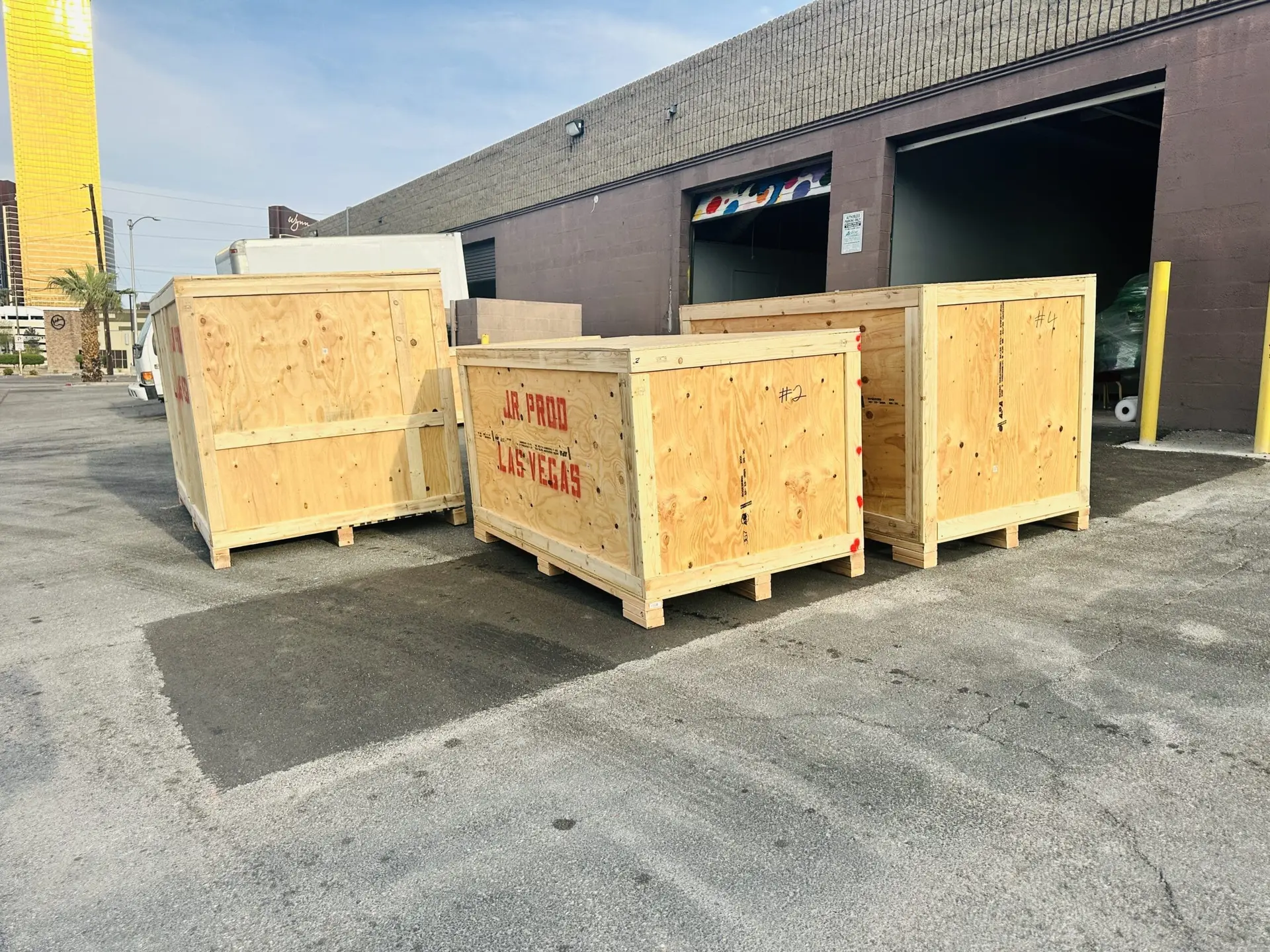
For businesses shipping from Las Vegas, custom wooden crates can combine structural support, internal restraint, and practical handling features. Selecting the right solution starts with understanding the cargo and coordinating the crate with the carrier, the receiving site, and any export requirements.
What a Custom Wooden Crate Needs to Do
Custom wooden crates protect goods during storage, handling, and transportation. Their design should account for weight distribution, fragile components, stacking restrictions, environmental exposure, and the equipment used to move the finished package.
A heavy machine may require a reinforced base and purpose-built bracing. A sensitive instrument may need cushioning selected for its supported weight and fragility. Moisture barriers or other protective materials may be appropriate where the route creates an exposure risk. None of these features should be selected solely because they appear in a standard package description.
A crate also has to work at the destination. Confirm how the receiver will unload, open, and remove the cargo and whether access panels or reusable closures are needed. Good packing documentation helps another crew handle the shipment as intended.
Why Industrial Crating Services Matter
Manufacturing, trade shows, entertainment production, and other Las Vegas businesses move equipment whose loss or damage can interrupt a project. Professional crating services can help translate a cargo assessment into a practical packaging design and identify handling issues before pickup.
The scope should be clear. Ask who is responsible for measurements, equipment preparation, crate fabrication, loading, transport booking, and unpacking. Specialist rigging, equipment servicing, customs brokerage, and transport may involve different providers.
Compare the proposed work and written specifications, not only the initial crate price. A low-priced solution that omits necessary supports or leaves the receiver without a workable unloading plan may create additional cost later. Conversely, a more elaborate crate is not automatically better if it adds weight or size without addressing a real risk.
Choose Heavy-Duty Packaging for the Actual Load
Start with four questions: How heavy and fragile is the cargo? How far will it travel? How will it be handled? What environmental conditions could it encounter?
If you are comparing enclosure materials, review the trade-offs between wooden crates and corrugated boxes alongside the load and route requirements.
- Provide verified dimensions, weight, center-of-gravity information where available, and approved support or lifting points.
- Describe sensitive assemblies, finishes, removable parts, and restrictions on orientation.
- Identify road, air, ocean, or combined transport and the expected transfer points.
- Confirm storage time, stacking requirements, and conditions at both loading sites.
- Decide whether the crate is for one trip or repeated use.
A palletized base can improve handling when designed for the load and the available equipment. Blocking and bracing restrain movement; cushioning helps manage shock and vibration when correctly specified. For electronics, any static-protection materials should follow the equipment manufacturer's requirements.
Moisture-resistant packaging does not provide active temperature control. If equipment has temperature or humidity limits, plan appropriate transport and storage conditions as well as the crate.
Match the Crate to the Industry and Equipment
Different shipment types call for different priorities:
- Manufacturing machinery needs support at suitable structural points and a plan for securing moving assemblies.
- Medical equipment and laboratory instruments require manufacturer-approved preparation, clean compatible materials, and any necessary inspection or recommissioning arrangements.
- Stage equipment, exhibits, and convention booths benefit from organized interiors and repeatable packing for successive events.
- Artwork and museum objects need support and contact materials appropriate to their condition and surfaces, with specialist input where required.
- Electronics need protection suited to the assembly, including any specified static or environmental precautions.
These are design considerations, not interchangeable crate types. Share the specific equipment requirements rather than relying on an industry label alone.
Plan for International Shipping and Reuse
For international moves, confirm the destination's requirements for regulated wood packaging. USDA APHIS export guidance is a useful starting point for sourcing properly treated and marked packaging. ISPM 15 addresses wood-pest risk; it does not establish a crate's load capacity or replace the cargo's other import requirements.
Coordinate the crate's finished dimensions with the carrier before fabrication. Space efficiency matters, but reducing size must not compromise necessary clearance, support, or handling access. The complete packed weight should be used for transport planning.
Reusable crates can support recurring shipments when their condition and suitability are checked between trips. Review repairs, altered cargo, and export-marking requirements before reuse. Keep the packing method documented so protection does not depend on one crew's memory.
PLAN YOUR CRATING
Discuss Your Industrial Crating Requirements
The right crate is a coordinated system of support, restraint, protection, and handling instructions. Crates of Las Vegas can discuss custom wooden packaging for your industrial shipment and help define the required scope.
Contact Crates of Las Vegas with the cargo details, photographs, route, receiving arrangements, and schedule to request a tailored quote.
Request an industrial crate quoteMORE CRATING GUIDES



