


LAS VEGAS · CRATING GUIDE
Best Crating Solutions for Medical Equipment Shipping
Shipping medical equipment is one of the most demanding challenges in modern logistics. Unlike standard freight, medical devices must be protected not only from impact, but also from vibration, moisture, contamination, electrostatic discharge, and improper handling. A damaged diagnostic monitor, surgical system, laboratory instrument, imaging component, or patient-care device can lead to expensive repairs, delayed installations, regulatory concerns, and interruptions in healthcare operations.
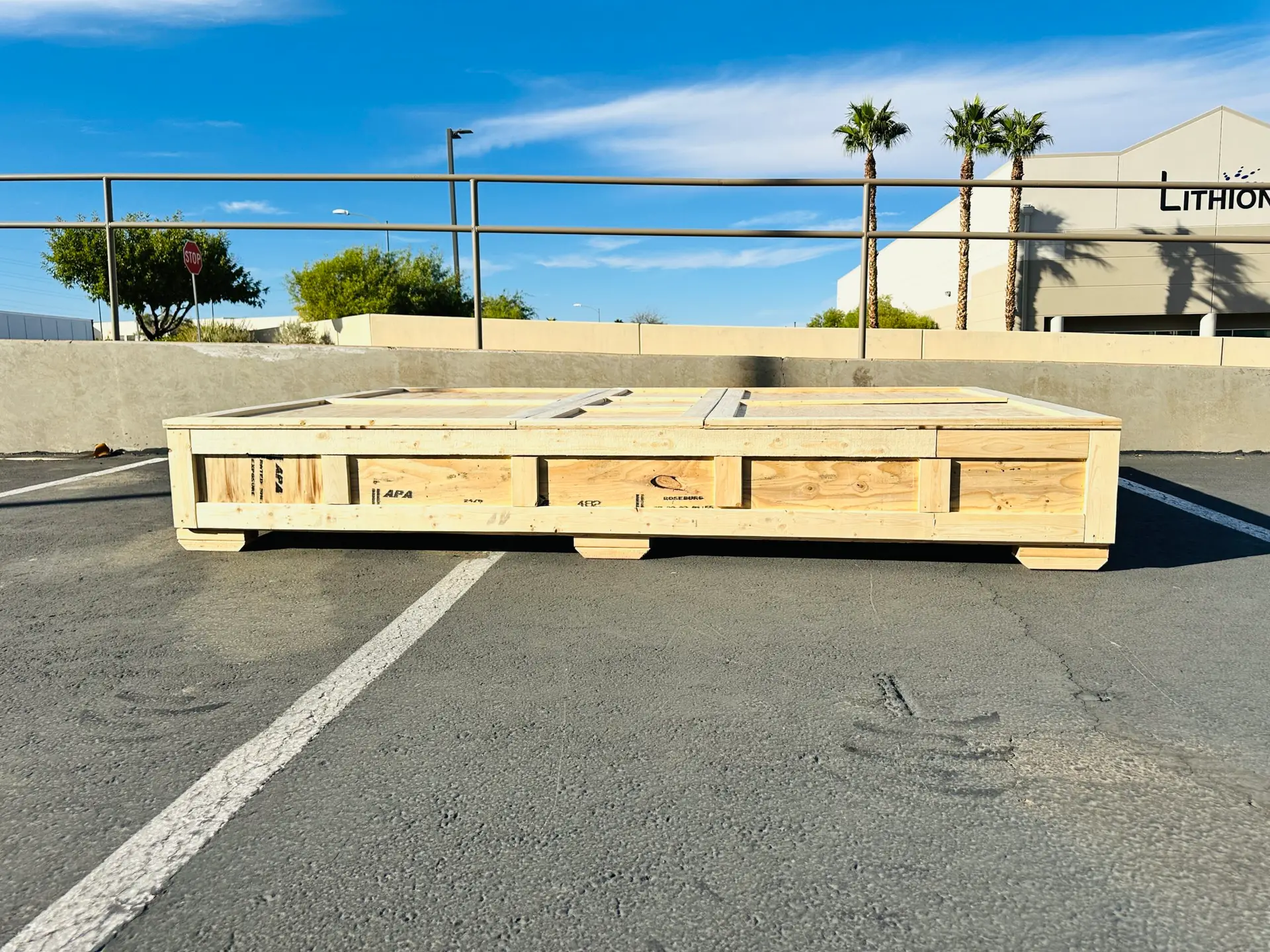
In Las Vegas, Henderson, Summerlin, and North Las Vegas, hospitals, medical suppliers, laboratories, dental practices, and healthcare technology companies regularly transport sensitive equipment across Nevada, throughout the United States, and internationally. As medical devices become more advanced and more expensive, the quality of the crating solution becomes a critical part of risk management.
At Crates of Las Vegas, we specialize in custom medical equipment crating, foam-lined shipping crates, reusable transport systems, and ISPM-15 compliant export crates designed specifically for sensitive healthcare equipment. Begin with the equipment manufacturer’s packing and transport instructions, then design the outer protection around the device and route.
This guide explains the best crating solutions for medical equipment shipping and how Las Vegas experts protect high-value healthcare technology during transit.
Why Medical Equipment Requires Specialized Crating
Medical equipment is uniquely vulnerable during transportation because many devices contain precision electronics, optics, sensors, calibration components, glass elements, and delicate mechanical assemblies that can be affected by shock and vibration even when no visible exterior damage is present. For healthcare facilities in Las Vegas and Henderson, the true cost of shipping damage is often far greater than the freight claim itself, as a delayed imaging installation, a non-functional laboratory analyzer, or a damaged surgical device can disrupt patient scheduling, reduce operational efficiency, and impact revenue.
Common risks include forklift impact, continuous road vibration, moisture and condensation, electrostatic discharge (ESD), dust contamination, improper lifting, multiple freight transfers, and long-term storage before installation. Because of these factors, medical equipment needs a device-specific packing plan. A crate can provide physical protection, but it does not by itself provide sterility, temperature control, or validated contamination control. Preserve any required sterile barrier and follow the manufacturer’s handling instructions.
Foam-Lined Closed Crates for Suitable Devices
For some medical devices, a custom closed wood crate with appropriately selected foam is a suitable transport option. Use the manufacturer’s specified packaging when required. This design provides strong protection against external impact while securely immobilizing the equipment inside the crate. The foam is engineered to match the exact dimensions and contours of the device, creating a secure cavity that distributes pressure evenly and prevents movement during transit. Foam material, loading, thickness, chemical compatibility, cleanliness, and particle shedding should be evaluated for the device. High density or a material name alone does not establish cushioning performance or cleanliness. This type of protective packaging may be considered, subject to device-specific requirements, for patient monitors, ultrasound systems, dental imaging equipment, laboratory analyzers, surgical devices, endoscopy systems, medical electronics, and calibration instruments. In Summerlin and North Las Vegas, foam-lined medical equipment crates are frequently used for shipments traveling through LTL networks or by air freight, where repeated handling and transportation vibration can increase the risk of damage.
Reusable Medical Equipment Crates for Multi-Site Operations
Many healthcare organizations regularly move equipment between hospitals, medical facilities, service centers, and temporary installation sites. In these situations, reusable medical shipping crates can provide significant long-term value by combining durable construction with consistent protection. A reusable crate is built with reinforced framing, heavy-duty hardware, and replaceable foam components, allowing repeated use when the crate and inserts pass inspection and still match the device. Instead of purchasing new packaging for every shipment, healthcare organizations can evaluate whether repeat use reduces packaging purchases and supports a consistent packing process.
Include return freight, cleaning requirements, inspections, repairs, and storage in that comparison. For medical suppliers and service providers in Las Vegas, reusable crates are particularly effective for loaner equipment, warranty repairs, field service operations, equipment maintenance, and recurring hospital deliveries where reliable protection is needed throughout multiple transportation cycles.
Anti-Static Protection for Sensitive Electronics
Many modern medical devices contain circuit boards, sensors, communication modules, and other electronic components that can be vulnerable to electrostatic discharge (ESD). Standard foam and packing materials may not provide sufficient protection for these sensitive components, making specialized ESD-safe packaging important during transportation and handling. For ESD-sensitive assemblies, follow the manufacturer’s specified protective system. Low-charging or anti-static materials and discharge-shielding packaging serve different functions; anti-static foam alone may not provide the required shielding.
This level of protection is particularly important for diagnostic electronics, imaging control units, telemedicine equipment, laboratory control systems, surgical navigation systems, and networked medical devices. Without proper ESD protection, equipment can experience hidden electronic damage that may not become apparent until the device is powered on and tested at its destination, potentially leading to costly repairs, troubleshooting, or delays in deployment.
Vibration Isolation for Precision Instruments
Shock protection alone is not enough for precision medical equipment because continuous vibration during trucking can affect calibration, optics, mechanical alignment, and overall performance. For high-precision instruments, a packing specialist may evaluate cushioning or isolation mounts against the manufacturer’s transport limits. The loaded system must be assessed because an unsuitable cushion can amplify vibration at some frequencies. This approach is particularly recommended for laboratory analyzers, optical instruments, microscopy systems, calibration equipment, and precision diagnostic devices that require careful handling during transportation.
Do not assume that protective crating guarantees calibration. Arrange any manufacturer-required inspection, calibration, installation, or acceptance testing after delivery and before the equipment returns to service.
Moisture and Contamination Control
Medical equipment may be stored in warehouses, transported through humid regions, or shipped internationally, making protection from moisture and dust an important part of the crating process. Humidity, condensation, and airborne particles can damage sensitive electronics, optics, connectors, and other sensitive components, potentially affecting equipment performance and reliability. Effective moisture control can include vapor barrier bags, desiccant packs, sealed crate interiors, heat-shrink wrapping, and clean, low-particulate foam materials selected for sensitive applications.
For international shipments, moisture protection can be just as important as impact protection because transit times may extend for several weeks and equipment can be exposed to changing environmental conditions throughout transportation, storage, and customs handling. Specify the required moisture and cleanliness protection for the device and expected storage period. A sealed wood crate is not a validated sterile barrier or temperature-controlled shipping system.
ISPM-15 Export Crates for International Medical Shipments
For international shipments, check the destination’s requirements for regulated solid wood packaging, including any crate framing, runners, and loose blocking. Where ISPM 15 applies, the packaging needs the required treatment and official mark; heat-treated lumber alone does not establish compliance. Export medical crates should also incorporate moisture protection, shock protection, tilt and impact indicators, clear handling labels, and a secure documentation pouch for shipping and handling records.
For medical manufacturers and distributors in Las Vegas, export-ready crating is especially important when transporting equipment to hospitals, laboratories, and distributors overseas. The right crating solution also depends on the type of equipment being shipped: patient monitors typically benefit from foam-lined closed crates, ultrasound systems may require suspended foam crates, dental imaging equipment can require custom foam combined with moisture control, laboratory analyzers benefit from vibration-isolated crates, surgical equipment can be protected with foam-lined reusable crates, medical electronics may require ESD-safe foam packaging, and export medical devices need the packing specified for the product and route, plus compliant wood packaging where required.
Professional packing is just as important as the crate itself because even a properly engineered crate can fail to protect equipment if the contents are not secured correctly. The equipment owner or qualified service provider should prepare the device according to its transport instructions, including approved shipping locks, accessory handling, and any required cleaning or decontamination. The crating team should use approved support and lifting points rather than modifying internal assemblies.
For high-value shipments, it is also recommended to photograph the equipment, internal foam placement, and completed crate before pickup. This documentation provides a clear record of the equipment’s condition and packing configuration before it enters the freight network, helping support insurance requirements and accountability throughout the shipping process.
Conclusion
The best crating solution for medical equipment is the one designed specifically for the device, the shipping method, and the destination. A foam-lined closed crate can be appropriate when it meets the device manufacturer’s requirements and the expected handling conditions. Precision instruments benefit from vibration isolation, sensitive electronics require ESD-safe materials, and international shipments require a check of applicable wood-packaging and device-import requirements. For hospitals, laboratories, medical suppliers, and healthcare technology companies in Las Vegas, Henderson, Summerlin, and North Las Vegas, a suitable crating plan can reduce transport risk.
Receiving checks and any manufacturer-required inspection or calibration remain part of preparing the equipment for use. When the equipment supports patient care, diagnostics, or surgical operations, packaging should never be an afterthought.
Further Reading
PLAN YOUR CRATING
Plan Your Shipment
Share the item’s dimensions, weight, photographs, destination, shipping method, and handling requirements when requesting a quote. Review medical equipment crating, custom packaging services to discuss the packing approach that fits your shipment.
Request a Crating QuoteMORE CRATING GUIDES



