
LAS VEGAS · GLASS TABLETOP PACKING
How to Ship a Glass Tabletop: Packing and Crating Options Explained
A glass tabletop can be the hardest part of a furniture move to plan. It may be heavy, awkward to handle, and expensive to replace, especially when it belongs to a distinctive dining table or custom-designed base.
The best way to ship a glass tabletop depends on its size, construction, condition, and journey. Before buying packing materials or booking a pickup, decide who will prepare the glass, what packaging the carrier accepts, and how the tabletop will be handled at both ends.
Start with the tabletop’s details
Record the tabletop’s length, width or diameter, thickness, and known weight. Photograph the whole piece, its edges, and its connection to the base. Note any existing chips, scratches, decorative finishes, or unusual cutouts.
Check the furniture manufacturer’s instructions before attempting disassembly. Some tops are removable; others use bonded connections or specialized fittings. Ask a furniture or glass professional to assess anything you cannot identify confidently.
TSI’s glass-table shipping guide discusses packing the glass separately from the base and protecting the tabletop’s surfaces and edges. Apply that approach only where the table is designed for safe separation. Keep removed hardware identified and accounted for in the packing plan.
Compare the packing options
Protective wrapping for a managed local move
If a professional mover proposes padded transport, ask how the glass will be supported, restrained, and protected throughout the trip. Confirm that the plan covers the path out of the property, loading, vehicle transport, and unloading. Wrapping alone does not explain how those steps will be managed.
Specialty cartons for suitable pieces
A purpose-made glass or mirror carton may be an option for a tabletop that fits its specifications and the carrier’s requirements. Ask the packer to confirm the carton’s suitability for the actual size and weight, including the cushioning system. A carton intended for a small framed picture should not be assumed suitable for a heavy tabletop.
Custom crating for a shipment-specific enclosure
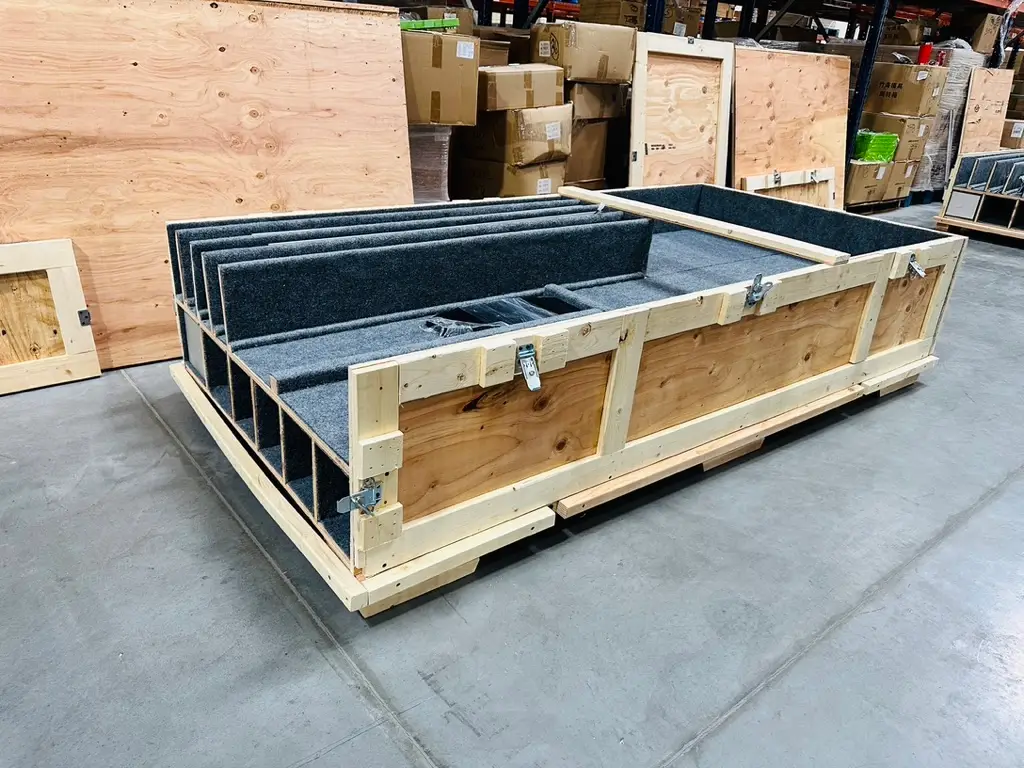
Discuss a crate when the glass is large, unusually shaped, difficult to replace, or needs protection through a more involved freight journey. A crate can be designed around the packed tabletop, with internal protection and supports selected for the piece.
Crates of Las Vegas offers custom crating with tailored dimensions and interior protection options. The assessment should cover both the enclosure and how the glass will be secured inside it.
What the packing plan needs to address
A useful plan explains which materials can touch the glass, how the edges are protected, and how the tabletop is prevented from moving against hard surfaces.
Glass manufacturer Vitro’s handling guidance emphasizes keeping glass away from exposed fasteners, removing debris from supports, and maintaining cushioning on racks and crates. These are useful points to discuss with your packer when reviewing the proposed protection.
Also ask how the packaging will accommodate any decorative coating or special finish. Supply the manufacturer’s care instructions rather than assuming every surface can accept the same tape, film, or padding.
Have the packaging professional specify the shipping orientation and support arrangement for your exact tabletop. Confirm that the carrier can follow that plan. Handling labels should communicate the agreed requirements, while the package itself provides the necessary protection.
Consider packing at the property
Moving an unprotected tabletop to a packing shop creates another handling step. For a large or difficult-to-move piece, ask about in-home crating in Las Vegas.
Discuss access before scheduling. A tabletop in a Summerlin home may have a different path to the pickup vehicle than one in a Las Vegas high-rise with a service elevator. Share doorway measurements, stairs, tight turns, elevator rules, and any building requirements that could affect the work.
Confirm where packing will take place and whether the finished package can leave by the planned route. If the tabletop is part of a commercial furniture installation, check loading access and the receiving contact as well.
Prepare an estimate-ready request
Gather these details for the packing and shipping assessment:
- Photos and tabletop measurements
- Known weight and glass type, if available
- Whether the top can be safely removed
- Details of the base and any additional pieces
- Pickup and destination ZIP codes
- Access restrictions and required timing
- Whether unpacking or reassembly is needed
Ask for a clear description of what the quote includes. Packing, transportation, inside delivery, unpacking, and reassembly should each be confirmed if needed.
Before pickup, document the tabletop’s condition and the finished packaging. Coordinate receiving arrangements and ask the carrier about its inspection and damage-reporting process.
PLAN THE PROTECTION
Plan the protection before the move
Choosing how to ship a glass tabletop starts with the piece itself and the handling it will encounter. A professional assessment can help you compare suitable packing options before the pickup date is set.
Contact Crates of Las Vegas to discuss your tabletop, property access, and crating requirements. Include the details you know and flag anything that needs to be measured or inspected.
Discuss tabletop cratingMORE CRATING GUIDES