

Export packaging
Wooden Crates for Export Shipping
When businesses ship valuable equipment, fragile products, oversized machinery, artwork, or commercial inventory internationally, packaging becomes part of the logistics plan. The crate needs to protect the item, suit the handling route, and address the destination’s wood-packaging requirements.
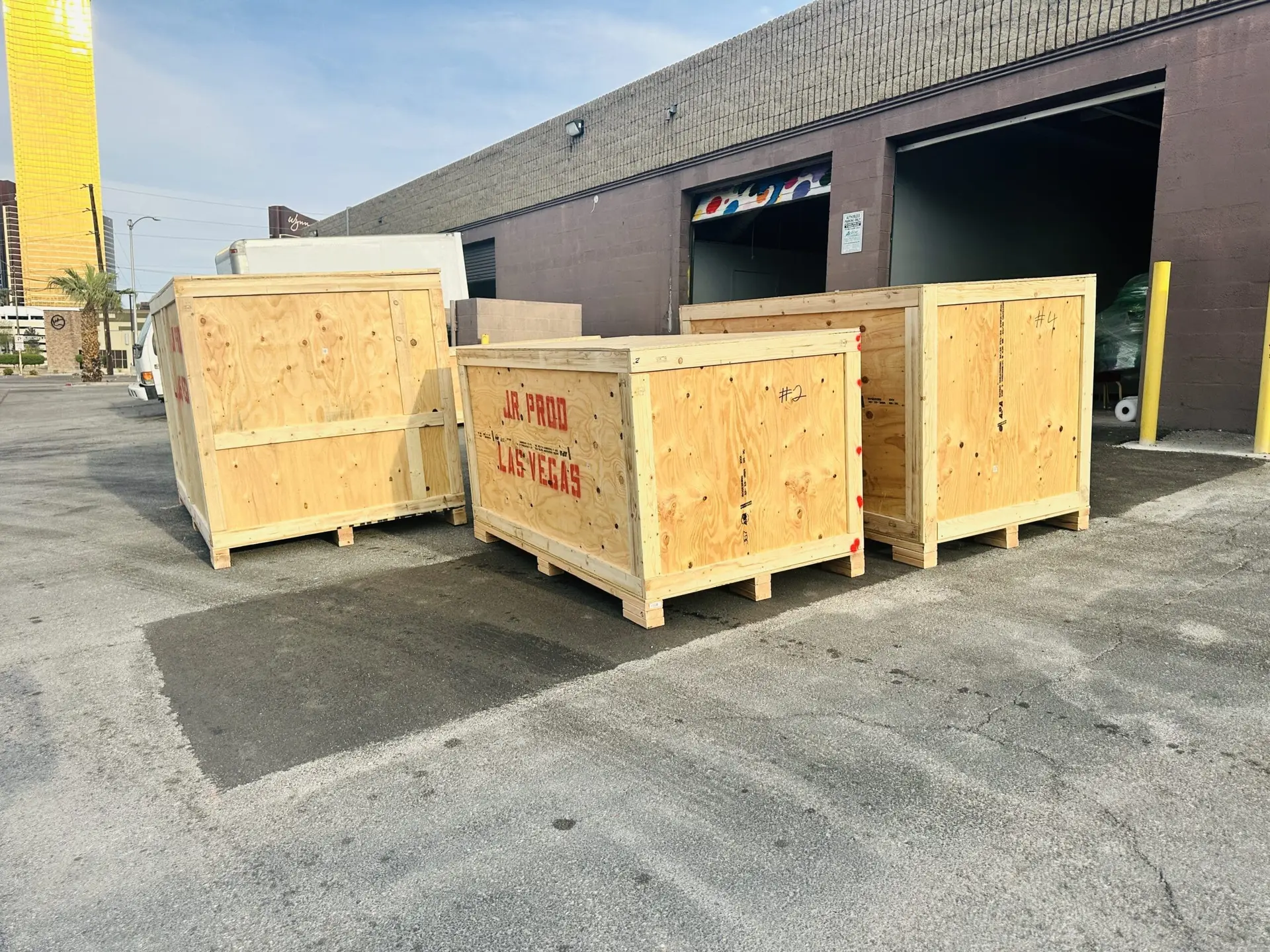
Wooden crates can be designed around cargo dimensions, weight, and vulnerabilities. Crates of Las Vegas provides custom crating and packaging services. Understanding the protection, export preparation, and handling included in a proposal helps businesses make a more useful comparison than choosing an enclosure by size alone.
Why Wooden Crates Help Protect Export Shipments
Custom wooden crates combine a rigid outer structure with internal support suited to the item. That is useful for equipment or fragile goods that need more protection than an exposed pallet can provide during transfers between vehicles and cargo facilities.
The design should account for the load, weight distribution, handling equipment, and expected transport conditions. Heavy equipment needs appropriate support points, while delicate surfaces may require carefully selected contact materials and clearance from the outer walls.
Blocking and bracing help restrain movement. Cushioning serves a different role by helping manage forces transmitted to the cargo. The two need to work together: an empty strong crate does not by itself establish protection for a fragile item.
If the crate will be reused, discuss removable panels, access to supports, repacking instructions, and inspection between trips. Reusability and stacking capacity should be specified for the design rather than assumed from the fact that it is wooden.
Export Compliance and ISPM 15 Requirements
Export preparation involves more than building a strong crate. Before ordering, confirm the receiving country’s rules for the packaging materials. The APHIS export wood-packaging guide explains how U.S. exporters can obtain appropriately treated and marked wood packaging where required.
ISPM 15 addresses pest risks associated with regulated wood packaging. Treatment and the required mark must be considered together. A general statement that lumber was heat-treated should not replace checking the finished packaging’s compliance for the destination.
Our treatment and marking guide outlines practical questions to raise with the packaging supplier.
The rules for packaging are separate from the cargo’s customs documents, permits, carrier restrictions, and any product-specific requirements. Confirm responsibilities with the freight provider or broker. Correctly prepared wood packaging can help avoid packaging-related problems, but it does not guarantee customs clearance.
Environmental protection is another separate part of the plan. Wooden construction and pest treatment do not make the crate waterproof or temperature-controlled. Discuss moisture exposure, storage time, and the contents’ sensitivity before selecting barriers or other protective materials.
How Custom Crating Supports Different Shipping Needs
Different cargo calls for different protection. Art, antiques, and sculptures may need support that avoids delicate surfaces and projections. Their shape and condition should be documented so the packing method fits the individual item.
Heavy machinery and commercial equipment require attention to weight distribution, approved support points, moving parts, and handling access. Manufacturer instructions can be important when deciding how to restrain or prepare the equipment for transport.
Electronics and laboratory equipment may have specific limits on shock, moisture, temperature, or packaging materials. Share those requirements with the builder rather than assume every custom crate includes the required protection.
Trade-show displays and event equipment may need repeated packing, transport, and unpacking. In those cases, the design should consider access, labeling, loose parts, and how the crate will be inspected and stored between trips. These practical differences explain why the contents and journey should drive the design.
Working With Crating Services in Las Vegas
A local crating provider can help coordinate measurements, packing, and pickup around the item’s location. For cargo that is difficult to move before packing, ask whether on-site crating is suitable for the project.
Site work needs usable space and an agreed access plan. Explain doorways, loading areas, available handling equipment, and any restrictions. Some items may still need repositioning before packing, and any lifting or relocation responsibilities should be settled in advance.
Compare the complete scope, including crate construction, internal protection, packing labor, export preparation, and any transport coordination. Confirm lead time and availability rather than assuming a local provider can accommodate every urgent deadline.
Record the finished crate dimensions and gross weight for the carrier. Also confirm how the recipient will unload, open, and inspect the shipment so the packaging plan remains workable at the destination.
PLAN YOUR CRATING
Discuss Wooden Crates for Your Export Shipment
Export crating brings together cargo-specific protection, destination checks, and a practical handling plan. Accurate information at the start helps the builder identify what the shipment needs and what must be arranged separately.
Contact Crates of Las Vegas with dimensions, weight, photos, destination country, intended transport method, and timing. Include manufacturer instructions, expected storage, and any on-site or receiving restrictions to discuss a suitable export-packaging plan.
Discuss Export PackagingMORE CRATING GUIDES



