Crates of Las Vegas Journal
A Practical Custom Crating Plan for Las Vegas Shipments
Shipping becomes easier to manage when the crate, carrier and receiving team are working from the same information. A custom crate can address the item’s support and protection needs, while a clear plan reduces avoidable last-minute questions.
For Las Vegas businesses sending artwork, antiques, electronics or machinery, begin with the shipment’s constraints. The item’s shape is only part of the design brief; the route, handling arrangements and recipient’s facilities matter too.
Define the protection the item needs
Measure the complete item, including its base, frame or projections. Provide an accurate weight and identify fragile surfaces or parts that can be removed. Manufacturer instructions or a conservator’s advice may define how the item should be supported.
The crate should allow space for necessary protection, not merely squeeze the item into the smallest possible box. Ask the provider to explain how the base, restraints and interior materials address the specific vulnerabilities you have identified.
Put craftsmanship and handling into the scope
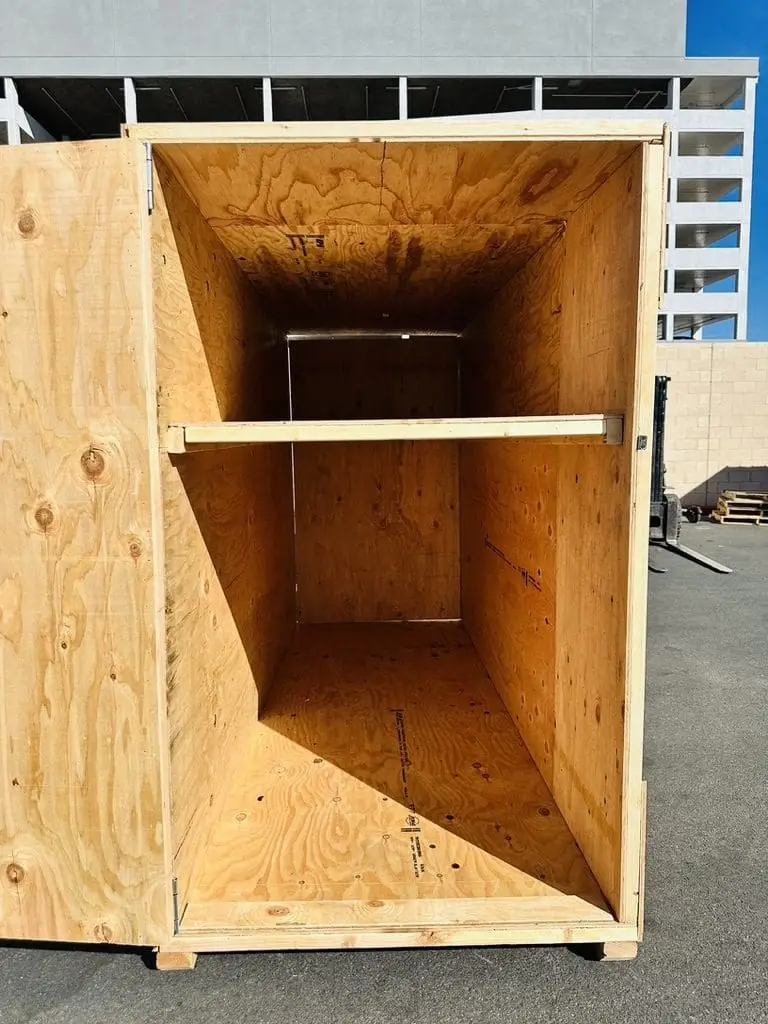
A sturdy exterior is useful only as part of a suitable overall package. Confirm the opening method, intended orientation and provisions for loading and unloading. Share those instructions with the carrier and recipient.
For exports, determine whether the wood packaging needs ISPM 15 treatment and marking. The APHIS export guidance addresses that question. Treatment does not certify cushioning, structural capacity or the delivery schedule.
Compare costs before promising savings
Custom crating involves materials and labor and may add freight weight. Compare the full shipment cost, including packing, transport, receiving and any return journey. A crate may be justified by a particular risk or repeat-use requirement even when the initial price is higher.
Keep insurance or declared-value arrangements separate. A crate is not an insurance policy, and packaging alone does not determine how a carrier or insurer will handle a claim. Retain the packing scope and condition photographs.
Make reuse an operational choice
If the crate will travel again, agree on storage, inspections and replacement components. Include a packing diagram so a different team can reproduce the intended arrangement.
Reuse may reduce new packaging demand when the crate is recovered and remains suitable. Avoid claiming a lower carbon footprint without considering return freight and actual material use. Ask suppliers to document specific sourcing or recycled-content claims that matter to your business.
Coordinate the people and milestones
A hotel installation, convention booth and manufacturing shipment have different access constraints. Turn the relevant details into a shared checklist:
- Confirm item preparation and who completes it.
- Approve the crate scope and expected packed dimensions.
- Arrange collection around a confirmed packing schedule.
- Send unloading and opening instructions to the recipient.
- Record the packed condition and final inventory.
- Establish who follows up on delivery discrepancies.
These steps improve coordination without promising that delays or damage are impossible. Leave time to resolve unanswered questions before the planned dispatch.
PLAN YOUR CRATING
Build a clearer plan for your shipment
Contact Crates of Las Vegas with the item specifications, photographs, locations and target dates. Explain the most important handling or protection concern and ask the team to confirm a suitable crating scope.
Discuss Your Crating ProjectMORE CRATING GUIDES