Crates of Las Vegas Journal
Custom Crates for Las Vegas Trade Show Exhibitors
A trade show shipment needs to work twice: when the booth is unpacked and when everything is packed again after the event. Custom crates can organize displays, furniture and equipment for that cycle, provided the design fits the exhibit and the venue’s handling arrangements.
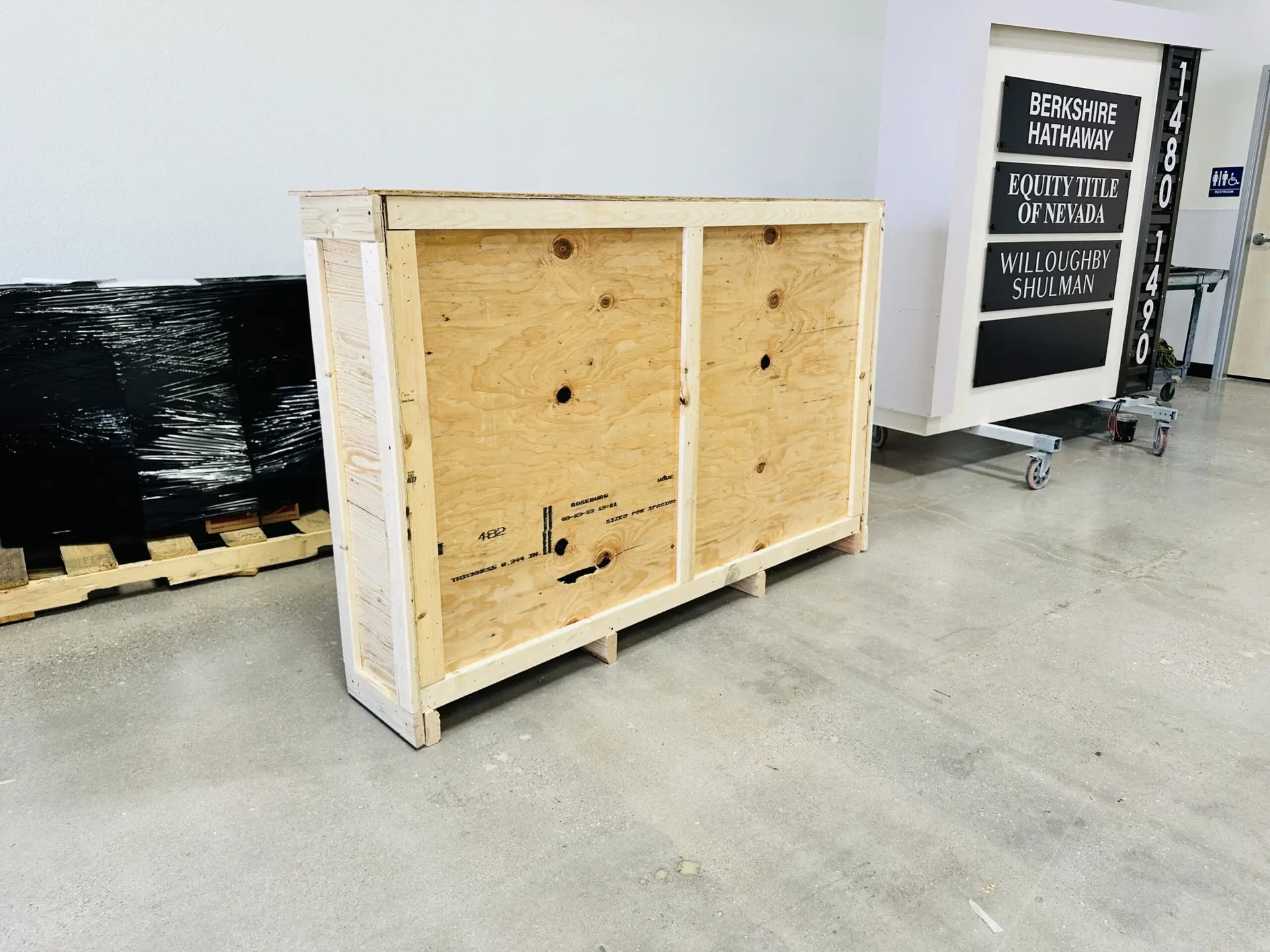
Start with an inventory and the exhibitor instructions for the specific show. Packaging choices should reflect what the crew will receive, how it will be unloaded and the order in which the booth needs to be assembled.
Protect the different parts of the exhibit
List screens, lighting, graphics, counters, furniture and product samples separately. A heavy base should not share an unsecured compartment with a delicate sign. Record dimensions, weights and manufacturer instructions for equipment before the crate is designed.
Custom supports and compartments can help keep items in their intended locations. Include accessories and tools in the inventory, and identify the materials that may contact finished or printed surfaces. A fitted interior should make missing pieces easier to notice during repacking.
Make setup and teardown understandable
Discuss the opening method and the order in which components will be removed. If multiple crates are used, give them a consistent identification system and include an inventory that matches those labels.
- Photograph the packed arrangement before departure.
- Label loose hardware and store it in an assigned compartment.
- Provide opening and repacking instructions to the booth crew.
- Confirm where empty crates will be stored during the show.
- Check the inventory again before the return shipment closes.
Reusable closures and removable panels may be worth considering. Confirm their suitability and do not assume every crate can be stacked or opened safely in a cramped booth.
Coordinate domestic and international requirements
Confirm whether freight goes to an advance warehouse or directly to the venue, and use the current event-specific labels and receiving instructions. Crating and freight transportation are distinct services; establish who books and manages each step.
For international routes, ask about applicable ISPM 15 wood-packaging treatment and marking. APHIS guidance covers export packaging requirements. A compliant crate does not guarantee customs clearance, arrival time or acceptance of unrelated shipping documents.
Compare reuse costs across the show calendar
A display that travels repeatedly may justify packaging designed for multiple trips. Include return freight, empty-crate storage, inspections and possible replacement inserts when comparing the cost with one-use packaging.
Before the next show, inspect the crate and check whether the exhibit has changed. New graphics or equipment may alter weight, fit or the packing sequence. Reuse can reduce material demand when the crate remains appropriate and is actually recovered.
Use presentation to support the crew
An orderly shipment helps the booth team locate parts and spot discrepancies. Clear branding and labels can also make the crate identifiable among other freight, but should leave transport labels, handling instructions and required marks visible.
The crate supports the exhibit’s presentation by making preparation more organized. It cannot guarantee a damage-free shipment or a particular event return on investment.
PLAN YOUR CRATING
Plan crates for your next exhibit
Send Crates of Las Vegas your item inventory, booth-component photographs, packed-size constraints and event schedule. Include the return plan and ask which crating and on-site services can be confirmed for the project.
Discuss Your Crating ProjectMORE CRATING GUIDES