

LAS VEGAS · CRATING GUIDE
Custom Crates for Fragile and High-Value Items: What Matters
Fragile and high-value items deserve a packing plan built around their particular risks. Fine art, antique furniture, glass installations, medical devices and precision machinery can all need careful handling, but they do not all need the same package.
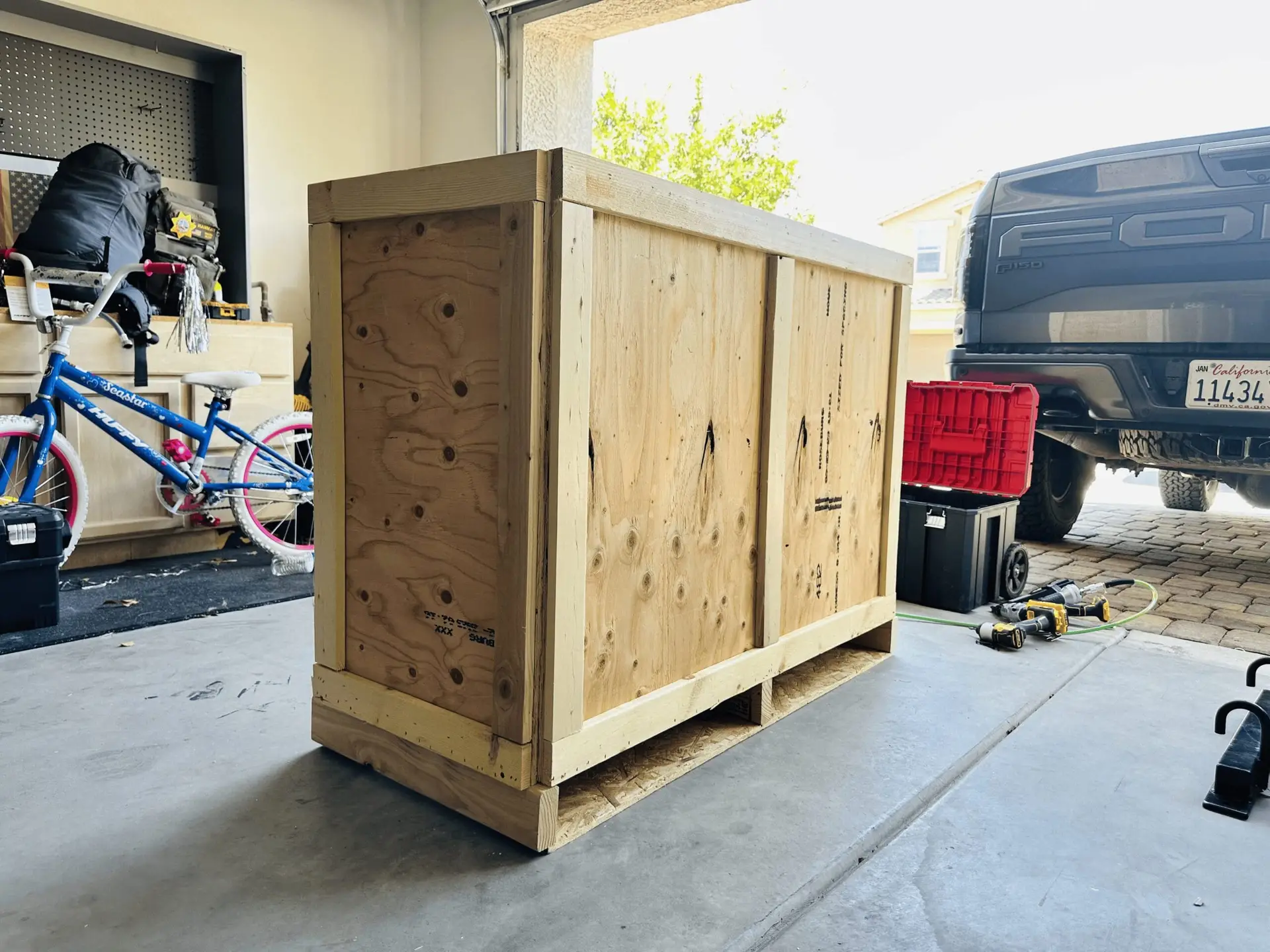
A custom crate is worth considering when a standard container cannot provide the required support, clearance or handling features. The decision should follow the item and route, rather than the assumption that every valuable object needs a wooden enclosure.
Identify what could be damaged
List fragile surfaces, projections, loose components and any existing damage. Record the item's condition before packing. Ask the manufacturer or a relevant specialist about transport locks, orientation and materials that can safely contact it.
Consider the journey too: loading, transfers, storage and unloading can expose the package to different handling conditions. A short local movement and a multi-stage international shipment may call for different protection and transport arrangements.
Separate support, restraint and cushioning
The crate base supports the load. Internal restraints limit unwanted movement, while cushioning is selected to manage transmitted loads. Surface protection has another role: preventing damaging contact or abrasion.
Ask the packer to explain the proposed arrangement and which parts of the item carry the load. The Canadian Conservation Institute's safe-shipment guidance provides a useful reference for delicate objects. Tight packing or extra foam is not a universal solution.
Specify environmental protection rather than assuming it
A wood enclosure does not automatically provide moisture control or a stable temperature. Describe the item's sensitivity and ask whether a barrier, insulation, monitoring or a different transport service is appropriate.
Shock or tilt indicators may help document an event when correctly selected and interpreted. They do not prevent mishandling or establish liability by themselves. Confirm any device, its purpose and the response process before adding it.
Check export and transport requirements separately
Where international rules apply to regulated wood packaging, appropriate ISPM 15 treatment and marking need to be addressed. The IPPC standard concerns plant-pest risk from wood packaging; it is not a structural certification or a promise of customs clearance.
Confirm cargo-specific paperwork, carrier acceptance and destination requirements with the responsible carrier or broker. For high-value goods, review the actual carrier liability and any insurance arrangements before shipment rather than assuming professional crating provides full coverage.
Ask a prospective crating partner specific questions
- Have you handled items with comparable size, weight and vulnerabilities?
- What materials will touch the item, and where will it be supported?
- Who is responsible for packing, collection and delivery arrangements?
- What does the receiver need to unload and open the crate?
- Can the packing configuration be documented for a return trip?
- Which requirements or assumptions are excluded from the quote?
Relevant project photographs and a clear explanation of the design are more useful than broad promises. If an institution, buyer or carrier requires testing or documented specifications, establish that before the crate is built.
PLAN YOUR CRATING
Plan protection for your valuable shipment
Contact Crates of Las Vegas about custom crating with dimensions, weight, photographs and the proposed route. Include any manufacturer, conservator or recipient instructions so the package can be assessed as part of the complete movement.
Discuss your crating projectMORE CRATING GUIDES




