

LAS VEGAS · CRATING GUIDE
Five Reasons to Consider Custom Crates for Las Vegas Art Shipping
An artwork's materials, condition and travel plans determine its packing needs. A custom crate may be appropriate when standard packaging cannot provide suitable support, clearance or handling access.

For artists, collectors and galleries shipping from Las Vegas, the following five considerations explain where customization can help. They are reasons to assess a design, rather than a promise that every artwork needs the same container.
Protection around fragile areas
Paintings, sculpture and works on paper have different vulnerabilities. The packing plan should identify safe contact areas and keep pressure away from delicate surfaces, projections and unstable repairs.
Use the artwork's condition assessment to guide the selection of supports and compatible materials. Ask a conservator when the surface or structure is uncertain. An outer enclosure alone does not establish suitable cushioning or moisture protection.
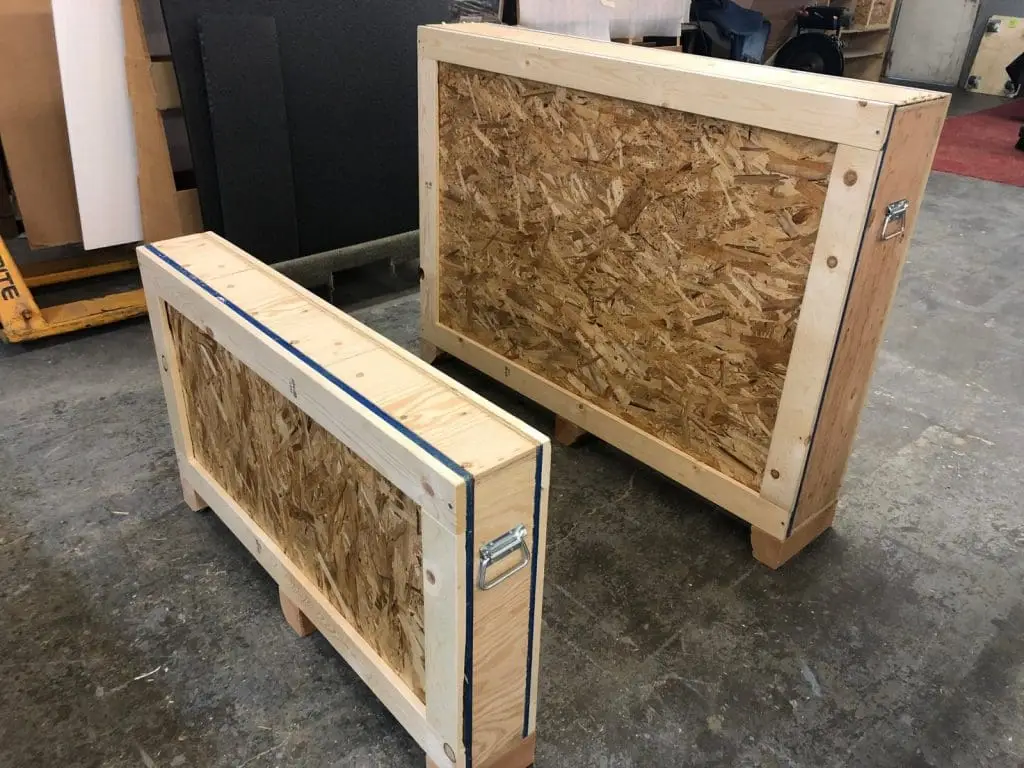
A fit that includes room for the packing system
Customization lets the provider account for the object's shape, weight and planned orientation. A fitted interior can reduce unwanted movement while protecting the areas that must remain untouched.
Allow space for the intended supports and safe handling. A tight box around the object's dimensions is not necessarily a safe fit. For fragile frames or unprotected paint surfaces, discuss whether a travel support is needed.
Export preparation for the actual destination
If the journey is international, check the applicable requirements for regulated wood packaging before construction. The complete package may include solid-wood supports as well as the visible crate.
ISPM 15 treatment and marking address plant-pest risk. They do not prove conservation suitability, provide an export permit for the artwork or guarantee customs release. Coordinate those separate requirements with the appropriate specialists.
Documented access and security
Locks and tamper-evident seals may be useful where available and appropriate. Confirm how authorized handlers or inspectors will gain access and who records package and seal identifiers.
Security is also a handoff process. Keep condition photographs and an inventory, identify the receiving contact and review any insurance arrangements. A lock does not establish theft-proof transport or coverage for every loss.

A plan for long journeys and repeat use
A sturdy enclosure can be designed for the expected handling and access needs of a multi-stage journey. Ask how the crate and its contents will be supported through transfers and what the destination needs to open it.
Long travel times and temperature changes still require separate assessment. Specify appropriate transport and storage conditions for sensitive art rather than assuming the wood controls its environment.
For repeat exhibitions, inspect the crate, closures and interior supports between trips. Retain a packing diagram and reassess the design when the object, route or condition changes.
PLAN YOUR CRATING
Review the right crate for your artwork
Contact Crates of Las Vegas about art crating and packing with condition photographs, dimensions and any conservator's instructions. Share the journey and reuse plans so each proposed feature has a clear purpose.
Discuss your crating projectMORE CRATING GUIDES




