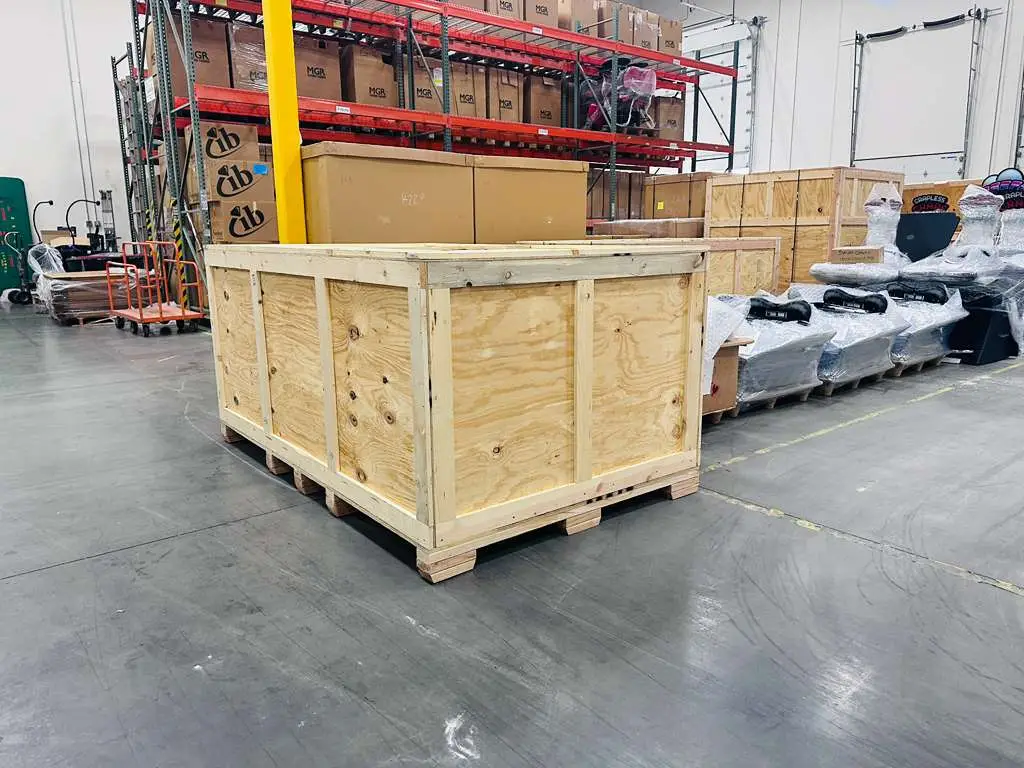

Industrial crating
The Ultimate Guide to Custom Crating for Industrial Shipping
Custom crating starts with understanding the shipment. Heavy machinery needs a base and restraints suited to its load; precision instruments need protection for vulnerable components; oversized equipment needs a workable lifting and unloading plan. A crate should be designed around those requirements and the route it will travel.
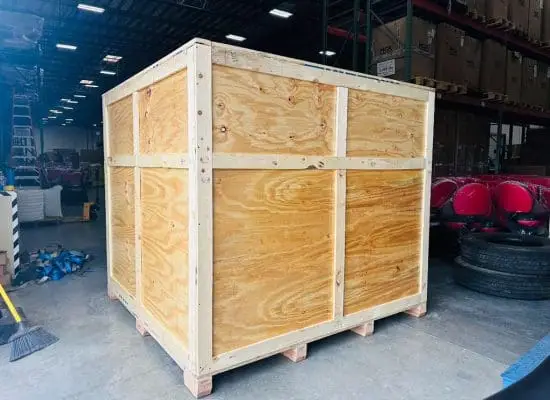
For a Las Vegas business preparing industrial equipment, artwork, or an exhibit for transport, the useful questions are practical: what needs support, what can move, what conditions will the shipment face, and who will handle it at each end?
Understand what a custom crate needs to do
A custom crate is a fitted shipping enclosure with an internal packing system suited to the item. The outer structure helps resist handling impacts and contact with other freight. Its base carries the load, while blocking, bracing, and cushioning address movement and vulnerable parts inside.
Start with accurate dimensions and weight, photographs, the item's condition, and manufacturer instructions. Identify projections and fragile areas separately from the main body. Explain whether the shipment will make one journey, return from an event, or travel repeatedly.
- Structure: Design the base, framing, and panels around the load and handling method.
- Restraint: Support the item at suitable points and keep it from shifting into the enclosure.
- Cushioning: Select materials and thickness for the item's weight and fragility.
- Access: Provide a practical loading and opening sequence for the people using the crate.
- Environment: Identify moisture, temperature, or cleanliness limits before choosing protective materials.
These decisions work together. Adding foam without considering load and support does not establish how a heavy or delicate item will behave in transit. An enclosed wooden crate also should not be assumed to be waterproof, climate-controlled, or theft-proof.
Plan for heavy machinery and industrial equipment
Heavy equipment requires verified load information. Give the crate builder the machine's dimensions, weight, center of gravity where available, and approved lifting or attachment points. Include transport instructions for moving assemblies, removable parts, fluids, and electrical components.
The packaging may use a skid or reinforced base, blocking and bracing, protective covers, and separately packed accessories. The right configuration depends on the machine and the carrier's handling system. A full wooden enclosure is one option; some loads require a different engineered support or transport arrangement.
Coordinate the finished package with the carrier before construction. Confirm gross weight and dimensions, forklift access, lifting clearances, loading capacity, and destination unloading equipment. Heavy equipment can outgrow a quoted freight plan once its crate and supports are included.
On-site crating can reduce the need to move an item unprotected to a packing facility. Confirm workspace, site access, and responsibility for disconnection, rigging, packing, and loading. Ask about availability and lead time rather than assuming those tasks are included in a crate quote.
For road transport, vehicle securement needs its own review. The FMCSA cargo-securement overview distinguishes general requirements from rules for particular types of cargo. A crate does not replace the carrier's responsibility to use the applicable restraint system.
Adapt protection for artwork and high-value items
Artwork and collectibles need a different approach to contact materials and supports. A fragile finish, delicate frame, or projecting element may be damaged by packing that would be acceptable for a robust industrial part.
Record condition before packing, and have a qualified conservator or art handler identify requirements for sensitive objects. Use supports that avoid concentrating pressure on vulnerable areas. Keep the unpacking sequence clear so the recipient does not need to move or pry against the object to remove it.
The Canadian Conservation Institute's transport guidance explains how the object, support, cushioning, and shipping container work as a system. For valuable artwork, agree on the specific packing treatment instead of relying on a general description such as “museum-quality.”
Discuss any environmental limits and planned storage as part of the route. Insulation, barriers, and controlled transport have different functions; the right combination depends on the object and conditions.
Make trade show crates practical to reuse
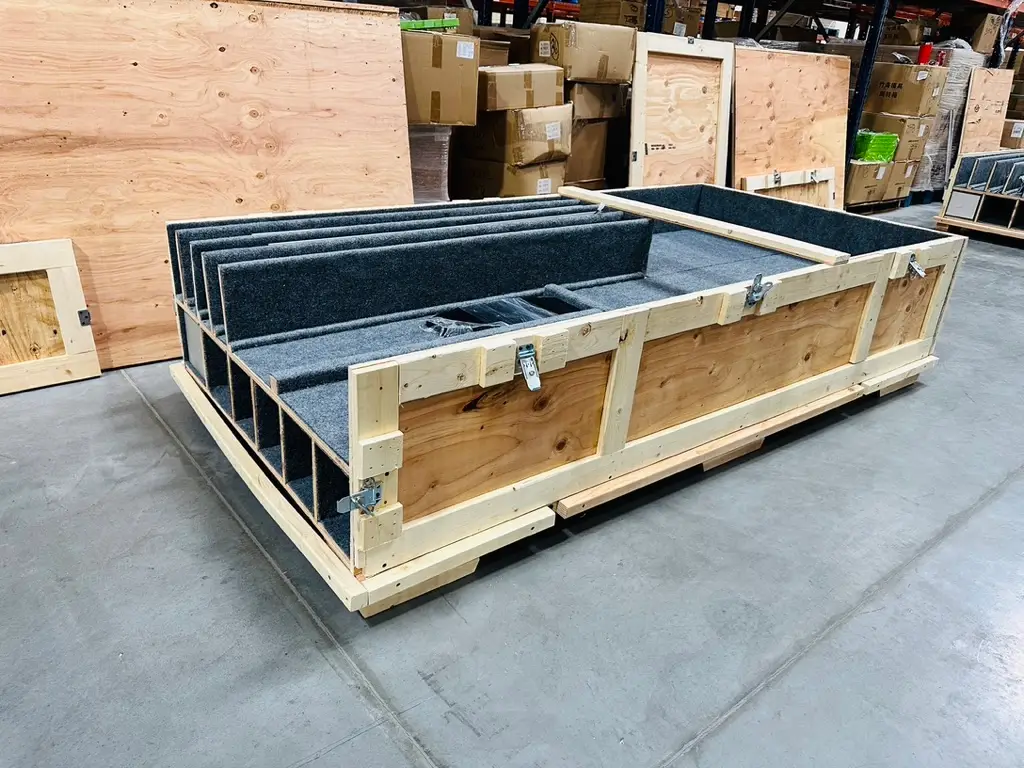
Booths, monitors, demonstration equipment, and promotional displays often travel out and back repeatedly. A reusable crate can be designed around that cycle, including removable panels, durable closures, fitted compartments, and a documented packing layout.
Separate delicate screens and finishes from structural components and loose hardware. Number parts or compartments where useful, and include photographs that show the correct loading order. Keep cushioning and fasteners with the crate during the event so the outbound protection can be recreated.
Confirm the venue's receiving window, labeling instructions, unloading arrangements, empty-container storage, and move-out requirements. Repeated use can spread the cost of packaging over several trips, but storage, return freight, repairs, and changes to the exhibit also affect that decision.
Inspect the crate and its internal supports before every reuse. A container that looks sound externally may have loose fittings or damaged cushioning inside.
Check export packaging and environmental requirements
For an international shipment, review the destination's wood-packaging rules before selecting materials. ISPM 15 addresses pest risk associated with regulated raw-wood packaging and dunnage. Certain processed-wood packaging, including qualifying plywood, is excluded; solid-wood framing or runners still need to be considered. See the IPPC's overview of ISPM 15.
Where required, obtain appropriately treated and officially marked packaging through a compliant supplier. Heat-treated lumber by itself should not be treated as proof that a completed crate carries the necessary mark. Ask the supplier and broker what applies to the finished package and route.
Wood treatment is separate from corrosion protection, moisture management, and temperature control. It also does not complete the customs documentation for the goods. Coordinate the packing list, commodity information, values, destination requirements, and any return arrangements with the responsible shipping professionals.
Review the finished shipment before pickup
A final inspection should confirm that the item is supported, loose components are secured, closures are complete, and the package matches the booked handling method. Record photographs before and after closing the crate.
Check labels, destination details, handling instructions, gross weight, and any required wood-treatment marks. Provide the recipient with the packing list, opening instructions, and any equipment needed to unload or remove the item.
At delivery, inspect for visible damage, document concerns, and follow the carrier's reporting procedure promptly. Keep packaging and records if damage needs investigation. Any equipment requiring recommissioning should be checked by the appropriate personnel before use.
PLAN YOUR CRATING
Request an industrial crating assessment
Send Crates of Las Vegas the item's dimensions, weight, photographs, pickup location, destination, and target shipping date. Include manufacturer instructions, loading constraints, export details, and whether on-site packing or repeat use is part of the plan.
Contact Crates of Las Vegas to discuss the crate and protective packing your shipment requires.
Discuss your shipmentMORE CRATING GUIDES