
Heavy equipment logistics
Shipping Heavy Equipment: A Step-by-Step Logistics Guide
Shipping heavy equipment requires a plan for the machine, its packaging, the vehicle, and the people who will load and unload it. Dimensions and weight affect the crate and freight booking, while fragile components, approved lifting points, and destination access can change the entire handling approach.
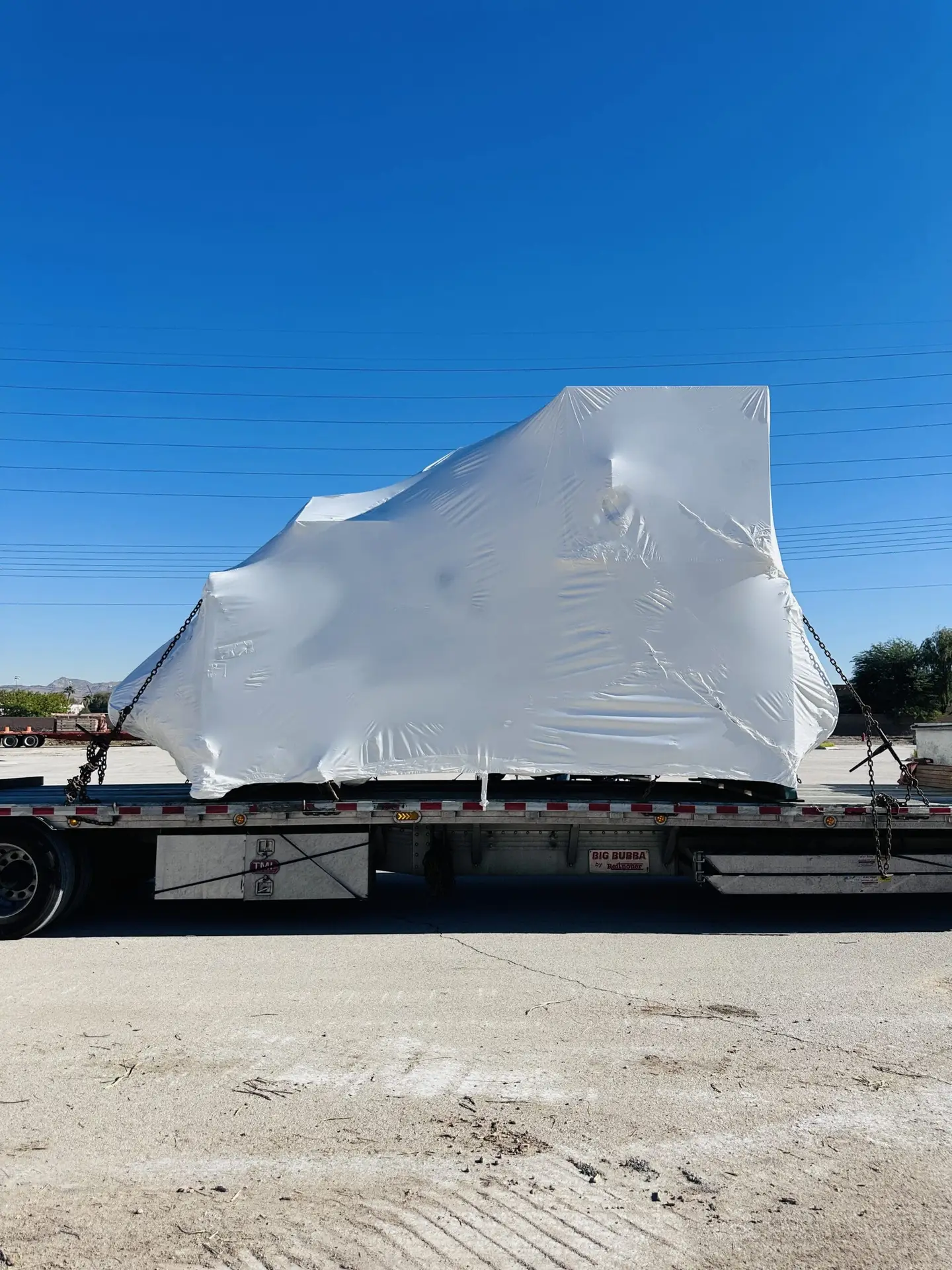
Use this step-by-step guide to prepare a clear brief for your crating provider and carrier. Manufacturer instructions and the requirements of qualified riggers or equipment technicians should guide the work on the particular machine.
Assess the equipment and the route
Collect the information needed to understand the load before requesting a crate or freight quote. Measurements should include projecting controls, handles, guards, and any parts that will remain attached during transport.
- Verified equipment dimensions and weight
- Center of gravity and approved lifting or attachment points, where available
- Fragile assemblies, finishes, electronics, and moving parts
- Manufacturer transport and preparation instructions
- Pickup and delivery access, including doorway and loading constraints
- Planned transport mode, destination, deadline, and any return journey
- Environmental limits or regulated contents that need separate review
Photograph the equipment and document existing damage. Identify the person authorized to approve preparation and packing decisions. If accessories will be removed, record their identity and where they will be packed.
Confirm whether the quoted freight dimensions will refer to the bare machine or the finished package. Crating adds size and weight, and those changes can affect handling capacity, rates, or transport arrangements. For an international shipment, give the destination details to the crate supplier and broker at this stage.
Prepare the machine before packing
Ask the manufacturer or responsible technician how the equipment should be shut down, disconnected, cleaned, and restrained for transport. Moving assemblies may need approved transport locks or braces, and some components may need separate packaging.
Do not improvise lifting points or attach restraints to controls, guards, or other parts that are not intended to take the load. Where fluids, batteries, pressure vessels, or other regulated materials are present, have the responsible shipper and carrier determine the necessary preparation and documentation.
Agree on who will perform each task. A crating appointment does not necessarily include electrical disconnection, mechanical dismantling, decontamination, rigging, or recommissioning. Clear responsibilities help keep packing work from starting before the machine is ready.
Select the base, enclosure, and internal protection
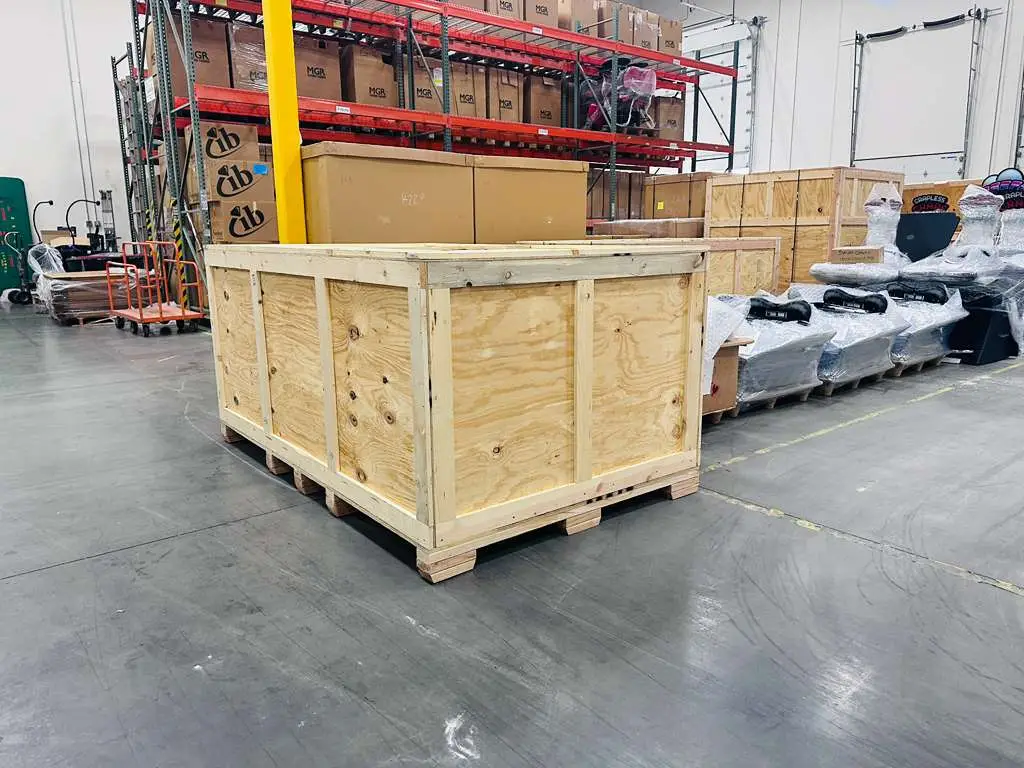
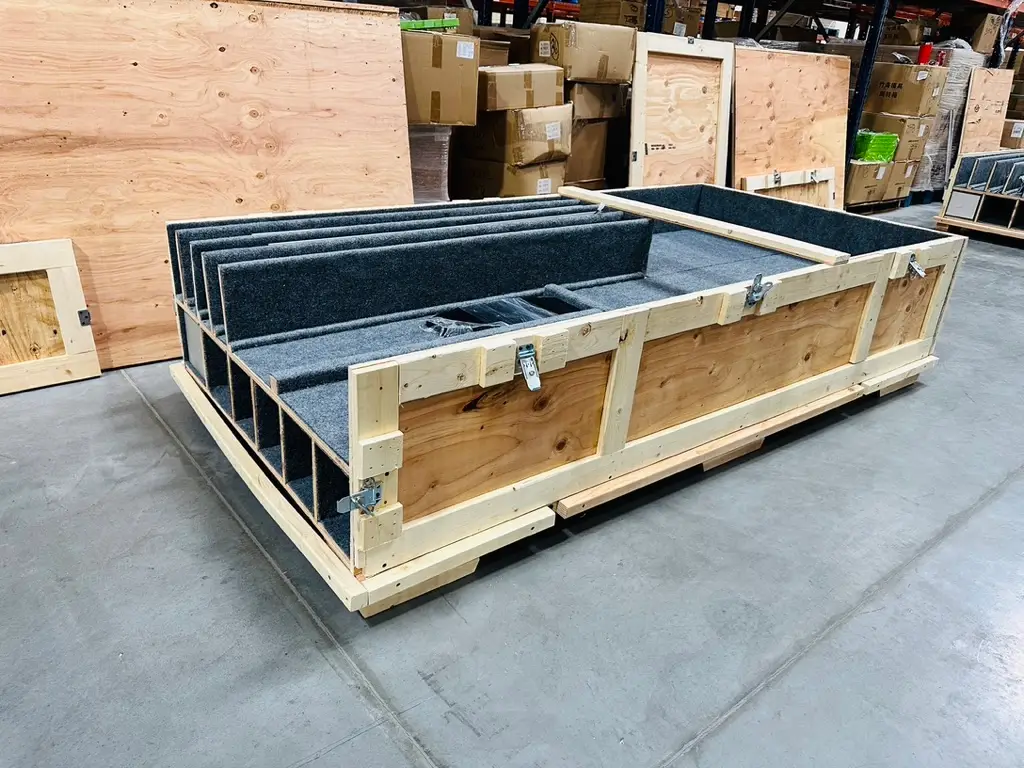
The crate's structure should support the actual load and intended handling method. Depending on the equipment, the design may include a reinforced skid, an enclosed crate, internal blocking and bracing, protective covers, or individually packed attachments.
Cushioning is selected for the parts that need it. Foam that works for a small instrument may compress too far under a heavier load, while poorly placed support can put pressure on a vulnerable assembly. Discuss the item, loading, and expected transit hazards with the packaging designer rather than choosing materials by appearance alone.
Confirm that the finished package can be loaded and unloaded using the available equipment. Consider forklift entry, lifting clearances, gross weight, and the opening sequence at the destination. If the shipment will travel repeatedly, discuss reusable closures and replaceable internal supports.
New materials or modular designs may be useful, but ask what requirement they address and how their performance will be assessed. There is no general percentage reduction in damage that can be promised simply by selecting custom crating.
Decide whether on-site crating is appropriate
On-site work can be practical for equipment that is difficult to move unprotected to a packing facility. It allows the packing team to work where the item is located, but access and safe working conditions still need planning.
Provide the site address, contact, access hours, photographs, and any relevant restrictions. Confirm workspace, loading access, and who supplies the appropriate lifting equipment. Identify whether the machine can remain in its current position while the crate is built or must first be moved to a suitable packing area.
Coordinate the packing sequence with the carrier's pickup. Allow time to inspect the finished crate and resolve any issue before loading. Avoid assuming that immediate turnaround, specialized rigging, or controlled-environment packing is included unless the provider has confirmed it for the job.
Digital photographs and packing records are useful for handoff, especially when the people receiving the machine were not present during packing.
Coordinate freight and vehicle securement
Choose transport around the completed package and the route. Discuss ground, air, or ocean options with the freight provider as applicable, including receiving appointments, unloading capacity, and any permit or route-planning needs for an oversized load.
Securing the machine inside its crate is separate from securing the package on the vehicle. The carrier and qualified loading personnel must use the relevant cargo-securement requirements. The FMCSA rules include specific provisions for heavy wheeled or tracked equipment weighing at least 10,000 pounds, as well as general and other cargo-specific rules. Those provisions should not be applied as a universal recipe for every industrial machine.
Provide accurate shipment descriptions, weights, dimensions, contacts, and handling instructions. Orientation and weight labels help communicate the plan, but they do not replace suitable packaging or securement.
Confirm tracking arrangements and how delays will be communicated. If you are arranging cargo coverage, review it with the responsible provider, including limits and exclusions. Tracking and coverage address different risks and neither prevents physical damage.
Review export packaging and shipment documents
For international moves, ask the supplier and broker to check the destination's wood-packaging requirements. Where ISPM 15 applies to solid-wood components, the required treatment and official marks need to be in place before dispatch. The U.S. APHIS export guidance explains how to source compliant packaging.
Separately confirm the cargo documentation, including the item description, quantities, values, and any necessary permits or special declarations. The specific documents depend on the goods and route. A marked crate does not establish compliance for the machine inside it or guarantee customs clearance.
If condition monitoring is needed, agree on which conditions to measure, acceptable limits, device placement, and who will review the results. Data loggers or alerts can support an investigation or response plan; they do not replace cushioning or temperature-controlled transport.
Inspect at pickup and delivery
Before pickup, check the packing, closures, restraints, labels, and access points against the plan. Photograph the secured item before closing and the completed package before loading. Retain the packing list and handling instructions with the shipment records.
Make sure the receiver knows the unloading and opening sequence and has appropriate equipment available. At arrival, inspect the outside of the package and document visible concerns. Follow the carrier's reporting procedure promptly and retain packaging if an investigation is needed.
After unpacking, inspect the equipment and accessories. Manufacturer-required calibration, testing, or recommissioning should be completed by the appropriate personnel before the machine returns to service. Record any lessons about packing or handling before the next shipment.
PLAN YOUR CRATING
Prepare a heavy-equipment crating quote
Send Crates of Las Vegas the equipment dimensions, verified weight, photographs, pickup location, destination, and target shipping date. Include manufacturer instructions, lifting details, site constraints, and whether you need on-site packing.
Contact Crates of Las Vegas to discuss the crate and protective packing for your equipment.
Discuss your shipmentMORE CRATING GUIDES