LAS VEGAS · CRATING GUIDE
Fine Art Crating: Protection, Handling and Shipping Planning
Fine art crating begins with the artwork's condition and vulnerabilities. A painting, sculpture or installation may need protection from different hazards, and its materials can limit where wrapping or supports may touch. The crate must be part of a considered transport plan.
For a valuable or fragile work, involve the owner, appropriate conservator, packing provider and transport team early. Their responsibilities should be clear before the artwork is handled or the crate is designed.
Assess the artwork and the journey
Record the piece's dimensions, weight and current condition, including frame details or removable components. Identify fragile surfaces, loose parts, projecting elements and other concerns. Ask a conservator whether the work is suitable for travel if its condition is uncertain.
Describe the transport route, expected transfers and any temporary storage. The Canadian Conservation Institute's shipment-planning guidance connects an object's vulnerability with the hazards it may encounter. This gives the packing discussion a specific purpose.
Design support and cushioning around the piece
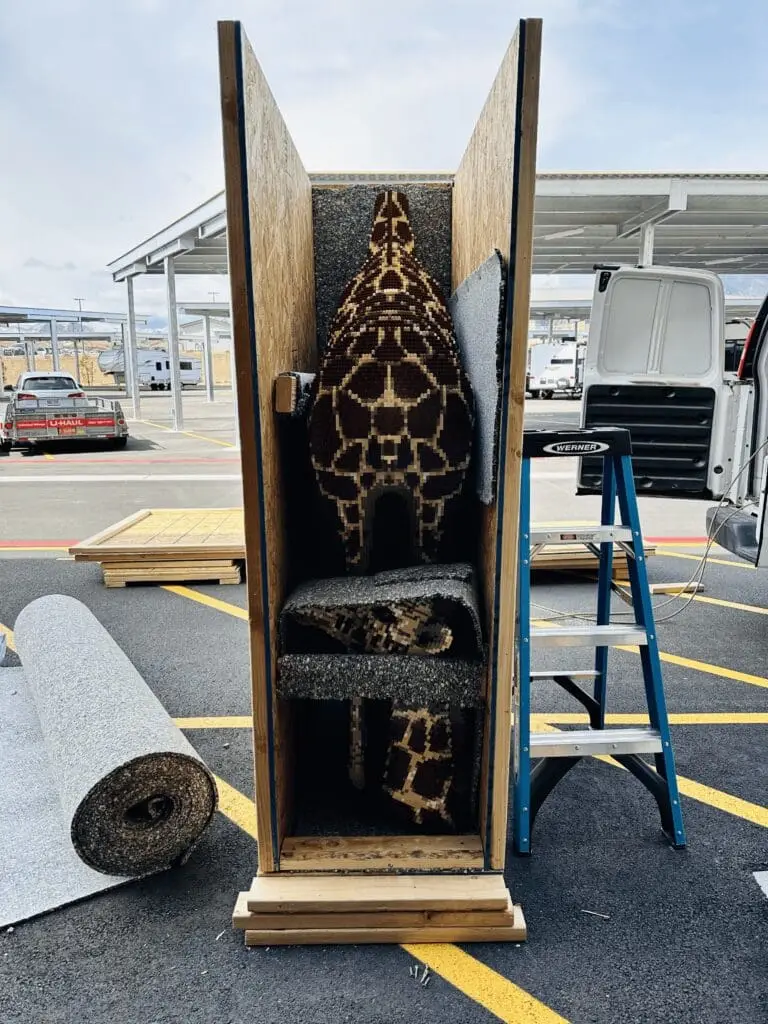
The strongest-looking crate can still be unsuitable if its internal supports put pressure on the wrong place. Discuss safe contact points, compatible surface protection and the clearance required for cushioning. Delicate projections should not be used to restrain an object.
Support, cushioning and the enclosure play different roles. A secure internal arrangement should remain stable while allowing the protective system to work. Plan the opening sequence at the same time, so removing a panel or support does not put the artwork at risk.
- Label the crate and contents consistently.
- Provide an inventory for multi-part works.
- Document the packed arrangement where appropriate.
- Give the receiver clear unpacking and repacking instructions.
Address environment and storage explicitly
A crate may help buffer changes, but it is not an active heating or cooling system. The CCI technical bulletin on artwork transport distinguishes passive packaging protection from controlled transport conditions.
Ask the artwork's specialist to define any required environmental conditions, then confirm how the carrier and storage provider will meet them. Do not assume that a sealed enclosure, moisture-resistant coating or indoor storage is enough for every work.
Check international packaging and cargo requirements
For an overseas move, ask the freight provider or broker about regulated wood packaging, destination rules and the documentation for the artwork itself. The IPPC explains ISPM 15 as a wood-packaging pest-risk standard.
Appropriate treatment and marking do not guarantee clearance, protect against all pests indefinitely or certify the crate's structural performance. Review the export plan separately from the artwork's physical packing needs.
Keep custody and value protection clear
Agree who may access the work, who receives it and how its condition will be checked at handoffs. Ask the actual transport or storage provider about any tracking, access-control or monitoring arrangements; those features should be confirmed rather than assumed.
Review the shipment's value and any insurance or carrier terms with the responsible provider. High-quality packing can address identified risks, but it does not replace coverage or guarantee that a loss can be fully repaired.
PLAN YOUR CRATING
Discuss a fine art crating project
Send Crates of Las Vegas photographs, dimensions, condition information and the proposed route. Include any conservator instructions and receiving requirements so the crating discussion starts with the needs of the artwork.
Discuss your crating projectMORE CRATING GUIDES