

On-site crating
On-Site Crating Services in Las Vegas: What to Expect
On-site crating brings the packing and crate-assembly work to the item. It can be useful when machinery, artwork or other large cargo would be difficult to move to a shop before it is protected.
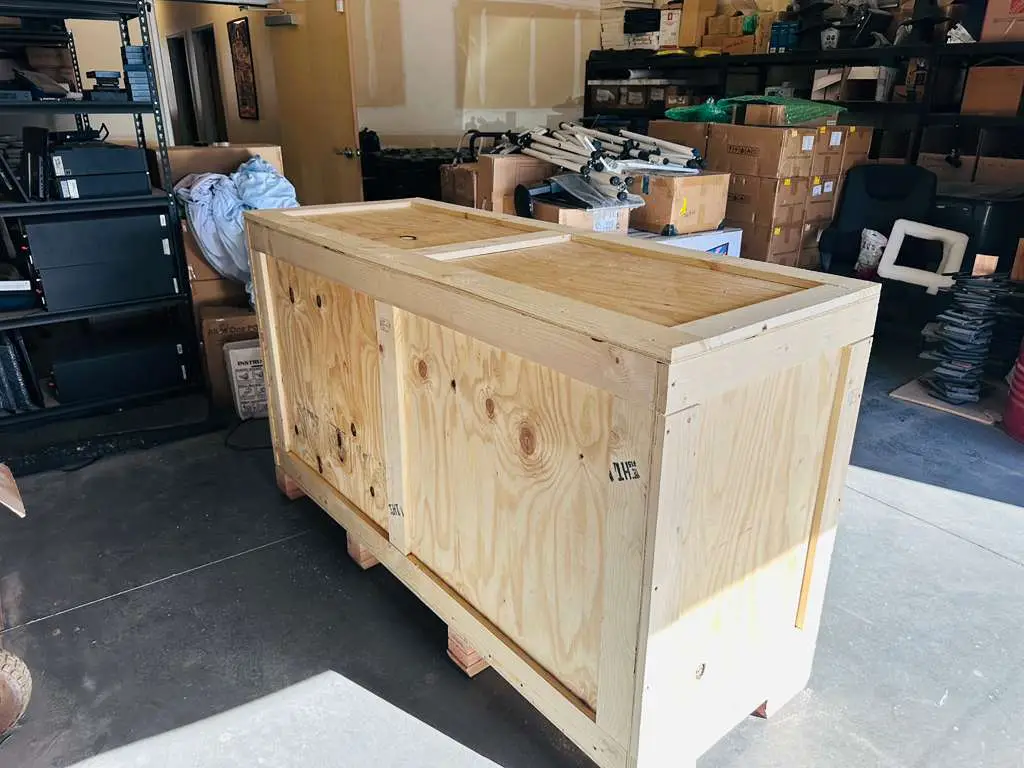
For a Las Vegas business, gallery or homeowner, the main planning questions are straightforward: what needs to be packed, where the team can work, how the completed crate will leave the property and who will arrange the freight. Understanding that process helps you request an accurate scope and prepare for the visit.
How On-Site Crating Works
A crating team assesses the item's dimensions, weight, shape and vulnerable areas, then plans a crate and internal protection for the shipment. Depending on the job, components may be fabricated in advance and assembled at the pickup location, or additional construction may be completed on site.
The assessment should include the full journey. A crate that fits around an item still needs to pass through doors, elevators and loading areas. The packed weight must be compatible with the handling equipment available at both ends.
For export shipments, identify the destination before fabrication. Regulated wood may need to meet ISPM-15 requirements, with marking controlled by an authorized provider. APHIS explains the U.S. sourcing and marking process. An on-site visit does not itself confer certification or guarantee customs clearance.
Potential Benefits of Mobile Crating
Packing at the item's location can remove a separate trip to a crating facility. That may reduce handling of an unprotected item and simplify coordination when equipment is already difficult to move.
On-site work also allows the team to check the fit against the actual item. Bracing, removable panels or cushioning can be adjusted around protrusions and access points identified during the assessment. Any changes should still follow the item's handling restrictions.
For trade-show displays and event equipment, packing near the point of use can help organize components for the return trip. Venue move-out rules, contractor access and freight pickup windows must still be confirmed in advance.
Timing and cost depend on the job. Travel, work-space restrictions, lifting equipment, fabrication and carrier scheduling can affect the quote. Compare the complete on-site scope with a shop-built alternative rather than assuming one will always be faster or cheaper.
Items That May Suit On-Site Crating
Machinery and industrial equipment
Large machines may be difficult to move safely before they are secured to a suitable base. Provide the verified weight, center of gravity, mounting points and manufacturer handling instructions. Confirm whether disconnecting, lifting or rigging is included or needs a separate qualified contractor.
Artwork, antiques and large furniture
Sculptures, framed works and delicate furnishings may benefit from being assessed where they are displayed or stored. Surface condition, fragile projections and access constraints affect the packing method. Conservation-sensitive work may need a conservator's advice before wrapping or supporting it.
Electronics, laboratory and medical equipment
Sensitive equipment can require product-specific restraints, compatible materials or electrostatic precautions. Follow manufacturer instructions for shutdown, transport locks and accessories. Crating alone does not establish that calibration will be preserved or that an item is ready for use after arrival.
Trade-show and exhibition components
Reusable crates can be planned around an inventory of components, removable supports and a repeatable packing sequence. Include the return shipment and storage arrangements when discussing the design.
The On-Site Crating Process
1. Share the shipment details
Send photographs, dimensions, weight, destination and the required pickup window. Identify fragile surfaces, liquids, batteries, loose components and any manufacturer restrictions so the team can determine what needs further review.
2. Confirm access and the work area
Discuss parking, loading docks, door clearances, elevators and space for assembly. Confirm building or venue rules, any required appointments and whether power or special access is needed. Keep the proposed route clear before work starts.
For a more detailed preparation brief, see our on-site crating access and workspace guide.
3. Fabricate, fit and pack
The team prepares the base, panels and supports, then checks fit and access. Cargo is restrained at appropriate points, with cushioning or barriers selected for the item and route. A close-fitting crate still needs enough room for the designed protective system.
4. Inspect and prepare for pickup
Check the closure, handling information, external dimensions and gross weight. For export, verify applicable wood-packaging marks and the rest of the shipping requirements. Confirm who loads the crate, what equipment is needed and when custody passes to the carrier.
Choosing a Las Vegas Crating Provider
Ask for experience relevant to your cargo and a clear written scope. Useful questions include:
- What measurements or specifications are needed before the quote?
- Which work is completed on site and which is prepared in advance?
- Are lifting, rigging, disconnecting or loading included?
- Who supplies and marks regulated export wood?
- What access, workspace and equipment must the customer provide?
- Does the quote include freight, or only packing and crating?
- How will changes to dimensions, weight or the schedule be handled?
Reviews and examples can help you assess experience, but the agreed scope should define what will happen on your job. Confirm availability rather than relying on general promises of rapid turnaround.
PLAN YOUR CRATING
Discuss an On-Site Crating Visit
Share the item details, pickup address, access restrictions and destination with Crates of Las Vegas. Those details help establish whether on-site crating is suitable and what preparation is needed.
Contact our team about on-site crating.
Discuss your crateMORE CRATING GUIDES



