

LAS VEGAS · CRATING GUIDE
Custom Wooden Crates for Las Vegas Packaging Projects
Custom wooden crates can be considered when a product needs an individual fit, a defined support arrangement or packaging suited to repeated handling. For Las Vegas businesses, the decision should connect the cargo, transport route and receiving process.

This guide reviews the potential benefits, applications and provider questions. A custom crate is a project-specific option; its value depends on the complete design rather than broad promises about strength, savings or presentation.
Identify the packaging problem first
Describe the item, its dimensions and weight, and what the package needs to accomplish. Include fragile areas, approved support points, detachable components and the planned shipping orientation. Provide photographs and manufacturer or owner instructions where available.
If an existing package is being replaced, explain why. Poor access, repeated damage, an awkward fit and unnecessary handling are different problems. A clear brief helps the provider address the relevant issue rather than add features without a purpose.
Evaluate the potential benefits
Protection matched to the item
Review the base, enclosure and interior arrangement together. Ask how the design supports the load and addresses its vulnerable areas. No package should be described as immune to damage under all conditions.
Useful customization
Discuss the required dimensions, opening method and component organization. Ask which optional inserts, closures, markings or finishes are available. Confirm their purpose and inclusion in the quote.
Repair and reuse
If the crate will travel again, plan storage, inspection and repair from the start. Label removable parts and retain a packing reference. Request evidence for sourcing or recycled-content claims rather than treating all wood crates as environmentally equivalent.
Cost over the whole project
Compare construction, interior materials, packing labor, transport, return logistics, storage and repair. Potential savings from reuse or reduced damage need to be evaluated against your own shipment pattern and results.
Presentation and receiving
If customers will see the crate, explain the intended appearance and opening experience. Keep practical labels and instructions visible. Packaging can support a visual identity, but increased customer loyalty or sales should not be promised without evidence.
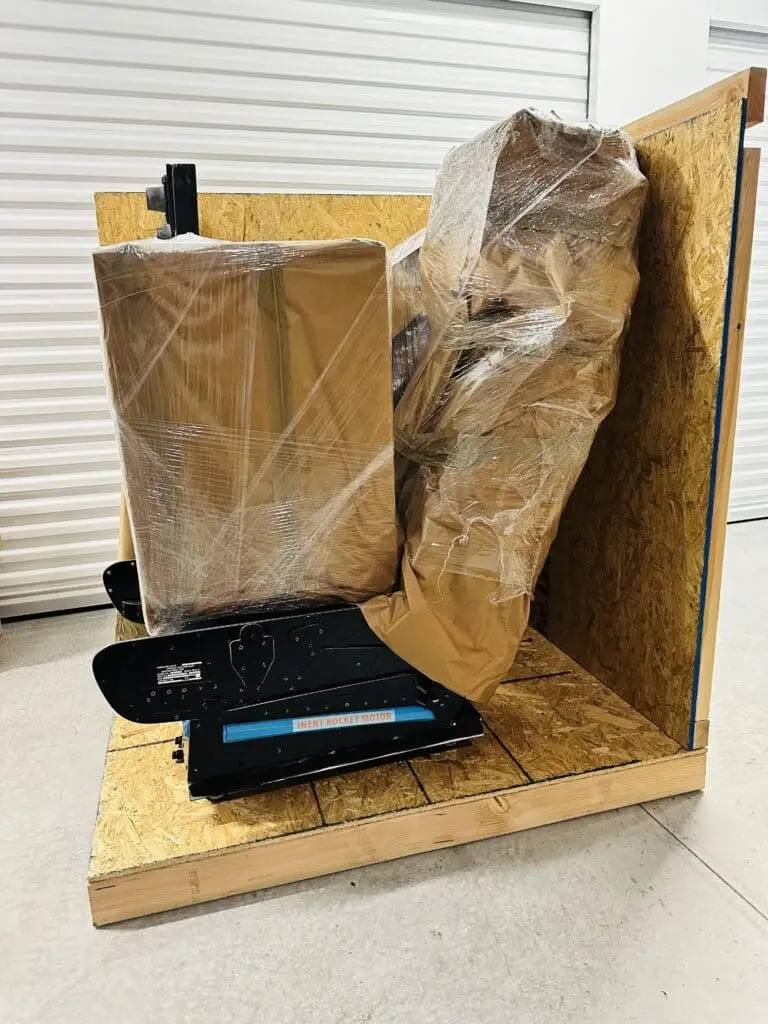
Adapt the brief to the industry
Entertainment and hospitality
For props, equipment and decor, provide the installation sequence and receiving requirements. Check event or venue instructions for delivery, unloading, empty-crate storage and outbound collection. A custom enclosure cannot resolve a missing logistics booking.
Retail and e-commerce
Consider whether a crate is justified by the product's dimensions, fragility or presentation needs. Tell the provider who will unpack it and what tools or assistance will be available. Standard packaging may remain appropriate for other products.
Manufacturing and industrial cargo
Include weight distribution, approved lifting and mounting points, and transport preparation instructions. Ask for a review of the finished packed dimensions and the carrier's handling requirements. International wood-packaging compliance must be considered separately from structural suitability.
Art and antiques
Identify sensitive finishes, glazing and projecting details. Involve the owner or conservator when specialist handling or contact materials are needed. Keep condition photographs and clear opening instructions with the project records. For artwork-specific preparation, read our fine art crating and transport planning guide.
Food and beverage products
Do not assume a general shipping crate is suitable for direct food contact or temperature-sensitive food. The FDA's food-transport guidance addresses appropriate packaging, sanitary conditions and temperature control. Have the actual food product and transport plan reviewed by the responsible food-safety professional.
Compare providers using a defined scope
Ask for relevant examples and an explanation of the proposed approach. Experience claims alone do not show that a particular design fits your item. A useful conversation makes both responsibilities and limitations clear.
- Experience: request examples relevant to the cargo or handling challenge.
- Materials: ask what will be used and how the design supports the intended load.
- Customization: identify essential requirements and optional presentation features.
- Communication: confirm who reviews changes and approves the final configuration.
- Services: distinguish construction, packing, collection, delivery and transport.
Confirm availability and timing directly. Compare quotations against the same cargo information, destination and scope so omissions do not look like savings.
Prepare for packing and delivery
Before closure, check the inventory and record the packing arrangement. Confirm the crate identifier, finished dimensions and weight. Give the receiver the opening instructions and any special handling requirements.
For repeat use, retain those records and have the crate inspected after travel. Review changed contents or damaged components before the next shipment rather than assuming the original design remains suitable.
PLAN YOUR CRATING
Discuss your packaging project
Send Crates of Las Vegas the item details, destination and any storage, presentation or reuse goals. Ask the team to review the project and provide a clearly defined crating and packing scope.
Discuss your crate projectMORE CRATING GUIDES




