

LAS VEGAS · CRATING GUIDE
Wooden Crates and Weather Protection: What to Specify
A wooden crate can form part of an environmental-protection plan, but it is not automatically waterproof or climate-controlled. The required protection depends on the item, the route and how long the shipment may be exposed.
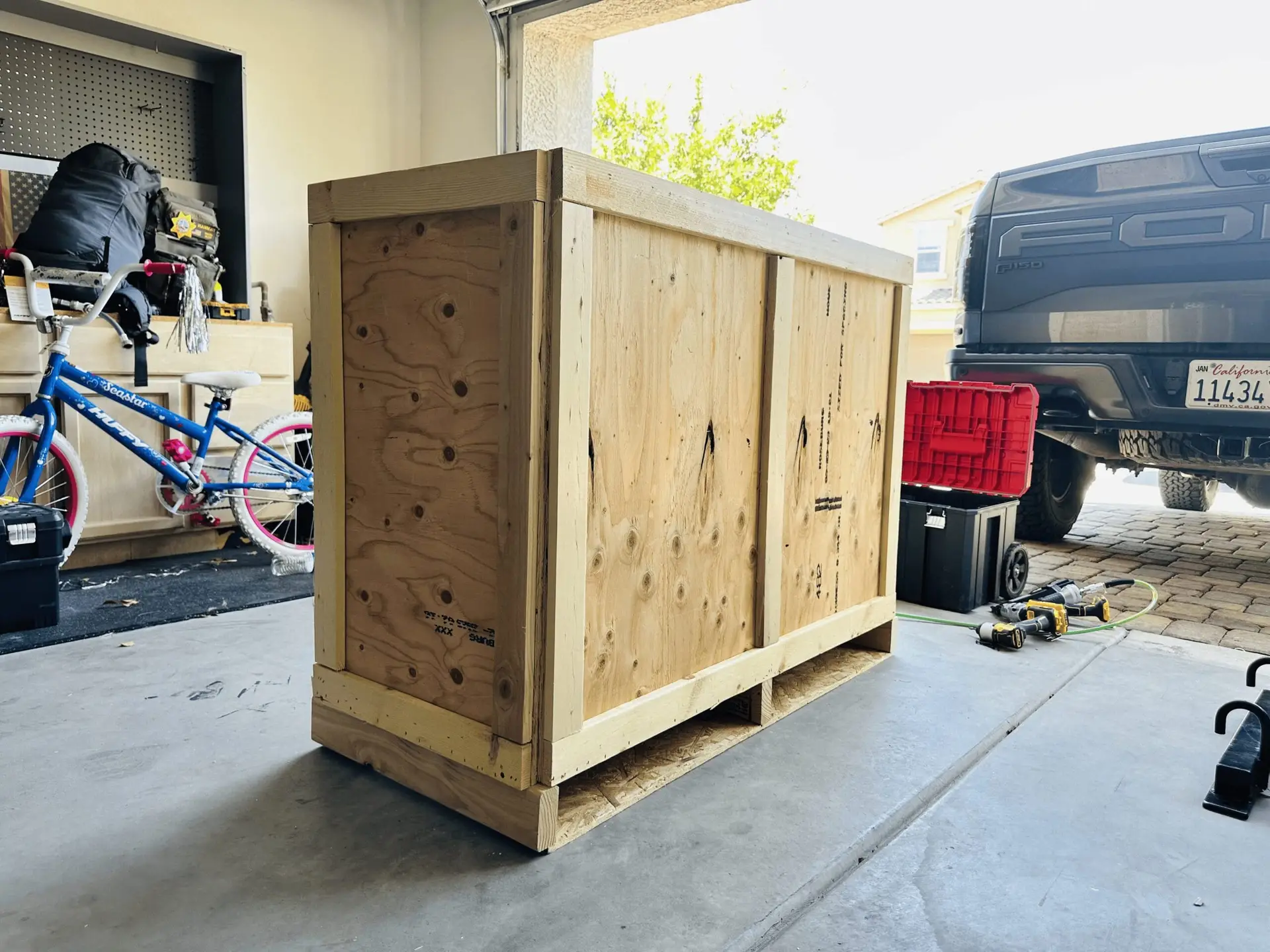
For artwork, electronics, equipment and antiques, discuss those conditions before construction. It is easier to specify the right combination of enclosure, interior packing and transport service when each hazard is identified separately.
Identify the exposure along the route
Consider pickup, loading, terminal transfers, delivery and any storage interval. Ask whether the shipment may wait outdoors, move through different climates or sit in an uncontrolled vehicle.
Get the item's environmental limits from the manufacturer or an appropriate specialist. A brief exposure and a prolonged holding period can require different arrangements even on the same route.

Separate rain, humidity and temperature protection
- Liquid water: discuss the enclosure and any specified protective covering or barrier.
- Humidity: assess the item's moisture sensitivity and the packing system's intended conditions.
- Temperature: determine whether insulation or a controlled transport/storage service is necessary.
- Dust: identify sensitive openings and appropriate approved protective layers.
USDA's wood-moisture guidance explains that wood interacts with moisture in its surroundings. Wood panels alone should not be relied on as a water-vapor barrier.
Ask a qualified packing specialist to specify any barrier, desiccant or insulation system for the actual item and journey. Do not add materials blindly or assume a logger can prevent an environmental excursion.
Keep the physical support plan intact
Environmental layers must work with the cargo's supports and cushioning. They should not introduce pressure on delicate surfaces, obstruct handling points or conceal information the receiving team needs.
Record dimensions, weight and safe support areas. Art and antiques may need conservation-compatible interfaces; equipment should follow its manufacturer's preparation instructions. The outer crate's strength does not make those requirements optional.

Review export and reuse requirements separately
Where required, arrange treatment and authorized marking of regulated wood packaging. ISPM 15 addresses plant-pest risk and does not establish weather resistance or guarantee admission at the border.
Inspect a reused crate and its protective layers before another shipment. A damaged seal, altered interior or different route may require a revised plan. Do not assume a previous successful trip validates all future uses.
Compare cost and sustainability with a defined scope
Ask the quote to identify the enclosure, packing, environmental features and any controlled transport services. Include finished size, weight and handling costs in the comparison.
Reuse and local material recovery may be useful, but verify the actual arrangements and any sourcing or recycled-content claims. No environmental benefit or cost saving follows automatically from choosing wood.
PLAN YOUR CRATING
Discuss environmental protection for your shipment
Contact Crates of Las Vegas about custom crates with the route and the item's environmental limits. Ask which hazards the proposed package addresses and which require a separately arranged transport or storage service.
Discuss your crating projectMORE CRATING GUIDES




