

LAS VEGAS · CRATING GUIDE
Hotel Art Crating: Plan Packing, Delivery and Installation
Hotel art projects need careful coordination before the first crate arrives. Paintings, sculptures and decorative installations may differ in size, material and condition, while deliveries must fit around loading access and the installation schedule. A useful crating plan protects each piece and keeps the project organized.

Begin with a piece-by-piece inventory and clear responsibility for packing, transport, receiving, storage and installation. Those services may involve different teams, so confirm the scope rather than assuming one booking covers everything.
Assess the artwork before planning the crate
Document each piece's dimensions, weight, material and condition. Note projecting details, fragile finishes, glazing or joints that should not carry pressure. Existing damage or unstable materials may require a conservator's advice before travel.
The Canadian Conservation Institute's painting-travel guidance explains why current condition and past records matter. A crate cannot correct an artwork's instability; the piece needs to be suitable for the proposed move first.
Tailor protection to each type of piece
Framed art, large canvases, glass objects and sculptures need different support arrangements. Discuss where supports can contact the piece, how cushioning will be selected and which surfaces must remain untouched. A fitted cavity should not press against delicate projections simply to prevent movement.
Provide the installer with the planned opening and removal sequence. For multi-part works, label the components consistently and keep the packing list matched to the crate. If the artwork requires environmental controls, specify them for the whole transport and storage period; a wooden crate is not active climate control.
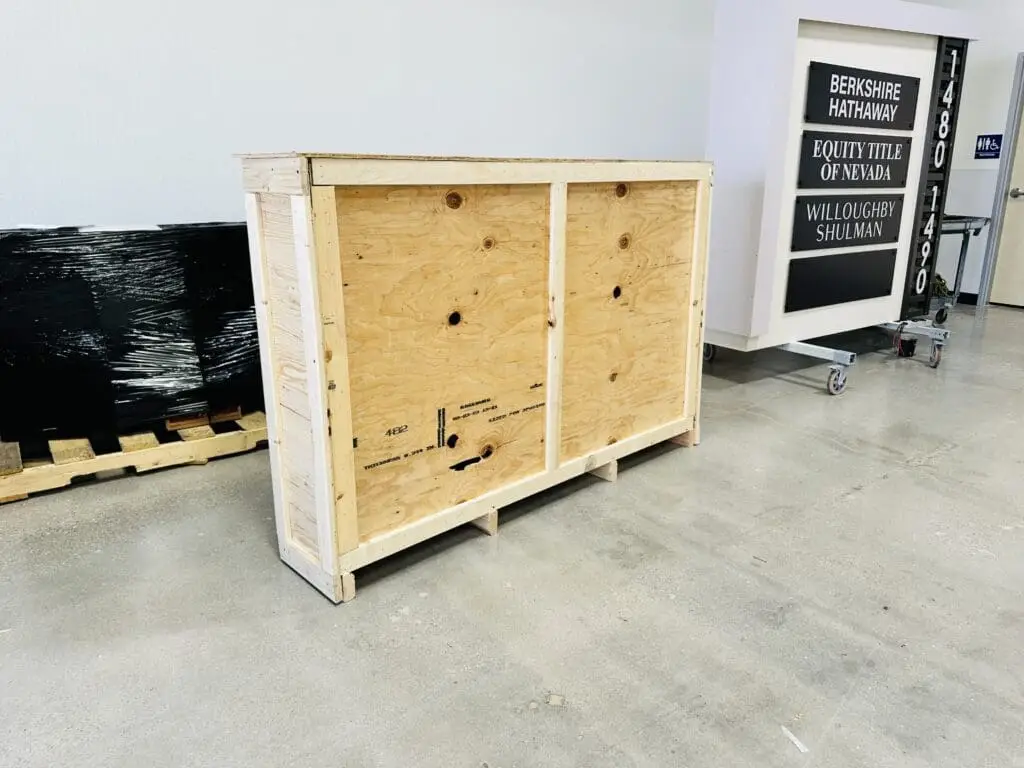
Coordinate delivery with the hotel
A delivery plan should connect the freight handoff to the installation team's work. Confirm dock appointments, vehicle access, unloading equipment and the route from receiving to the installation area. Include the completed crate dimensions when checking doors and elevators.
- Assign a unique artwork and crate number.
- Link each piece to its intended room or installation location.
- Identify the person authorized to receive and inspect it.
- Agree on when the installation team will be present.
- Plan where empty crates and reusable packing will go.
Discuss packing and delivery dates early, allowing time for inspection and unexpected changes. Crating does not guarantee an installation deadline.
Confirm storage conditions and custody
If installation is delayed, agree where the artwork will wait and who is responsible for it. Ask the actual storage provider about access controls, environmental conditions, inventory records and retrieval arrangements. Verify any claimed monitoring or climate-control service directly.
Keep crates away from unsuitable storage conditions and avoid opening them casually before the agreed inspection or installation. Any acclimatization or unpacking requirements should come from the artwork's conservator or responsible specialist.

Choose a clearly defined packing partner
Ask a crating provider to explain the proposed supports, protective materials, handling access and reusable features. Clarify whether the quote includes an on-site assessment, packing, carrier coordination or other work.
Make installation responsibility explicit, including mounting hardware and any building approvals. A packing provider's role should be confirmed separately from the art installer's work, even when both teams are contributing to the same project.
PLAN YOUR CRATING
Discuss crating for your hotel art project
Share the artwork inventory, photographs, dimensions and project schedule with Crates of Las Vegas. Include the receiving route, installation sequence and any storage or environmental requirements so the packing scope can be coordinated with the wider project.
Discuss your crating projectMORE CRATING GUIDES




