

Packaging choices
Custom Wooden Crates vs Standard Shipping Boxes
The right shipping container depends on the item, its weight and fragility, the carrier, and the journey. A custom wooden crate can be useful for heavy machinery, artwork, medical equipment and large exhibit components. A correctly specified corrugated box can also provide suitable protection for many shipments.
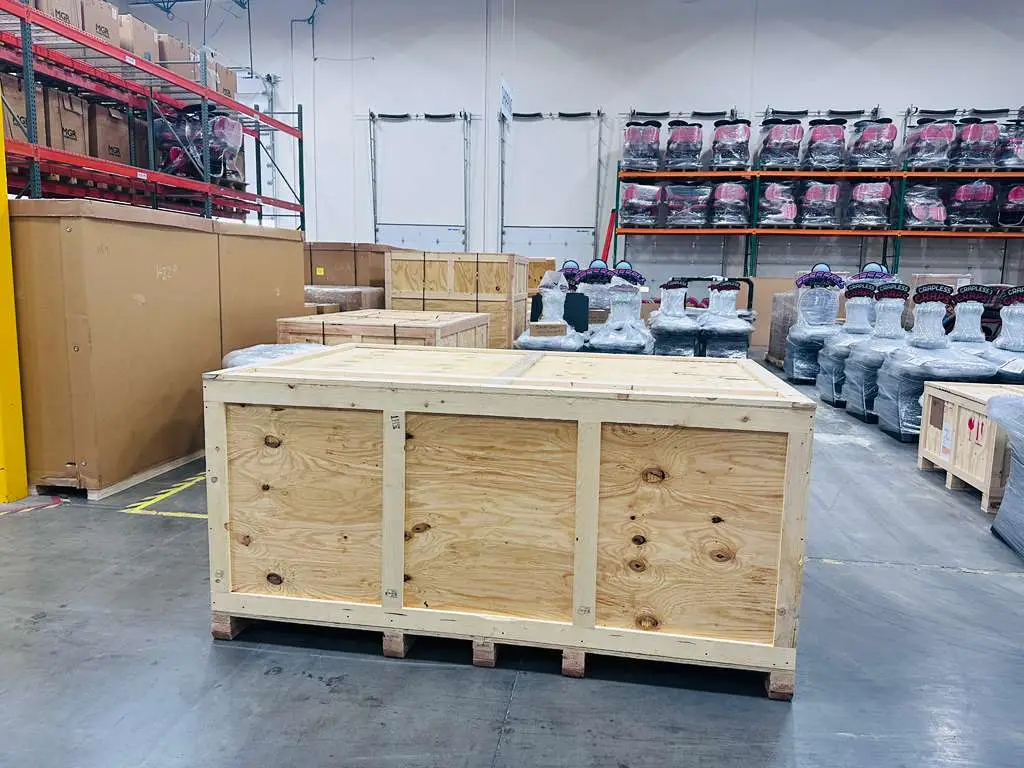
For Las Vegas businesses comparing the two, the useful question is what the complete packaging system needs to do. Consider the container, internal supports, handling arrangements and total shipping cost together.
Protection and Durability
A wooden crate provides a rigid enclosure and a base that can be designed around the load. Depending on the item, the design may include:
- Reinforced panels, framing and corners
- Blocking or bracing to restrain the load
- Cushioning selected for the item's weight and fragility
- A separate moisture-protection system when the route requires it
Corrugated packaging comes in different strengths and constructions. Its suitability depends on the packed weight, cushioning, stacking conditions and carrier limits. A lightweight box should not be assumed adequate for a heavy machine, but a wooden enclosure also needs a properly designed interior.
Heat treatment addresses wood-packaging pest requirements. It does not make a crate waterproof or supply shock protection.
Size and Customization
Custom crating is worth considering for oversized equipment, irregular shapes, modular trade show displays and fragile pieces that need support at specific points. The interior needs room for those supports and protective clearances, rather than simply a tight box around the item.
Standard boxes are convenient when an available size and strength suit the shipment. Oversized boxes can require excess void fill; undersized boxes can leave insufficient cushioning. Compare the final packed dimensions for both options before selecting a carrier service.
For repeat shipments, a dedicated crate can also organize accessories and provide a consistent packing arrangement.
Compliance and Export Standards
ISPM-15 concerns regulated wood packaging used in international trade. Cardboard is not subject to that wood-treatment requirement; neither is packaging made wholly from qualifying processed wood. Solid-wood skids or framing can change the assessment. See the IPPC's ISPM-15 standard.
A compliant wood-packaging mark is not approval of the cargo or a guarantee of customs clearance. Confirm the destination's requirements and the shipment documents with the freight forwarder or broker. International shipping is not, by itself, a reason to reject a suitable corrugated box.
Upfront Cost and Long-Term Value
Compare more than the purchase price of the container:
- Container construction and interior packing
- Packed weight and dimensions used for the freight quote
- Loading, unloading and delivery equipment
- Expected reuse, storage and return transport
- The consequences of damage or replacement
A custom crate may cost more and weigh more than a box. It can still be worthwhile when its protection, handling features or repeat use justify the expense. Savings depend on the shipment; neither option automatically lowers freight charges or damage costs.
Reusable crates should be inspected before each trip. Check the base, panels, hardware and interior supports, and confirm that the next load still matches the design.
Ideal Use Cases
When a Custom Crate Is Worth Considering
- Industrial machinery or other concentrated, heavy loads
- Delicate instruments with specific support requirements
- Artwork or collectibles needing a purpose-built enclosure
- Large exhibits or components that travel repeatedly
When a Shipping Box May Be Suitable
- Items within the box's rated capacity and carrier limits
- Products that can be protected with an appropriate cushioning system
- Shipments where a lightweight container provides sufficient protection
Choose by the actual load and transport conditions. Fragility alone does not settle the choice, and a familiar container should still be checked against the current shipment.
Frequently Asked Questions
Why choose a custom crate over a standard box?
A crate can provide a load-bearing base, rigid enclosure and item-specific supports where an available box cannot meet the shipment's needs.
Can custom crates be reused?
Some are designed for repeated opening and shipping. Reuse depends on condition, hardware, the next load and any applicable export requirements.
Are wooden crates automatically suitable for international shipping?
No. Material, treatment, marking, destination requirements and cargo documentation all need review.
Which items benefit most?
Heavy, irregular or high-consequence shipments often merit a custom design. Equipment specifications and the route determine the final choice.
Do standard boxes make sense for international shipments?
Yes, when their strength, dimensions and packing arrangement meet the item and carrier requirements.
PLAN YOUR CRATING
Compare Packaging Options for Your Shipment
Send Crates of Las Vegas the item dimensions, weight, photos, destination and expected number of trips. Discuss a custom crating quote and compare it with the other suitable packaging options before booking transport.
Discuss your shipmentMORE CRATING GUIDES



