
LAS VEGAS · CRATING GUIDE
Custom Shipping Crates in Las Vegas: A Buyer’s Guide
Buying a custom shipping crate is easier when you can compare proposals on the same basis. A crate for industrial equipment, artwork or a trade show display should reflect the item’s support needs, vulnerable features and handling plan.
This guide explains what to put in a quote request, what to look for in the proposed construction and which services to confirm before approving the work.
Understand the protection you are buying
Freight may encounter vibration, handling shocks, contact with adjacent cargo and changing environmental conditions. A suitable crate addresses those risks through its base, frame, interior supports and packing materials.
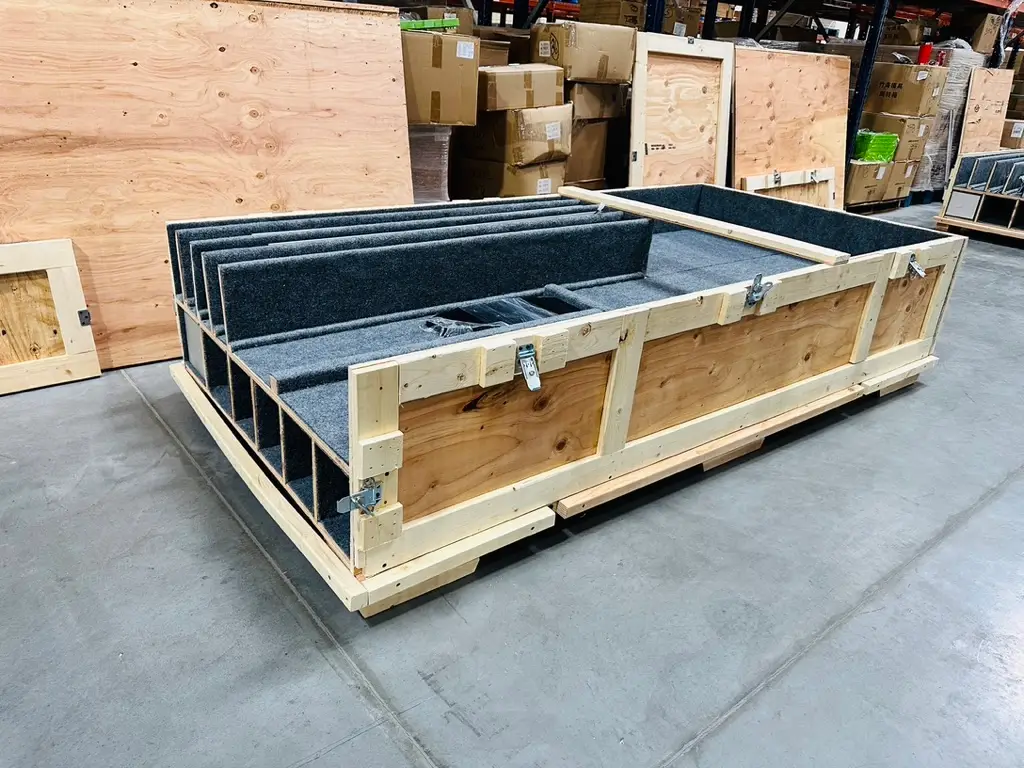
The base must support the load where the item can safely carry it. Blocking or bracing restrains unwanted movement, while appropriate cushioning helps manage forces reaching fragile components. Surface protection and partitions may be needed to avoid rubbing or contact between parts.
The proposal should explain these features in relation to your item. A thick wooden exterior by itself does not establish the package’s capacity or its ability to protect a sensitive component.
Prepare a useful buying brief
Give prospective providers consistent information:
- Item description, quantity, dimensions and weight
- Photos showing the base, projections and fragile areas
- Manufacturer transport instructions or approved handling points
- Packing location and access constraints
- Destination, transport mode and required shipping date
- Expected storage and whether the crate will be reused
- Available receiving and unloading arrangements
Mark estimated details clearly. If a measurement or inspection is needed before construction, ask who will complete it and when. Changes after a quote can alter materials, packing labor or handling requirements.
Review the proposed build process
Assessment and design
The provider should understand the load, weight distribution, safe support areas and opening method. Confirm whether the item must remain upright or has other orientation restrictions.
Material and structure selection
Review the proposed base, frame, panels and fasteners as a complete assembly. Ask about the intended load and any stacking limits. Confirm that the packed dimensions and handling access will work with the booked carrier and receiving site.
Interior packing
Identify how each sensitive feature will be supported or kept clear. Fitted foam, blocking, partitions and protective wrapping should be selected for the cargo. Electronics may need specific static protection; delicate art may need advice on compatible contact materials.
Packing and final inspection
Agree how the item’s condition and packing arrangement will be documented. Label loose accessories and retain opening instructions. For a reusable design, make the repacking sequence understandable to the next crew.
Compare needs across common applications
Manufacturing and construction equipment often require careful load support and planned handling access. Generators, compressors and other machinery may also need preparation by a qualified technician before transport.
Healthcare and laboratory equipment can have specific manufacturer requirements for moving assemblies, cushioning and checks after delivery. Fine art and antiques need attention to condition, surfaces and environmental sensitivity.
Trade show displays can benefit from labeled compartments and hardware suited to frequent opening. Discuss who will repack the display and where the empty crate will be stored between uses.
Ask which protective extras are justified
Some routes or cargo call for additional moisture or corrosion protection. Ask why a barrier, desiccant, compatible corrosion-inhibiting material or exterior wrap is proposed and what it is expected to address.
Avoid treating every extra layer as automatically beneficial. Material compatibility and the item’s required conditions matter, and a wooden crate cannot replace a temperature-controlled service where one is needed.
For exports, assess all regulated wood components, including skids and dunnage. The ISPM 15 standard distinguishes raw wood packaging from processed materials. Check destination requirements before approving the materials.
Compare the full quote, including exclusions
Check whether the price includes measurement, crate construction, interior packing, onsite labor, loading and any collection or delivery. Confirm who arranges freight, specialist handling and unloading.
Look at reusable features in the context of expected trips, repair, storage and return freight. A higher initial price may or may not produce lower total costs for your shipment pattern.
Ask for relevant project examples and a confirmed schedule for the agreed scope. Do not substitute an unsupported delivery or damage guarantee for a clear explanation of the work.
Buyer’s questions
What if two quotes describe different designs?
Ask each provider to explain the assumptions, load support and protection included. Compare the differences against the same buying brief.
Should all loose parts be removed?
Follow the manufacturer’s or specialist’s instructions. Identify detachable components and confirm which should be secured, removed or packed separately.
Can custom crates be reused?
A suitable design can support repeated use, subject to inspection and correct repacking. Ask what maintenance or replacement materials will be needed.
PLAN YOUR CRATING
Request a proposal for your shipment
Crates of Las Vegas offers custom crating services. Share your buying brief and ask for a clear description of the proposed crate, packing and related services.
Request a Crating QuoteMORE CRATING GUIDES