

LAS VEGAS · CRATING GUIDE
Tailored Shipping Crates in Las Vegas: Art and Equipment
Tailored shipping crates are built around a shipment's actual requirements: the weight they must support, the surfaces they must protect and the handling they must accommodate. That makes the quality of the brief as important as the appearance of the finished enclosure.

For Las Vegas shippers moving art, antiques or equipment, the most useful comparison is between complete packing plans. A custom label on a crate does not by itself demonstrate that the design suits the object.
Decide why the shipment needs a custom crate
Start by identifying the limitation of standard packaging. It may not accommodate the item's shape, support its weight or provide an acceptable way to restrain delicate components. In other cases, suitable manufacturer packaging may already exist.
Record the object's dimensions, weight and transport configuration. Separate the item measurements from the finished package dimensions, which include its structural base and internal protective space.
Connect material choices with the risks
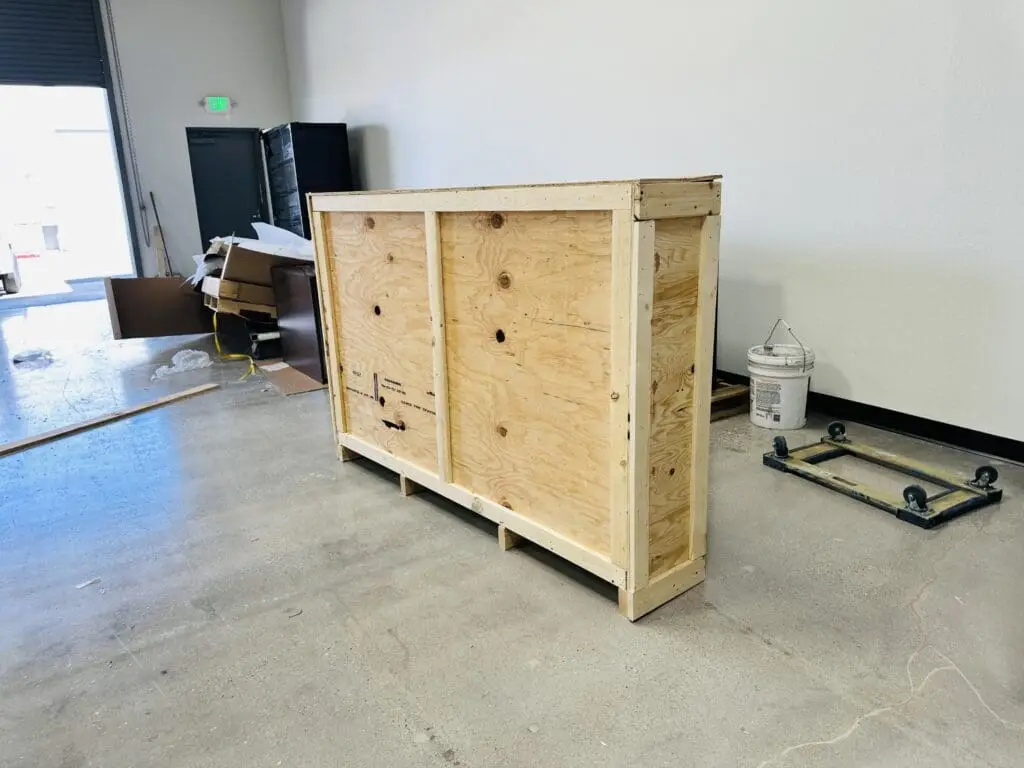
Ask what each part of the proposed package does. The base carries the load; the frame and panels enclose it; internal supports, cushioning and contact layers address movement and surface protection.
Insulation, moisture barriers and wrapping should be specified where the item and route justify them. Do not assume any of them is standard, or that wrapping turns a crate into a waterproof enclosure. If the package will be reopened or reused, plan the closures and retain a packing record.
Plan artwork and antique support carefully
For paintings, sculptures and antique furniture, identify finishes, frames, joints and projections that may be vulnerable. A conservator or knowledgeable object specialist can advise on unstable materials or previous repairs.
The CCI guide to preventive-conservation materials explains why materials contacting collection objects need careful selection. Avoid applying a generic packing recipe to an unfamiliar finish.
Review art-crating and packing options with the object's details in hand. Terms such as museum quality should be supported by a clear specification rather than treated as a certification.
Prepare industrial and medical equipment properly
Obtain reliable weight information and approved lifting or attachment points. Identify moving assemblies, removable accessories and any transport locks. The equipment manufacturer should determine preparation requirements that affect the machine itself.
- State whether the unit is fully assembled or partly dismantled.
- Provide orientation and handling instructions.
- Confirm who completes deinstallation and transport preparation.
- Identify specialized materials or environmental limits.
- Plan inspection and recommissioning after delivery.

Crating is a transport-protection task. It does not establish that a medical device is sterile, calibrated or ready for use.
Review freight and export requirements
Confirm pickup access and the receiver's unloading equipment before the crate is built. For international freight, ask the provider and broker about applicable wood-packaging treatment and marking, as well as the separate cargo documents.
For repeat shipments, inspect the crate and internal supports each time. A repaired crate or changed load may require a new assessment rather than another trip under the old packing plan.
PLAN YOUR CRATING
Request a crate proposal tied to your item
Contact Crates of Las Vegas with photographs, dimensions, weight and your route. Include the relevant art-handling or equipment instructions so the custom-crating proposal can explain the protection and handling arrangements you need.
Discuss your crating projectMORE CRATING GUIDES




