

Export crating
A Complete Guide to ISPM-15 Compliant Wooden Crates
An international shipment needs wood packaging that meets its destination's requirements as well as a crate designed for the cargo. ISPM 15 addresses the risk of harmful pests moving in raw-wood packaging; cargo protection still depends on the base, restraints, cushioning and handling plan.
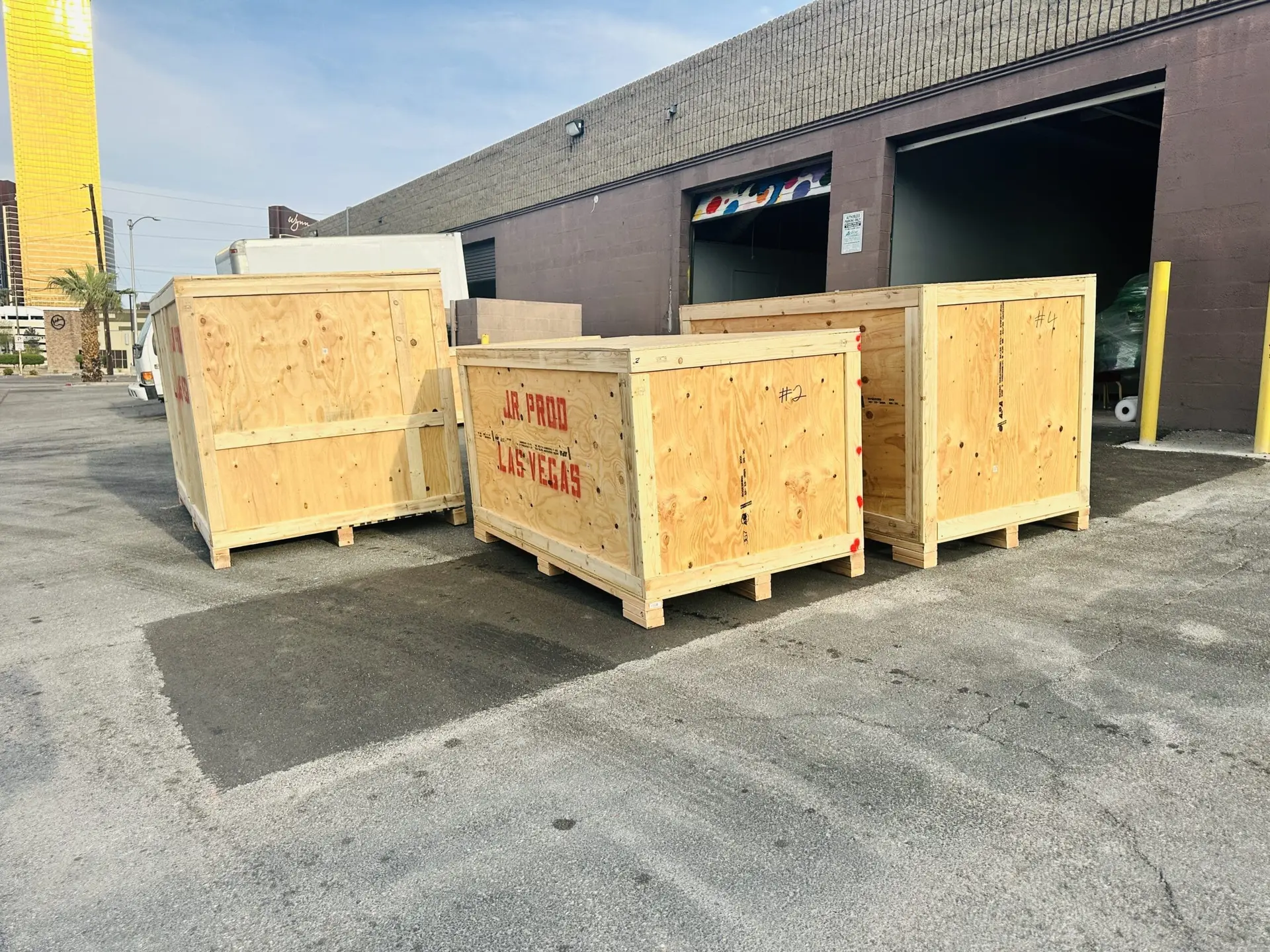
For manufacturers, distributors and logistics teams shipping from Las Vegas, the most useful approach is a repeatable process: confirm the route, specify the materials, use an authorized supplier, inspect the package and coordinate the required documents. This guide brings those steps together.
What ISPM-15 Covers and Why It Matters
ISPM 15 is an international phytosanitary standard developed through the International Plant Protection Convention. It applies to regulated wood packaging used in trade, including crates, pallets and dunnage that support cargo.
It does not apply to every wood-based material. Packaging made wholly of qualifying processed wood, such as plywood or oriented strand board, is exempt under the standard. Packaging made entirely from wood 6 mm thick or less is also exempt. Check solid-wood framing, runners and blocking separately when they are combined with processed panels. The official ISPM 15 overview explains these distinctions.
For regulated materials, compliance involves the applicable debarking, approved-treatment and marking requirements. The IPPC mark identifies the country, authorized producer or treatment provider, and treatment method.
Importing countries implement their own entry rules. Confirm the destination and relevant transit arrangements rather than assuming every international route is identical. Non-compliant packaging can disrupt a shipment even when the cargo itself has the correct paperwork.
Treatment Methods: Heat Treatment and Fumigation
Conventional heat treatment uses the code HT. The wood must reach at least 56°C throughout, including its core, for at least 30 continuous minutes. This minimum treatment condition is not a promise that the entire process takes only half an hour.
The international standard also recognizes dielectric heating (DH), methyl bromide fumigation (MB) and sulphuryl fluoride treatment (SF), with specified conditions for each method. Check which treatments the relevant production program and destination accept before sourcing packaging.
Heat treatment uses heat rather than a fumigant, but an HT mark does not establish that the whole crate is chemically inert, dry, waterproof or stronger than an untreated design. It also does not guarantee compatibility with medical devices, electronics or other sensitive cargo.
A compliant treatment reduces the targeted wood-pest risk. It does not protect packaging indefinitely from reinfestation. The IPPC's scope statement explicitly notes that limitation.
For practical supplier questions, see our guide to treatment, marking and traceability.
Choosing the Right Wooden Crate
A suitable crate balances the cargo's requirements with its transport environment. Start with dimensions, verified weight, center of gravity, approved support points and any manufacturer instructions. Include accessories and protrusions in the assessment.
Choose the base, panels, fasteners and internal supports for the actual load. Fragile items may need a designed cushioning system; heavy equipment may need blocking or attachment to a load-bearing skid. Environmental protection should follow the route and the product's sensitivities.
Confirm external dimensions and gross weight, forklift access, opening arrangements and any stacking limits. Request a specific load assessment or test when the shipment requires one. Neither an IPPC mark nor a supplier's unrelated quality certification establishes the capacity of a particular crate.
Reusable designs can be useful for repeat shipments, but include storage, inspection, repairs and return freight in the decision. Keep the supports and packing instructions with the crate so it can be repacked correctly.
An ISPM-15 Compliance Checklist for Exporters
- Confirm the destination's wood-packaging requirements and relevant transit conditions with the broker or forwarder.
- Specify the complete packaging system, including regulated runners, blocks and dunnage added during loading.
- Use a supplier with verifiable treatment and marking authorization.
- Inspect required marks for completeness and legibility before dispatch.
- Check the crate's condition and look for contamination or unverified repairs.
- Keep supplier details, the order specification and relevant records accessible.
- Confirm the shipment's commercial, transport and product documents with the responsible parties.
- Resolve discrepancies before the pickup rather than relying on correction at the destination.
Do not assume every marked crate needs a separate phytosanitary or treatment certificate accompanying it. APHIS explains the U.S. wood-packaging program and its certificate policy. Supplier records can support traceability; additional document requirements should be confirmed for the actual shipment.
Common Challenges and How to Address Them
Mixed packaging stock can introduce an untreated pallet or block into an otherwise compliant shipment. Keep unidentified and domestic-only materials separate from verified export inventory, and check last-minute substitutions.
Missing or illegible marks should be resolved through an authorized provider. Packing staff should never recreate a certification mark to meet a deadline. Provide a clear escalation path when the packaging's status is uncertain.
Treatment does not have a routine expiry date, but a crate's history matters. Repair or remanufacture can affect compliance and may require retreatment and remarking under the relevant program. Have changes assessed before reuse rather than assuming the old mark covers newly added wood.
Training, periodic supplier review and a short dispatch checklist can help catch these problems early. Update procedures when the route, provider or packaging design changes.
Coordinating with Las Vegas Crating Services
A local assessment can help clarify dimensions, handling restrictions and the practicalities of packing a large or sensitive item. If moving it to a shop would be difficult, discuss whether on-site assembly is suitable.
Confirm the service scope in writing. Ask who supplies the compliant materials, who applies the mark and who arranges freight, loading or rigging. Treatment facilities, storage, customs brokerage and expedited work should be confirmed rather than assumed.
Share the forwarder's packaging requirements and the receiving team's access limitations early. That allows the crate design and shipping plan to develop together instead of resolving conflicts after fabrication.
Using Records and Monitoring Effectively
Crate identifiers, photographs and electronic supplier records can make recurring shipments easier to manage. A simple system that connects each crate to its specification and packing instructions may be sufficient.
QR codes and tracking platforms are optional administrative tools. They do not replace the official mark, prove treatment on their own or guarantee that customs authorities can access a shared database.
Temperature, humidity or shock monitoring may be useful for sensitive cargo when specified for a clear purpose. Monitoring records conditions; it does not actively control them or substitute for protective packaging. Confirm equipment availability and who will interpret the results before adding it to the plan.
PLAN YOUR CRATING
Plan Your ISPM-15 Crating Requirements
Bring the cargo specifications, destination, schedule and any special handling instructions to the initial discussion. Crates of Las Vegas can review the requested packaging scope and information needed for a quote. Review our ISPM 15 heat-treatment service as part of that discussion.
Contact our team about an export crate.
Discuss your crateMORE CRATING GUIDES



