


LAS VEGAS · CRATING GUIDE
Reusable Shipping Crates in 2026: Costs, Benefits, and Return Planning
For businesses that ship the same equipment repeatedly, reusable shipping crates can be worth evaluating in 2026. A returnable crate may suit trade show displays, loaner equipment, service work, or regular transfers between facilities.
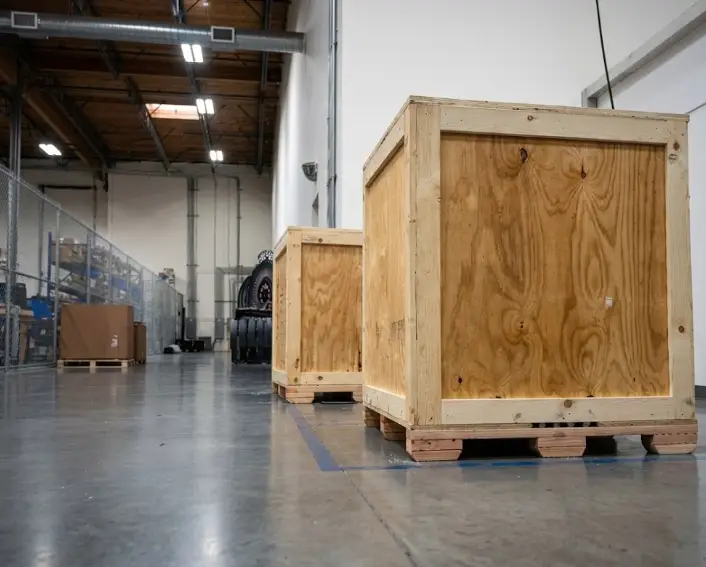
The decision depends on the complete shipping cycle: how often the crate will travel, whether it can be returned, where it will be stored, and who will inspect it before reuse. A higher purchase price can be justified when the crate remains suitable across enough trips.
For manufacturers, contractors, hotels, technology companies, and medical facilities in Las Vegas and nearby communities, this guide explains the potential benefits and the practical costs to check before selecting a reusable design.
The Real Cost of Single-Use Shipping Crates
Many companies focus only on the purchase price of a crate, but the real expense often appears later in the shipping cycle. Disposable crates may be cheaper initially, yet they frequently require replacement after one shipment, especially when transporting heavy, fragile, or high-value items. When a crate breaks, absorbs moisture, or becomes unsuitable for reuse, businesses must purchase another crate, arrange disposal, and absorb additional labor costs. Over time, these repeated expenses can exceed the cost of a durable reusable solution.
In Las Vegas logistics and freight operations, where equipment is often moved between job sites, warehouses, convention centers, hotels, and customer locations, reusable shipping crates may provide a financial advantage when return, storage, and maintenance costs are manageable. A crate designed for repeated handling still needs inspection after each trip. Check runners, panels, fasteners, closures, internal supports, and any stated stacking limits before reuse. This is particularly valuable for companies shipping medical devices, trade show displays, casino equipment, electronics, artwork, and industrial machinery.
Another hidden cost of single-use packaging is product damage. Even a minor impact during transit can lead to repair expenses, project delays, or lost customer confidence. Reusable crates are typically engineered with stronger materials, reinforced corners, and optional custom foam inserts that hold products securely in place. Consistent construction and packing procedures may improve repeatability, but protection depends on the design, condition, and handling of the complete package.
For businesses looking to improve margins, the useful comparison is the total cost per completed trip, including returns and maintenance.
Evaluate Packaging Waste Across the Full Cycle
Reusing a crate can reduce the need to build and discard a replacement package for every shipment. The environmental result still depends on how many trips it completes, the materials used, repair needs, and the distance and method of returning it.
A returnable crate program should track actual reuse, damage, repairs, and end-of-life handling. Empty return trips and long storage periods can change the comparison with a well-designed single-trip package. Avoid claiming a fixed emissions or waste reduction without project-specific evidence.
For export use, have an authorized provider check the wood packaging and its official marks, especially after repairs or changes. Reuse, repair, and remanufacture are treated differently under ISPM 15; a previous mark is not a reason to ignore the crate’s present condition.
Better Protection for High-Value Equipment
As freight networks become more complex, shipments are often transferred between trucks, warehouses, airports, and ports before reaching their destination. Every transfer introduces risk. For high-value products, the quality of the crate is often the difference between a successful delivery and an expensive claim.
Reusable shipping crates are designed for repeated access, packing, and handling. Heavy-duty construction, reinforced framing, secure fastening systems, and optional foam cushioning can support repeated use when specified for the load and route. This is especially important for businesses shipping sensitive or costly items such as medical equipment, laboratory devices, electronics, audiovisual systems, casino technology, and custom fabrication components.
In the Las Vegas convention and hospitality industry, equipment is frequently transported to and from trade shows, resorts, and event venues. A reusable crate allows the same protective packaging to be used for outbound shipping, storage during the event, and return transportation afterward. Clear packing instructions and labeled compartments can help crews repeat the intended packing method throughout the logistics cycle.
Custom foam inserts can limit unwanted movement inside the crate. Instead of relying on loose packing materials, the product is supported in a shaped cavity with cushioning selected for the load and transport risks. This approach is particularly effective for delicate instruments and irregularly shaped components.
When businesses calculate the cost of downtime, repairs, replacements, and customer disruption, investing in stronger reusable packaging often becomes the most economical decision.
Reusable Crates Improve Operational Efficiency
One potential benefit of reusable shipping crates is a more repeatable packing process. Warehouses, freight departments, and project teams are under constant pressure to move products faster while reducing labor costs. Reusable crates support this goal by creating a standardized packaging system that can be used repeatedly without redesigning or rebuilding packaging for every shipment.
In Las Vegas and North Las Vegas industrial operations, standardized reusable crates simplify loading, stacking, labeling, and inventory management. Employees become familiar with the crate dimensions and handling requirements, which can make training and packing checks more consistent. For companies shipping the same product repeatedly, this can save significant labor time over the course of a year.
Returnable crate programs are especially effective for businesses with recurring routes between suppliers, warehouses, job sites, and customers. Instead of purchasing new packaging for each shipment, the crate is returned, inspected, and placed back into service. This creates a predictable packaging cycle that is easier to budget and manage.
Reusable crates can also be designed with features such as removable panels, forklift access, internal foam systems, and durable identification markings. These details can simplify repeat packing when they are suitable for the item and the crew’s workflow.
For growing companies, operational efficiency is often more valuable than small upfront savings. A reusable crate system helps scale shipping operations without scaling packaging complexity, making it an attractive solution for businesses focused on productivity and long-term growth.
Plan the Return Route Before Buying a Reusable Crate
Returnable crate programs work best when someone owns the full cycle. Before buying, identify who will unpack the shipment, retain the empty crate, return it, inspect it, and approve it for the next trip.
- Expected use: How many trips are realistic, and will the same item fit each time?
- Return freight: Is a return movement already planned, or does the empty crate need a separate shipment?
- Storage: Where will the crate stay between uses, and will it remain dry and protected?
- Inspection: Who checks fasteners, runners, panels, foam, and closures after each trip?
- Repairs: Can damaged parts be replaced without changing the intended protection or export status?
- End of life: When should the crate be repaired, retired, or recycled?
Compare purchase, packing labor, return freight, storage, inspection, and repair costs over the expected number of completed trips. If there is no practical return route, a single-trip crate may be the more sensible choice.
Conclusion
Reusable shipping crates can make sense when equipment travels repeatedly and the return cycle is practical. They may reduce replacement packaging and make packing more consistent, but savings and environmental benefits should be assessed over actual use.
For Las Vegas businesses, the starting point is a clear route and inspection plan. Match the crate to the cargo, budget for its return and storage, and check its condition before every shipment.
Further Reading
PLAN YOUR CRATING
Plan Your Shipment
Share the item’s dimensions, weight, photographs, destination, shipping method, and handling requirements when requesting a quote. Review custom crating options, custom packaging services to discuss the packing approach that fits your shipment.
Request a Crating QuoteMORE CRATING GUIDES



