LAS VEGAS · CRATING GUIDE
Five Heavy Machinery Shipping Challenges to Plan for
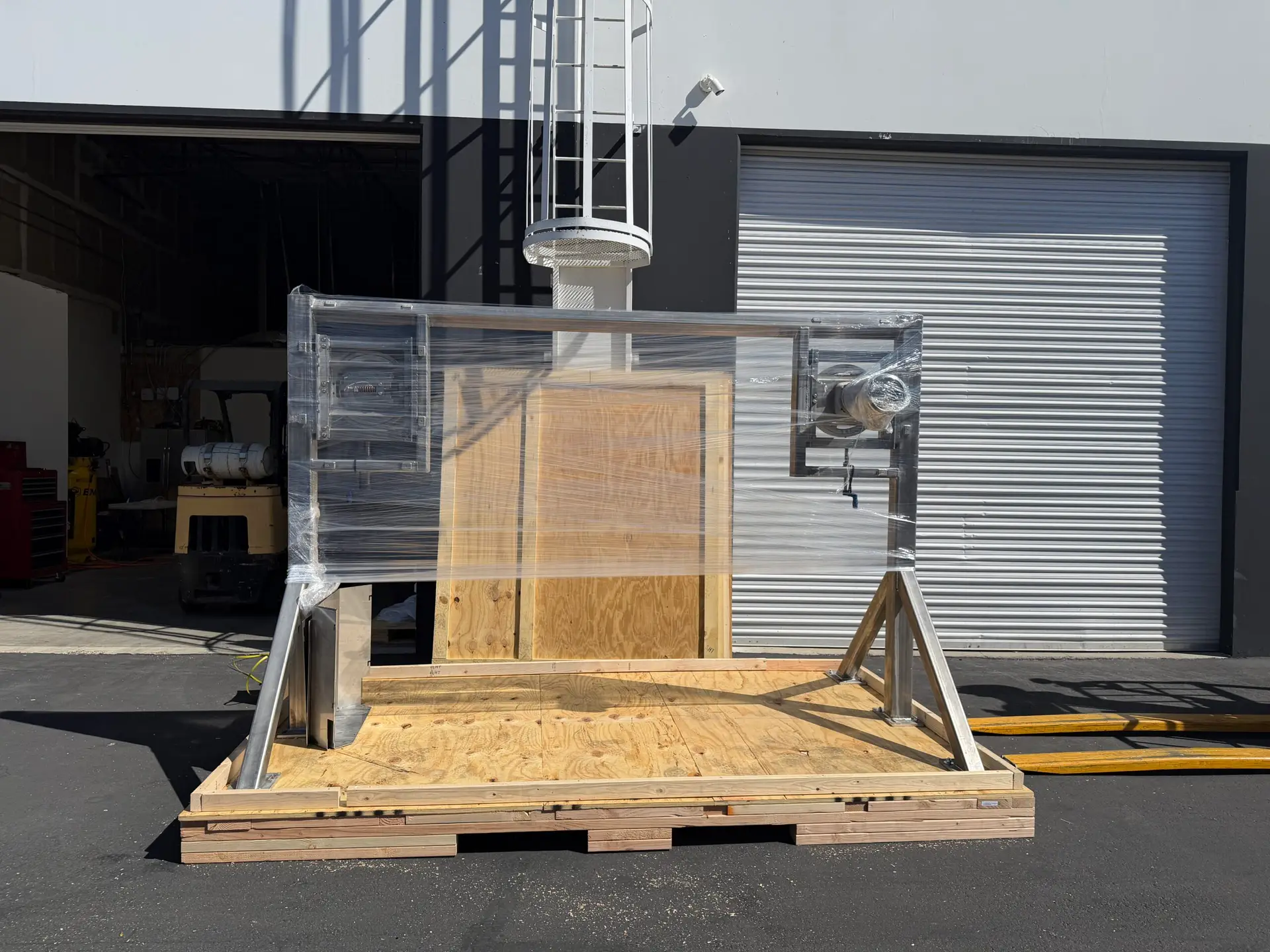
Heavy machinery can be difficult to ship because weight and bulk often coexist with vulnerable controls, finished surfaces and moving parts. A custom crate needs to address the machine's approved support points and the handling route, as well as its outer dimensions.

Use the manufacturer's transport instructions and an experienced handling team to define the move. These five challenges help frame the conversation with a crating provider before fabrication begins.
Protecting components from movement and contact
A strong outer box does not prevent the machine from shifting inside it. Identify suitable attachment or support points and any components that need separate protection or preparation. Controls, hoses, shafts and projecting parts should not become accidental load-bearing points.
Blocking, bracing and selected cushioning can serve different parts of the design. FedEx's freight packing guidance distinguishes these functions. Ask the provider how the machine will be restrained and how the packing arrangement accounts for its weight and shape.
Meeting international wood-packaging requirements
For an export move, provide the destination and route before ordering the crate. Regulated wood packaging may require treatment and authorized marking under ISPM 15. Check the APHIS export guidance and confirm requirements with your freight provider or broker.
This addresses the packaging's pest-risk requirements. It does not certify the machine's condition, load rating or customs admissibility. Equipment documents, any regulated contents and the carrier booking need their own review.
Managing weight, dimensions and lifting access
Provide a reliable equipment weight, its shipping dimensions and any manufacturer information about the center of gravity and approved lifting points. Include the crate base and protective materials when calculating the final package specifications.
- Confirm suitable equipment is available at pickup and delivery.
- Check loading areas, doors, clearances and turning space.
- Discuss where forklift access or other approved handling provisions belong.
- Have qualified personnel plan lifting and load securement.
Do not treat every timber base or crate edge as a lifting point. Handling provisions must be designed for the actual load and agreed with those doing the work.
Addressing moisture and environmental exposure
Discuss how long the shipment may be in transit or storage and whether it will face outdoor handling. Sensitive surfaces and components may need additional protection, selected to suit the equipment and the route.
A crate alone is not waterproof or temperature-controlled. Ask the manufacturer and packing provider about any appropriate moisture barrier, corrosion protection or monitoring, and make environmental requirements explicit in the transport plan. Avoid assuming a generic coating solves every exposure problem.
Controlling the full shipment cost
The quote should account for the crate, internal packing, loading work, freight and receiving needs. Removing unnecessary volume can help with efficiency, but required supports and handling clearances must remain.
If the same machine will travel again, discuss reusable access panels and an inspection plan. Include empty-crate storage, return shipping and repairs when deciding whether reuse is worthwhile. Savings depend on the project rather than the word “custom.”

PLAN YOUR CRATING
Plan a machinery crating project
Contact Crates of Las Vegas with photos, dimensions, confirmed weight, destination and manufacturer transport instructions. Include pickup and unloading arrangements so the crate design can be discussed alongside the handling plan.
Discuss your crating projectMORE CRATING GUIDES