
Trade show logistics
The Complete Guide to Trade Show Shipping Logistics
Trade show shipping brings together several separate jobs: protecting the exhibit, moving it to the correct receiving point, getting it into the booth, and packing it for the trip home. A strong crate helps with protection, but the delivery plan matters just as much.
For exhibitors heading to Las Vegas, the best starting point is the event's current exhibitor service manual. Use its receiving dates, labeling instructions, material-handling rules, and move-out procedures to build a shipment plan before booking freight or ordering a crate.
Plan the shipment around the show schedule
Begin with an inventory of everything traveling to the event: booth components, screens, demonstration equipment, graphics, samples, tools, and accessories. Record each item's dimensions, weight, condition, and handling restrictions. Identify anything that needs its own support or cannot be stacked.
Work backward from the date your booth must be ready. Allow time for measurements, crate construction, packing, freight transit, receiving, and installation. Ask the carrier and event contractor about the correct arrival window; a truck reaching Las Vegas is only one milestone in getting an exhibit ready.
- Confirm the event name, venue, exhibitor name, booth number, and on-site contact.
- Choose the authorized receiving location and verify its address and dates.
- Check size, weight, unloading, and special-handling restrictions before booking.
- Give the packing team and carrier the same shipment inventory and schedule.
- Include return transportation and repacking labor in the original plan.
Keep packing and setup instructions accessible to the people who will open the shipment. Photographs of a trial pack can help the booth team put components back into their intended positions after the show.
Choose between advance warehouse and direct delivery
An advance warehouse accepts exhibit freight during a designated period before the show. Direct-to-show delivery sends freight to the venue during its move-in window. The available options, deadlines, and charges depend on the event.
Transportation and material handling should be checked separately. Material handling can include unloading, delivery to the booth, empty-container storage, and load-out. Freeman describes these steps in its exhibitor guide, but the actual contractor and event manual govern your shipment.
Compare the entire plan rather than the carrier's line-haul price alone. Ask about receiving charges, missed delivery windows, special handling, storage, and after-hours work where relevant. Book installation work with the expected availability of freight in mind.
Design crates for the exhibit and its next trip
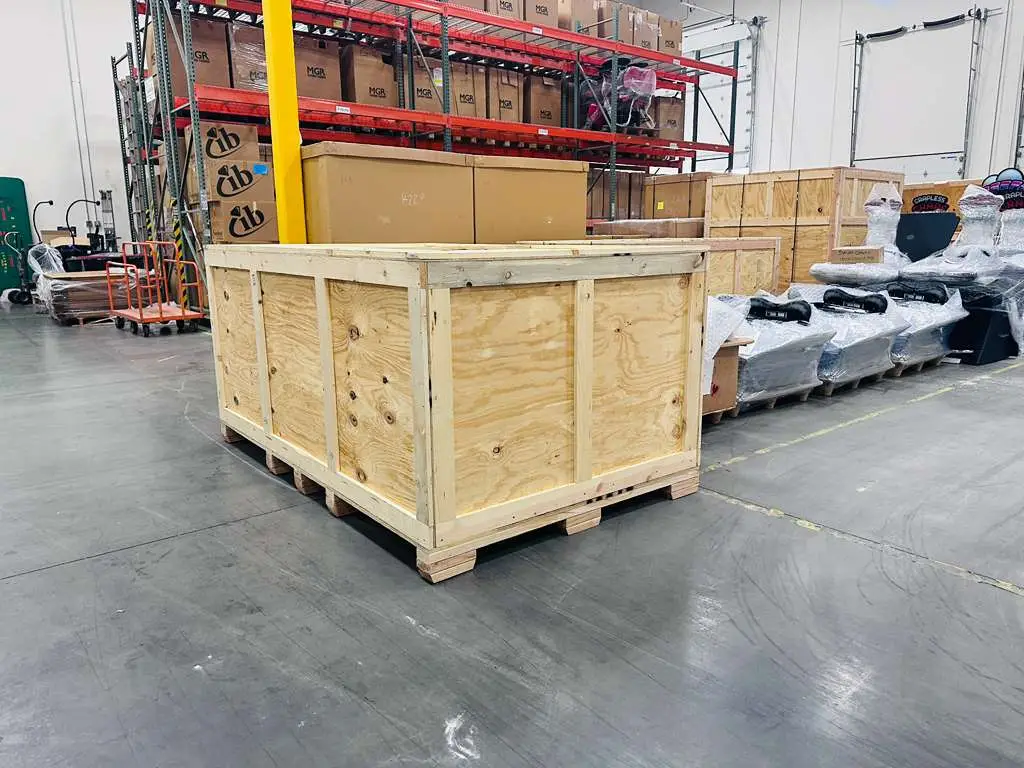
A trade show crate should fit the equipment and the way people will handle it. Displays, monitors, delicate finishes, and heavy demonstration units have different support needs. Supply the crate builder with photographs and an itemized packing list rather than relying on the exhibit's assembled dimensions alone.
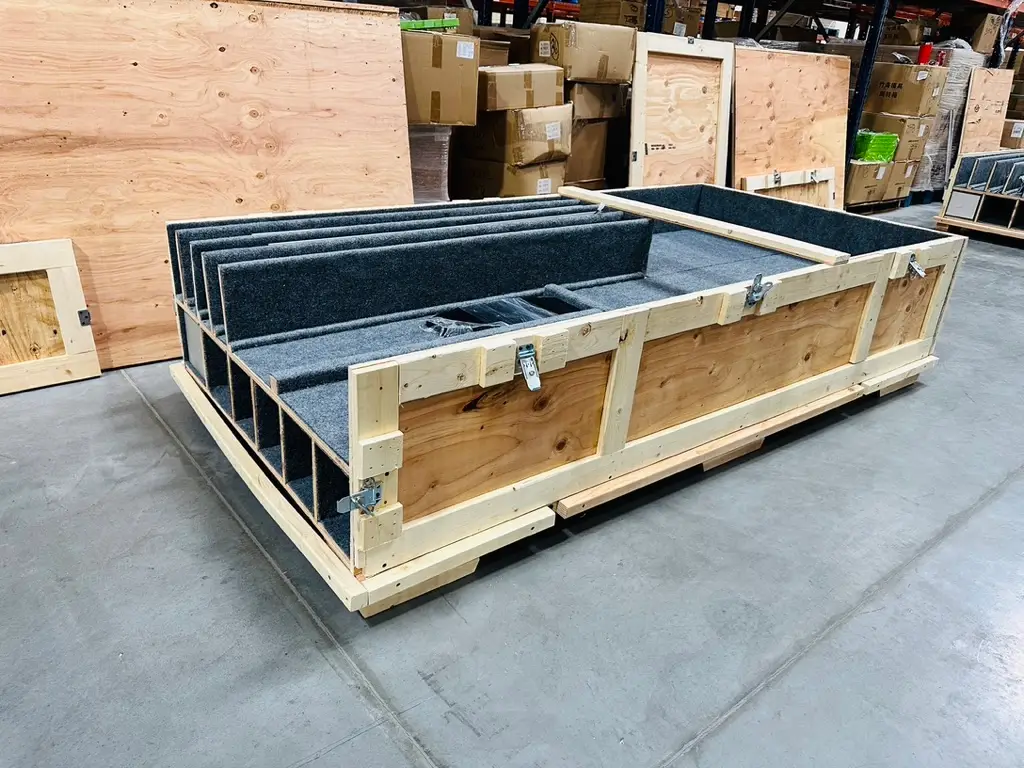
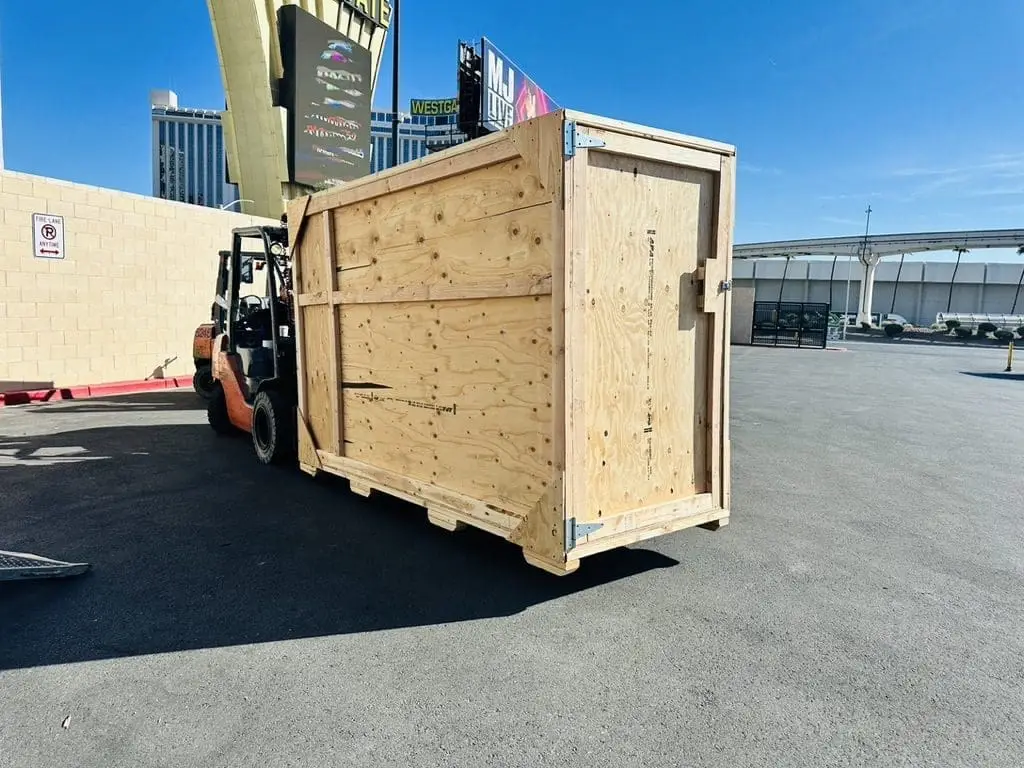
Useful design features may include a supported base, internal partitions, fitted cushioning, clearly identified opening panels, and hardware suited to repeated use. Confirm the loading method, including forklift access, with the people handling the shipment.
For exhibitors attending several events, consider the full reuse cycle. The crate must be practical to open, store, inspect, close, and move again. Numbered compartments and a packing diagram can help keep small parts with the correct display. Reuse may reduce replacement packaging over time, but the benefit depends on freight weight, return costs, storage, and maintenance.
Protect fragile components inside the crate
The outer shell, internal supports, and cushioning perform different jobs. Blocking and bracing restrain the load; suitable cushioning helps limit shock transmitted to vulnerable parts. Packing needs to avoid pressure on screens, delicate edges, moving parts, and finished surfaces.
- Separate loose accessories so they cannot strike the main equipment.
- Support each component at locations suitable for its construction.
- Match cushioning to the item, its weight, and the planned transport conditions.
- Check whether electronics need electrostatic-discharge protection.
- Discuss moisture or temperature limits before selecting a barrier or transport service.
- Photograph the contents and final pack before closing the crate.
A wooden crate does not provide active temperature control simply because it is enclosed. If an exhibit has environmental limits, identify who will meet those requirements during transport and storage. Handling labels communicate instructions, while the package still needs to tolerate the agreed distribution environment.
Coordinate on-site crating and packing
On-site crating can be useful when a display is too large or delicate to move unprotected to a packing facility. Confirm access, available workspace, loading equipment, and the condition in which items must be presented to the packing team.
Agree on responsibility for disassembly, packing, rigging, and carrier loading. At the venue, contractor rules and labor arrangements may affect who can do each task. Ask about availability early rather than assuming that last-minute crate changes or immediate turnaround will be possible.
For return packing, keep reusable cushioning, hardware, and instructions together. Check how empty containers will be stored and returned to the booth, and allow for that timing before scheduling the outbound pickup.
Prepare international exhibits separately
International shipments need an export and return plan in addition to event logistics. Give the freight forwarder or customs broker an accurate inventory, values, origin information, and the intended use of the goods. Ask how temporary exhibition goods and any items sold or consumed at the show should be handled.
Where the destination requires ISPM 15, regulated solid-wood packaging needs the appropriate treatment and official mark. Processed-wood exemptions and any solid-wood components must be considered together. The IPPC's ISPM 15 guidance addresses plant-pest risk in wood packaging; it does not certify the shipment's contents or guarantee customs clearance.
Confirm the requirements for the outbound journey and the return journey before building or reusing the crate. Keep marks visible, and have repairs to regulated wood reviewed by the packaging supplier.
Make move-out part of the same plan
Before the show ends, confirm the outbound carrier, pickup instructions, paperwork, destination, and the person responsible for releasing the shipment. The event contractor's move-out deadlines may differ from the carrier's booking cutoff.
Count every component, inspect it, and follow the packing diagram. Replace damaged packaging before reuse. Remove obsolete shipping labels and apply the correct outbound labels without covering required handling or treatment marks. Retain photographs and tracking details until the shipment is received and checked.
PLAN YOUR CRATING
Plan your trade show crate with Crates of Las Vegas
Send Crates of Las Vegas your exhibit inventory, dimensions, weights, photographs, destination, and receiving deadline. Include whether you need on-site packing and whether the crate will be reused for future shows.
Contact Crates of Las Vegas to discuss a crate and packing plan for your next event.
Discuss your shipmentMORE CRATING GUIDES