
LAS VEGAS · CRATING GUIDE
The Beauty and Strength of Wood Crates: What to Look For
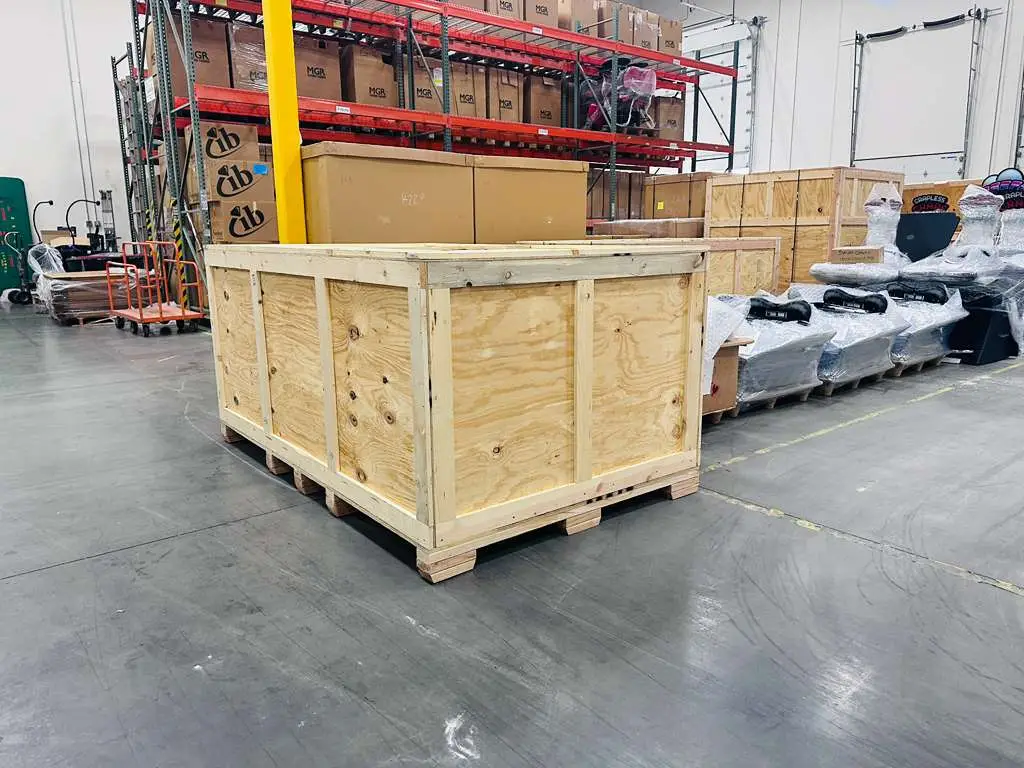
Wood crates can have an appealing combination of visible grain, simple proportions and useful structure. Appreciating that appearance is easy; deciding whether a particular crate suits shipping, storage or a second life as décor takes a closer look.
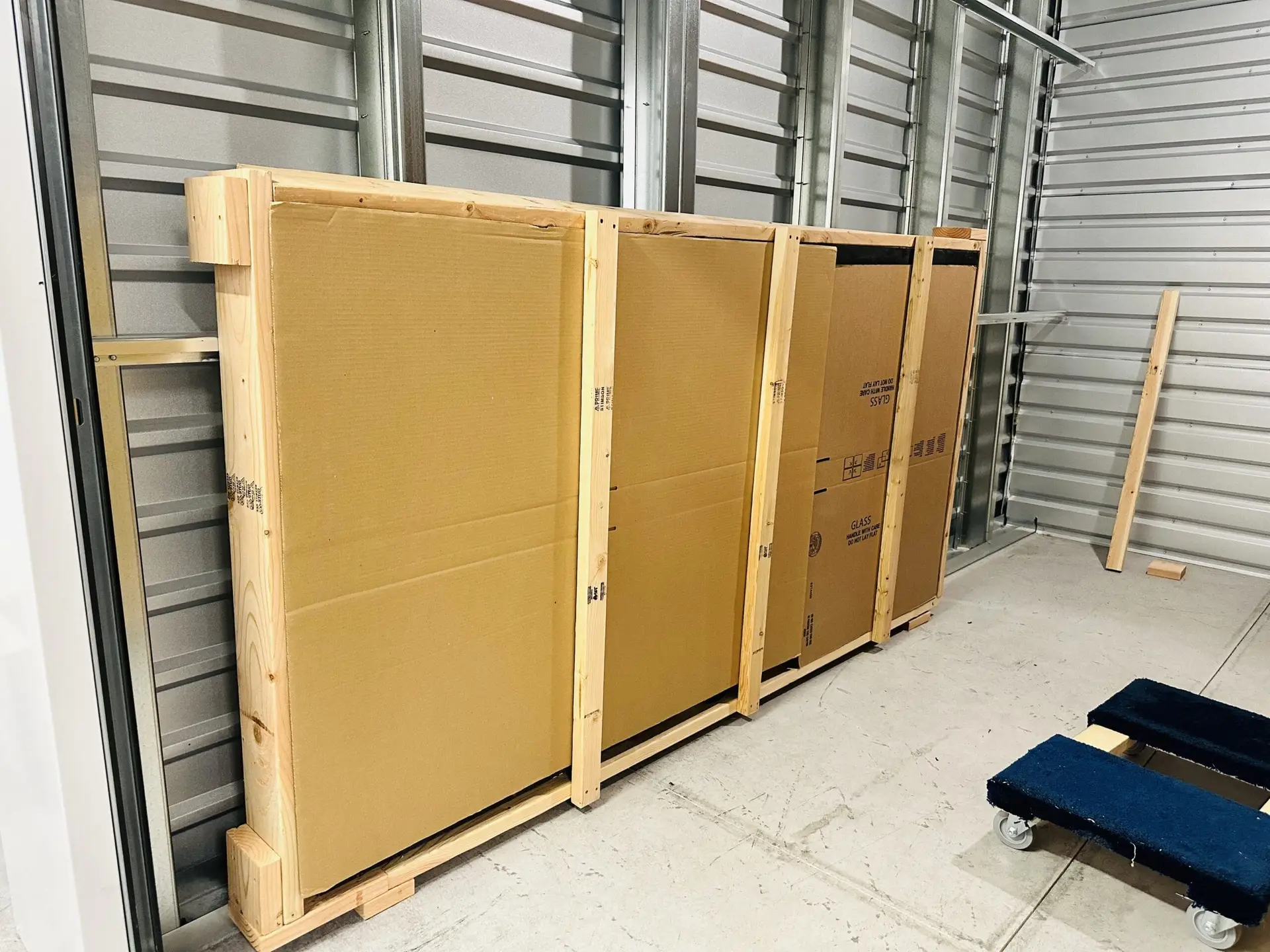
Separate the visual qualities from the performance questions. A rustic finish says little about load capacity, just as an industrial-looking crate may be carefully built for a particular shipment.
Recognize useful craftsmanship
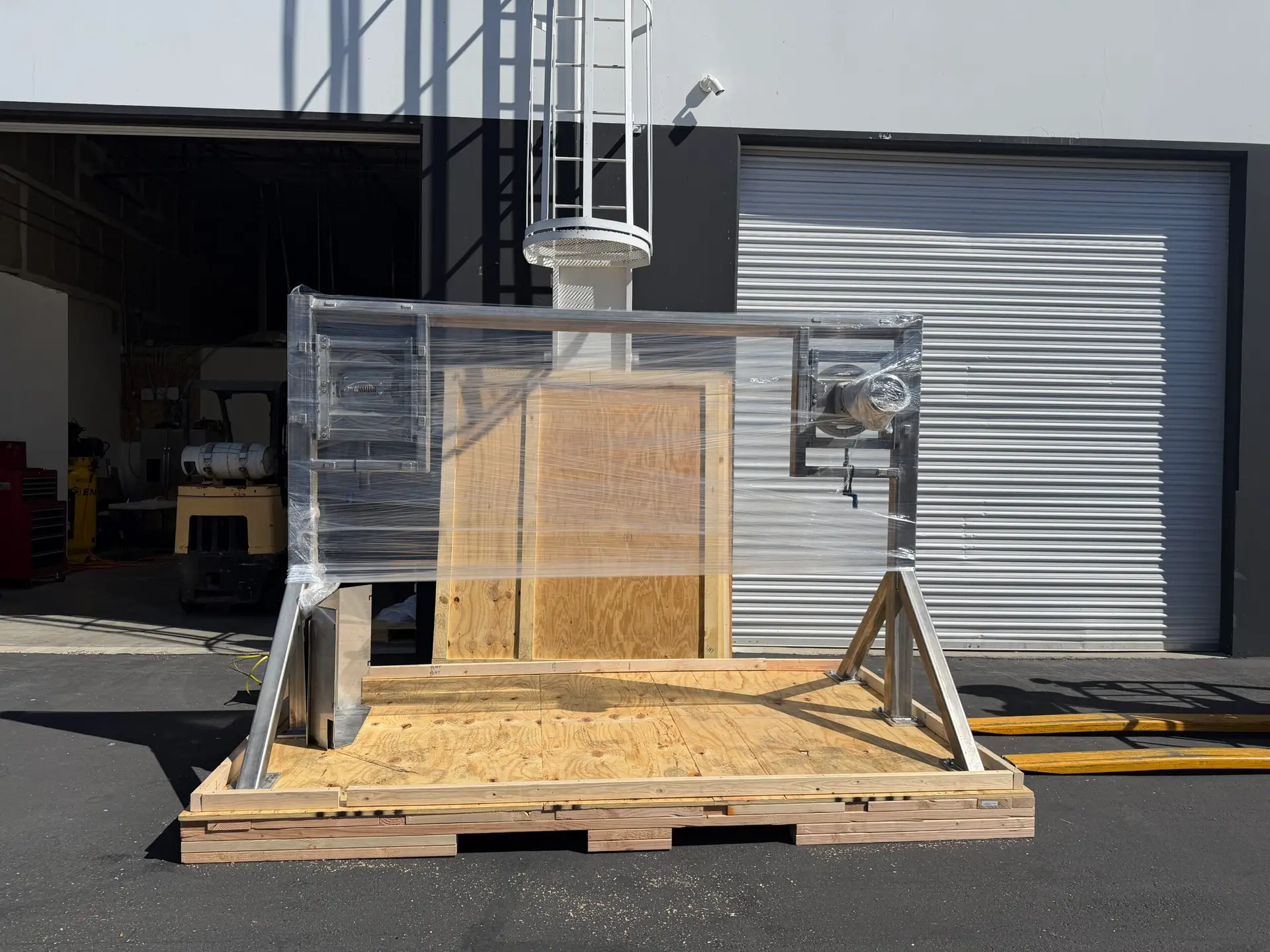
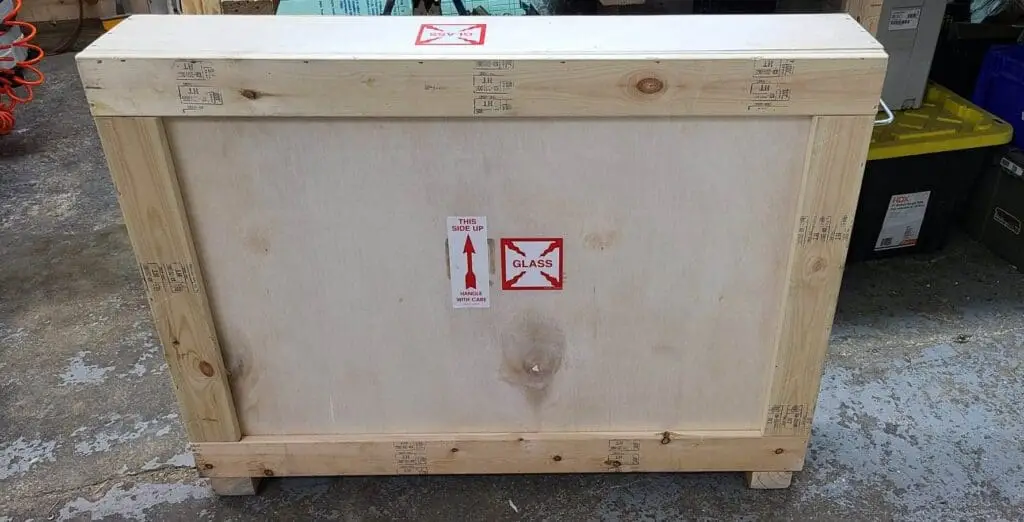
For a shipping crate, craftsmanship shows in the fit of the components, the condition of the materials and the way the base and connections suit the load. An accessible opening panel and clear reassembly instructions can matter more than decorative joinery.
Do not assume a freight crate uses furniture-style dovetails, hand carving or premium hardwoods. Ask what materials and fasteners are proposed and why they fit the job. The choice should be explained in relation to the contents and handling plan.
Work with the character of the wood
Grain patterns, color differences and small surface variations give wooden objects their character. For a visible display, compare samples or photographs and agree how much variation is acceptable. Discuss finish options rather than assuming every crate can receive the same treatment.
Appearance also changes with use. Transport labels, fastener holes and handling marks may be part of a crate's history. Decide whether you want to retain that character or use a purpose-built display piece instead.
Ask what supports the sustainability claim
Wood is a renewable material, but the environmental performance of a finished crate depends on sourcing, production, transport, service life and disposal. Request evidence for any specific sourcing or recycled-content claim that matters to your project.
Keep the second-use plan realistic. A crate that cannot be stored, repaired or transported back may not deliver the expected benefit from reuse. The EPA's materials-management hierarchy offers a useful starting point for prioritizing waste reduction and reuse.
Look beyond a sturdy exterior
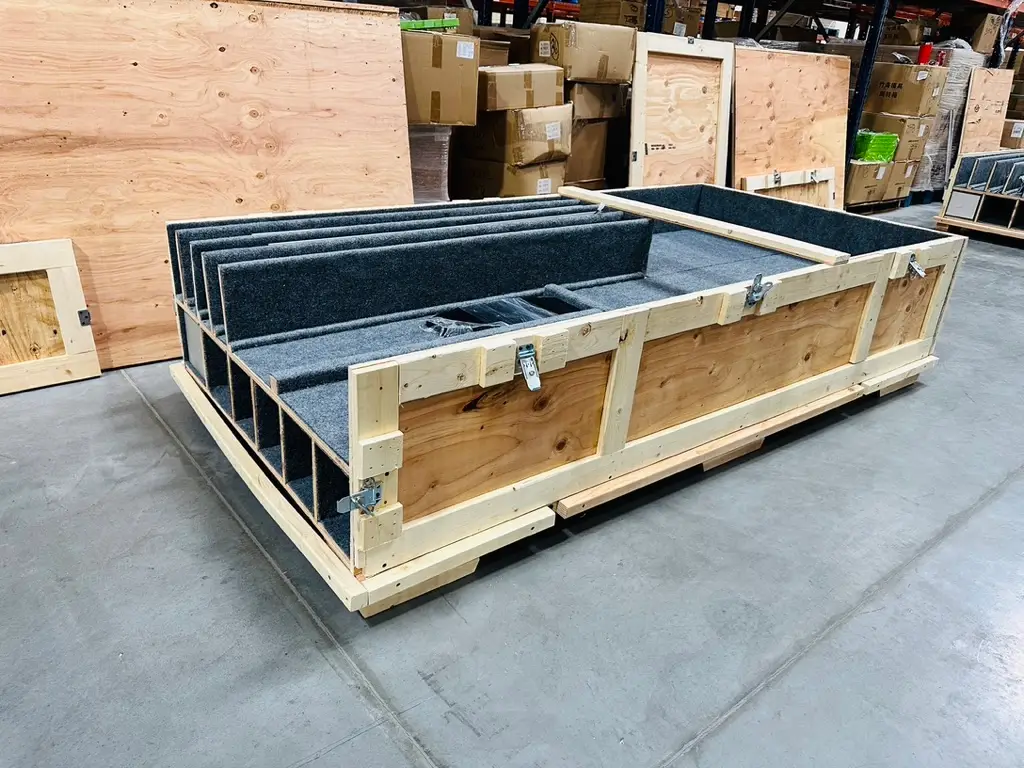
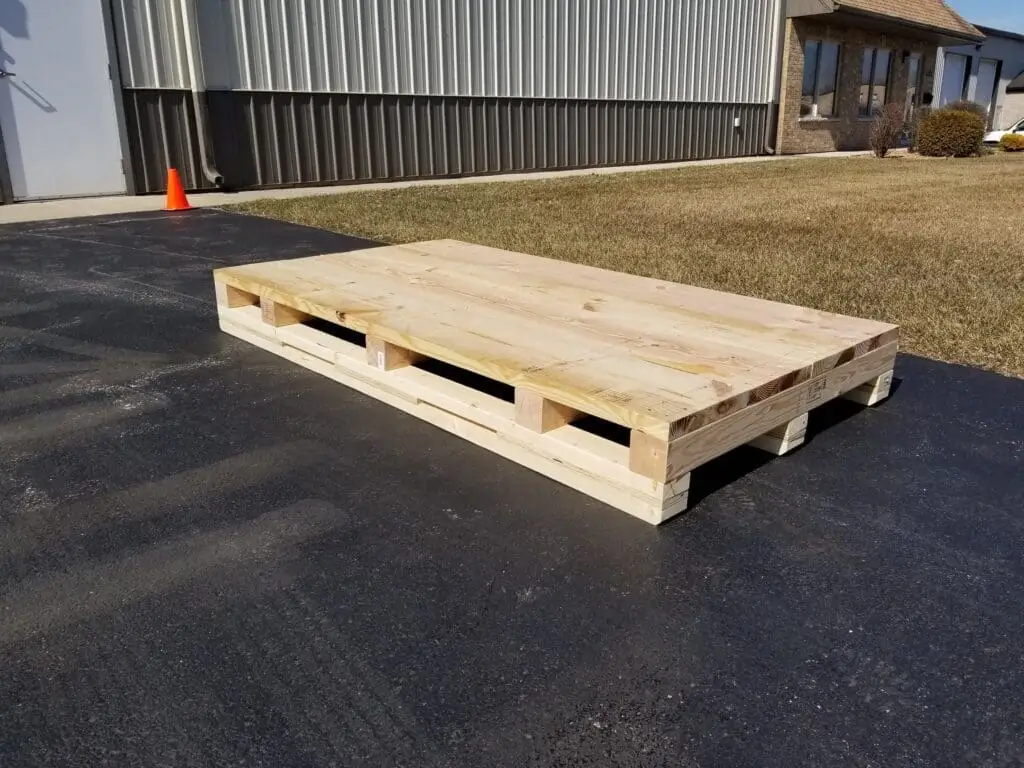
Shipping performance depends on the crate and its internal packing together. Inspect the base, framing and panels, then ask how the contents are supported. A strong enclosure still needs an interior suited to the object's shape and vulnerable surfaces.
- Is the original intended load known?
- Are panels, fasteners or base members damaged?
- Does the planned lifting method match the crate?
- Will the contents move or contact the walls?
- Has a change of use altered the original requirements?
For transport, get the builder's assessment rather than assigning a load rating from appearance alone.
Choose a sensible second use
Display boxes, low-level storage and plant-container surrounds can take advantage of a crate's shape. Use a separate pot and drainage arrangement for plants so water does not continually collect in the wood. Check the crate's history and condition before bringing it indoors.
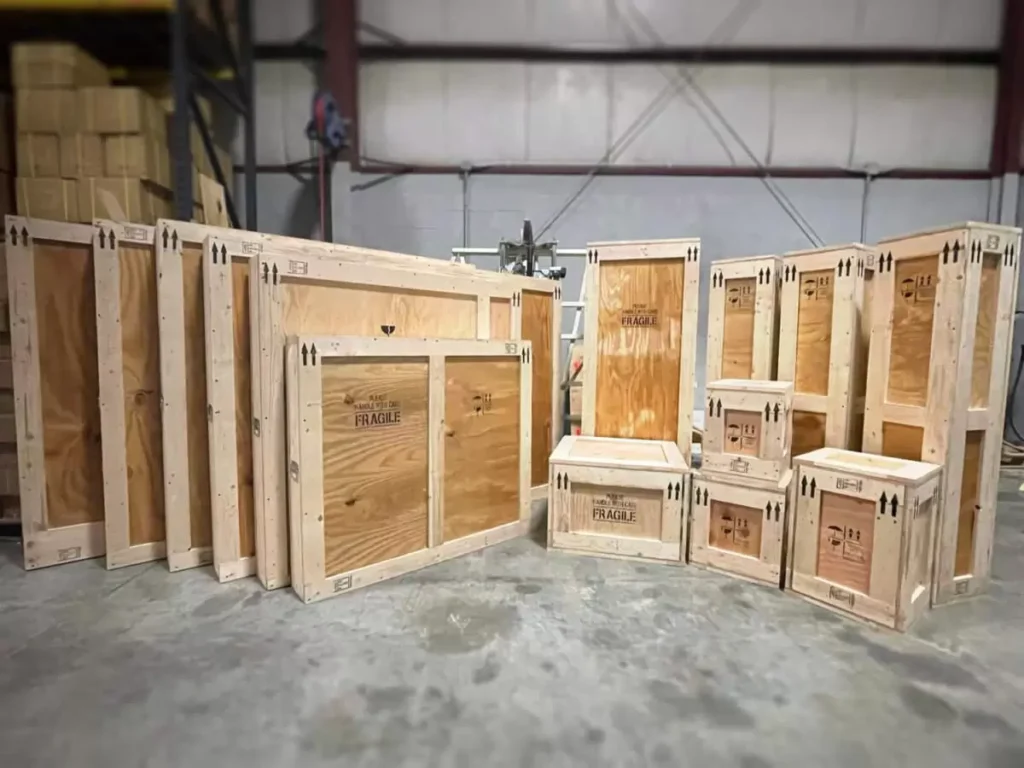
Wall-mounted shelves, tall stacks, coffee tables and seating involve additional structural questions. Do not treat an old shipping crate as ready-made furniture. Secure any display appropriately and follow CPSC tip-over prevention guidance where furniture-style storage is involved.
PLAN YOUR CRATING
Match the crate to its purpose
Whether you need transport protection or want a crate with a later display role, explain both uses at the start. Review wood-crate services and contact Crates of Las Vegas with dimensions, photographs and the intended handling plan.
Discuss your crating projectMORE CRATING GUIDES