


LAS VEGAS · CRATING GUIDE
Open Crate vs. Closed Crate: Which One Should You Choose?
When shipping valuable equipment, artwork, machinery, medical devices, or trade show materials, choosing the right crate is just as important as choosing the right freight carrier. One of the most common questions businesses ask is whether they should use an open crate or a closed crate. The answer depends on the size of the item, the level of protection required, the shipping method, and the destination.
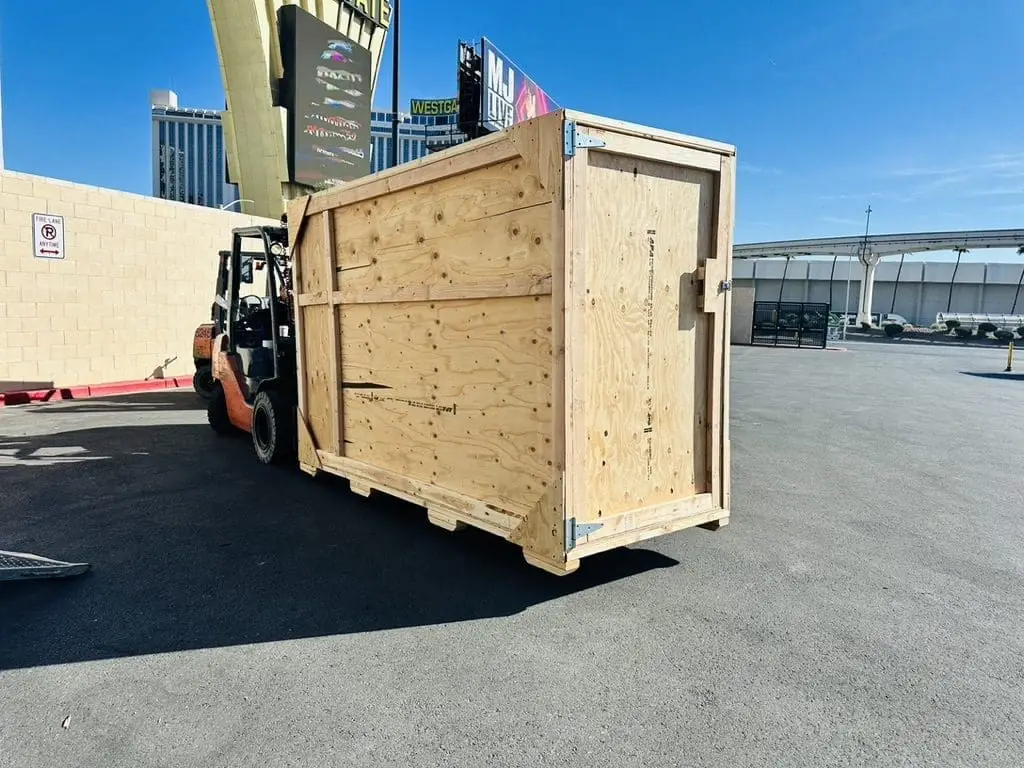
In Las Vegas, Henderson, Summerlin, and North Las Vegas, companies frequently use both crate styles for industrial, medical, hospitality, and convention-related shipments. An open crate can reduce weight and cost for durable equipment, while a closed crate adds enclosure for items whose surfaces or components need it.
At Crates of Las Vegas, we help businesses select the crate design that offers the best balance of protection, freight efficiency, and long-term value. Understanding the differences can help you avoid unnecessary shipping costs and reduce the risk of damage during transit.
What Is an Open Crate and When Does It Make Sense?
An open crate is a wooden shipping structure that protects the item with a base, frame, and partial side support while leaving portions of the shipment exposed. It is commonly used for heavy-duty equipment that is not easily damaged by dust, light moisture exposure, or normal handling. Open crates are popular for industrial machinery, generators, HVAC units, metal fabrication components, construction equipment, and oversized mechanical parts.
The biggest advantage of an open crate is efficiency. Because it uses less material than a fully enclosed crate, it is typically lighter and less expensive to build. Lower weight can also help reduce freight charges, especially for LTL shipments where dimensional weight and total shipment weight affect pricing.
In Las Vegas industrial and construction projects, open crates are often chosen for equipment that will be moved quickly between warehouses, job sites, and distribution centers. An open design can make visual inspection and some loading tasks easier. Forklift access and securement still depend on the base and restraint design.
However, open crates are not designed for maximum environmental protection. If the shipment will be exposed to rain, dust, salt air, or extended storage conditions, an open crate may not provide sufficient protection. For high-value or delicate items, the cost savings of an open crate can quickly disappear if damage occurs during transit.
What Is a Closed Crate and When Is It Useful?
A closed crate is fully enclosed with wood panels on all sides, including the top and bottom. This design creates a protective shell around the shipment and can be useful for fragile, sensitive, or high-value items that need an enclosure. Closed crates are commonly used for medical equipment, electronics, artwork, casino equipment, trade show displays, laboratory instruments, and export shipments.
The primary benefit is protection. A closed crate places panels between the contents and surrounding freight. It is not automatically waterproof, dust-tight, theft-resistant, or temperature-controlled. Internal blocking, bracing, and cushioning should be designed for the item. Assess any moisture barrier separately, and verify treatment and marking when regulated wood packaging is used for export.
For businesses in Las Vegas, Henderson, and Summerlin, closed crates are especially valuable when shipping equipment to conventions, hotels, healthcare facilities, or overseas destinations. These shipments often involve multiple handling points, including trucks, warehouses, airports, and ports, which increases the risk of damage.
Stacking strength must be specified for either style; a lid does not establish a stacking rating. If the shipment may sit in a warehouse for days or weeks, the enclosed structure helps maintain protection throughout the entire logistics cycle.
The tradeoff is cost. Closed crates require more material, more labor, and usually weigh more than open crates. Yet for expensive equipment, the additional protection is often far less costly than a repair, replacement, or delayed project.
Comparing Cost, Weight, and Freight Efficiency
Compare the complete design rather than assuming one style is always cheaper or more efficient.
| Factor | Open crate | Closed crate |
|---|---|---|
| Enclosure | Leaves parts of the item exposed | Adds panels around the item |
| Material and weight | Often uses fewer panels | Usually adds panel material and weight |
| Internal support | Must be designed for the load | Must be designed for the load |
| Moisture control | Exposure needs assessment | May need a separate moisture barrier |
| Stacking | Requires a specified load rating | Requires a specified load rating |
| Export wood rules | Apply to regulated wood components | Apply to regulated wood components |
For Las Vegas freight and logistics operations, an open crate may suit rugged equipment on a controlled route. A closed design may be worth the extra material when exposed surfaces or components need protection. Compare finished weight and dimensions, handling, and the cost of potential damage.
How Shipping Method Changes the Right Choice
The transportation method has a major impact on crate selection. Different freight networks expose shipments to different risks.
LTL Freight
LTL shipments are transferred between terminals multiple times. Closed crates are usually the safer option for fragile or valuable items because they protect against repeated handling and nearby freight.
Air Freight
Air freight often involves strict handling and security requirements. Closed crates are commonly preferred, especially for electronics, medical devices, and export shipments.
Ocean Freight
Ocean freight can involve long transit and storage periods with condensation risks. Choose the enclosure and moisture-control system for the cargo, and assess the destination’s rules for any regulated wood packaging.
Local Delivery or Dedicated Truck
If the shipment stays on a single truck and travels a short distance within Las Vegas, Henderson, or North Las Vegas, an open crate may be sufficient for durable equipment. At Crates of Las Vegas, we evaluate not only the product but also how many times it will be handled, how long it will be in transit, and whether it will be stored before delivery. These factors often determine the correct crate more accurately than the product itself.
Which Crate Is Best for Your Industry?
Different industries tend to favor different crate styles based on the level of protection, handling, and transportation risk involved. Medical and laboratory equipment may benefit from a closed crate, but follow the manufacturer’s transport instructions and specify cushioning and environmental protection separately. Construction and industrial equipment is often shipped in open crates, which allow for easier loading, inspection, and efficient regional transportation of heavy, durable machinery.
Trade show and convention displays typically require closed crates to protect graphics, lighting, electronics, and custom booth components as they move between events, while artwork and hospitality installations also benefit from enclosed crates that help prevent surface damage, contamination, and handling-related risks. For export shipments, either an open or a closed design may use compliant wood packaging. The official treatment and marking requirements are separate from enclosure style.
For hospitality and convention shipments, a reusable closed design with suitable internal supports may serve both outbound and return travel. Check where the empty crate can be stored and who will inspect and repack it.
The Most Important Question: What Happens If It Gets Damaged?
The easiest way to choose between an open and closed crate is to ask a simple question: What would it cost if this item arrived damaged? If the answer is minor inconvenience, an open crate may be acceptable. If the answer is repair costs, replacement costs, project delays, lost revenue, or customer dissatisfaction, a closed crate is usually the better investment. Many businesses underestimate indirect damage costs.
A delayed trade show setup, a postponed medical installation, or a damaged custom component can create expenses that far exceed the price difference between crate types. For high-value shipments, we often recommend a closed crate with internal foam support and reusable construction. Evaluate the extra protection and reuse features against the cargo’s requirements and the practical return route.
Conclusion
Choosing between an open crate and a closed crate is not simply a matter of price. It is a decision about risk, protection, freight efficiency, and operational reliability. Choose an open crate for durable, oversized, or heavy equipment that is not highly sensitive to environmental exposure and is traveling on a controlled shipping route. Choose a closed crate for fragile, valuable, sensitive, or export-bound items whose exposed surfaces need enclosure, with additional cushioning or environmental protection specified where required.
For businesses in Las Vegas, Henderson, Summerlin, and North Las Vegas, the right crate can reduce damage claims, improve shipping efficiency, and protect valuable assets throughout the entire transportation process.
Further Reading
PLAN YOUR CRATING
Plan Your Shipment
Share the item’s dimensions, weight, photographs, destination, shipping method, and handling requirements when requesting a quote. Review custom crating options, export crating information to discuss the packing approach that fits your shipment.
Request a Crating QuoteMORE CRATING GUIDES



