

Export crating
ISPM-15 vs Non-Certified Crates: Risks, Costs and Delays
For an international shipment, a wooden crate has two jobs: supporting the cargo and meeting the destination's wood-packaging rules. A strong crate can still cause a border problem if its regulated wood has not been properly treated and marked.
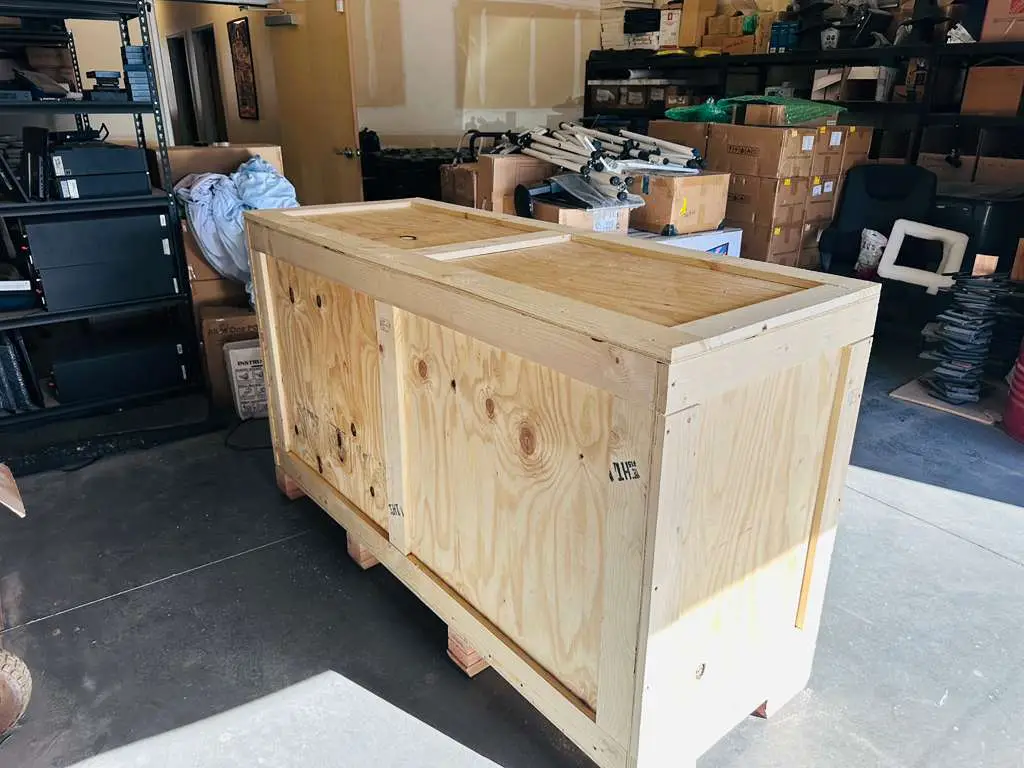
For Las Vegas businesses shipping machinery, electronics, artwork or exhibition equipment, understanding the difference between compliant and non-compliant packaging helps prevent avoidable disruption. The right choice depends on the material, destination and route, rather than whether a supplier simply describes a crate as “export quality.”
What ISPM-15 Compliance Means for Export Crates
ISPM 15 is the international phytosanitary standard for wood packaging material used in trade. Its purpose is to reduce the movement of harmful pests in raw wood. Regulated packaging can include solid-wood crates, pallets, skids and dunnage used to support cargo.
It does not apply identically to every wooden product. Packaging made wholly from qualifying processed wood, such as plywood, and packaging made entirely from wood 6 mm thick or less are exempt under the standard. A plywood-sided crate with solid-wood framing or runners can still contain regulated components. Check the whole package, including blocking added during loading. The Australian government's ISPM 15 overview explains these material distinctions.
Where required, regulated wood must meet the applicable debarking, approved-treatment and marking requirements. The IPPC mark identifies the country, registered producer or treatment provider, and treatment method. A supplier's invoice or an ordinary lumber stamp is not a substitute for the correct mark on finished packaging.
Risks of Using Non-Compliant Packaging
A crate without an IPPC mark is not automatically unsuitable for every journey. Domestic shipments and qualifying exempt materials need to be assessed separately. The problem arises when regulated packaging fails the importing country's requirements.
Authorities may hold or refuse a shipment and require corrective action. The available response depends on the country and the issue found. For example, USDA APHIS states that non-compliant wood packaging is not allowed entry into the United States. Do not assume treatment or repacking will be permitted after arrival.
Cushioning and reinforced construction cannot resolve a phytosanitary problem. Conversely, a treatment mark does not establish the crate's load capacity, cushioning performance or suitability for fragile cargo. Review those requirements separately before dispatch.
Financial Impact: Delays and Additional Charges
Non-compliance can create costs beyond the original freight quote. Depending on the shipment and the authority's directions, these may include storage, additional handling, return transport, approved treatment or replacement packaging. Penalties, where applicable, depend on local enforcement and the circumstances; there is no single universal ISPM-15 fine.
For machinery, the commercial impact may include a delayed installation. For a trade-show shipment, a missed receiving deadline can affect an entire event. Art and sensitive equipment may also require suitable storage while a problem is resolved.
When comparing crate quotations, consider the complete shipment rather than the purchase price alone. Confirm who is responsible for packing, loading, documentation and any corrective work. A compliant crate reduces one avoidable source of risk, but it cannot guarantee clearance, delivery time or total savings.
Operational Delays and Supply-Chain Disruptions
A rejected pallet or piece of dunnage can affect cargo that was otherwise ready to ship. This is especially disruptive when several suppliers contribute components to one shipment or when domestic packaging is reused for an export.
Build a packaging check into the schedule before the carrier arrives:
- Confirm the destination and any transit-country requirements with the freight forwarder or customs broker.
- Inspect the crate, base and loose blocking for the required marks and signs of contamination.
- Keep questionable packaging separate from approved export stock.
- Resolve missing or illegible marks through an authorized provider before loading.
- Give the receiving team the crate dimensions, gross weight and handling instructions.
Reusable crates deserve the same inspection on each trip. A previous successful shipment does not establish that a repaired crate or a different destination has the same requirements.
Choosing a Crating Provider
Ask how the provider sources compliant wood, controls marking and handles repairs. For U.S.-produced packaging, APHIS describes accredited treatment and manufacturing routes. Verify the relevant provider's status rather than relying on broad marketing language.
The design discussion should cover cargo weight, center of gravity, lifting access, attachment points, cushioning and the expected transport environment. Machinery may need a load-bearing skid and blocking; artwork may need surface-compatible materials; electronics may need product-specific electrostatic protection.
On-site construction can be useful when an item is difficult to move before it is protected. It still requires a suitable work area, an agreed handling plan and the same export checks as a crate built in a shop.
PLAN YOUR CRATING
Plan Your Export Crate
Crate strength and wood-packaging compliance both deserve attention before an international shipment leaves Las Vegas. Share the cargo dimensions, weight, destination and pickup requirements with Crates of Las Vegas so the packaging scope can be reviewed.
Contact our team about an export crate.
Discuss your crateMORE CRATING GUIDES



