

Equipment crating
Industrial Wooden Crates for Equipment
Industrial equipment is often expensive, heavy, and sensitive to damage during transport. Manufacturing machinery, electrical systems, medical devices, and precision tools each have their own support, handling, and protection requirements.
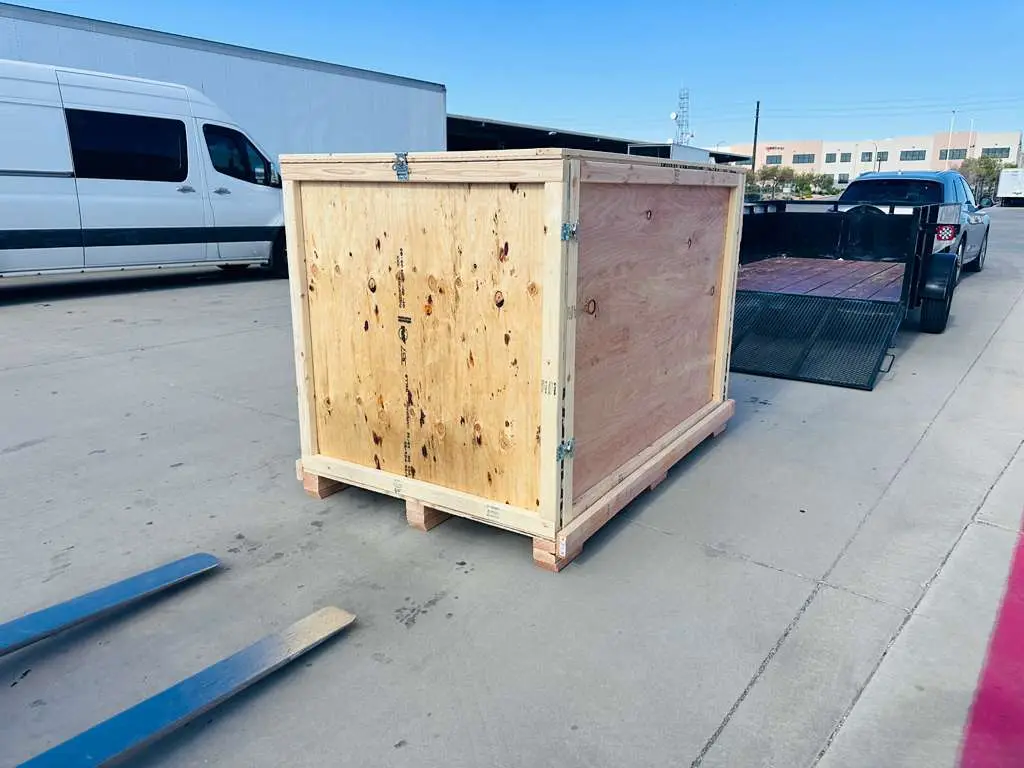
Industrial wooden crates provide a rigid enclosure that can be combined with cargo-specific blocking, bracing, and protective materials. Crates of Las Vegas builds custom crates for shipping needs. Planning for domestic or international transport should begin with the equipment’s actual weight, geometry, and manufacturer instructions.
Heavy-Duty Protection for Industrial Machinery
Industrial wooden crates can be designed to handle the weight and complexity of large machinery and equipment. Their base and frame must support the load at suitable points, with materials and connections selected for the shipment.
Compressors, generators, CNC machines, and production-line equipment may need different support arrangements. A large enclosure alone is not enough: the design should account for weight distribution, projections, and parts that cannot bear load. Internal supports help limit movement that could damage sensitive components.
The outer structure also helps protect against direct contact during loading and unloading. Its capacity is finite, so neither heavy-duty construction nor thick panels should be treated as proof that the crate tolerates any impact or top load.
Custom Design for Equipment Fit and Stability
Every machine has unique dimensions, weight distribution, and sensitivity levels. Custom crates allow the internal measurements and supports to be planned around those details instead of relying on a generic container.
Blocking, bracing, cushioning, or specified mounts may be appropriate, depending on the equipment. Supports must be positioned without stressing vulnerable parts, and any attachment to the machine should follow approved points and instructions.
Share drawings or manufacturer packing guidance where available. Identify detachable accessories and moving components so the packing plan accounts for them. Discuss custom crate design and whether an on-site assessment is appropriate; specialized handling or engineering requirements should be agreed for the project rather than assumed.
Protection Against Environmental and Transit Risks
Industrial equipment may be vulnerable to humidity, dust, temperature fluctuations, and corrosion as well as physical impact. Wooden crates offer an outer barrier, but they are not inherently waterproof or climate-controlled.
Moisture-resistant barriers, wrapping, and compatible protective materials may be needed for the expected route and storage period. Ocean freight and outdoor handling deserve particular attention during planning. Manufacturer limits and any required preservation procedure should be shared before packing.
For export shipments, check destination-specific wood-packaging requirements. Wood pest treatment is separate from moisture protection and does not certify that the equipment will arrive ready to operate. The recipient may still need an inspection or commissioning process.
Handling and Logistics Efficiency
A well-planned crate helps warehouse operators and freight handlers move equipment using an agreed method. Forklift entry, a suitable base, and clear handling instructions should be considered with the packed weight and center of gravity.
Confirm the equipment available at pickup and delivery. Forklift access does not automatically provide a crane lifting point, and a crate’s suitability for a pallet jack must also be checked. Specialized lifting should be planned with the responsible handler before the shipment moves.
Regular outside dimensions can help with storage and loading, but stacking requires a suitable design and confirmed limits. Record the finished dimensions and gross weight for the carrier, including the crate and all protective materials.
Cost Efficiency and Long-Term Value
Damaged machinery can result in expensive repairs, production delays, and lost revenue. Packaging decisions therefore need to consider the consequences of damage as well as the crate’s upfront price.
Custom crates may help reduce repacking and prevent avoidable handling problems when the scope is clear from the beginning. Actual savings depend on the equipment, route, and project; they should not be presented as guaranteed reductions in freight charges or insurance claims.
Compare quotes on an equivalent basis: crate construction, internal support, packing labor, environmental measures, site access, and any transport coordination. A clear scope helps businesses understand what protection is included and what needs separate arrangements.
PLAN YOUR CRATING
Discuss Industrial Crating for Your Equipment
The right industrial crate starts with a practical understanding of the machine and how it will be moved. That includes support points, environmental limits, lifting access, and the receiving plan.
Contact Crates of Las Vegas with equipment dimensions, weight, photos or drawings, destination, and timing. Include manufacturer handling instructions and details about loading equipment and access at both locations so the proposed crate can fit the project.
Discuss Equipment CratingMORE CRATING GUIDES



