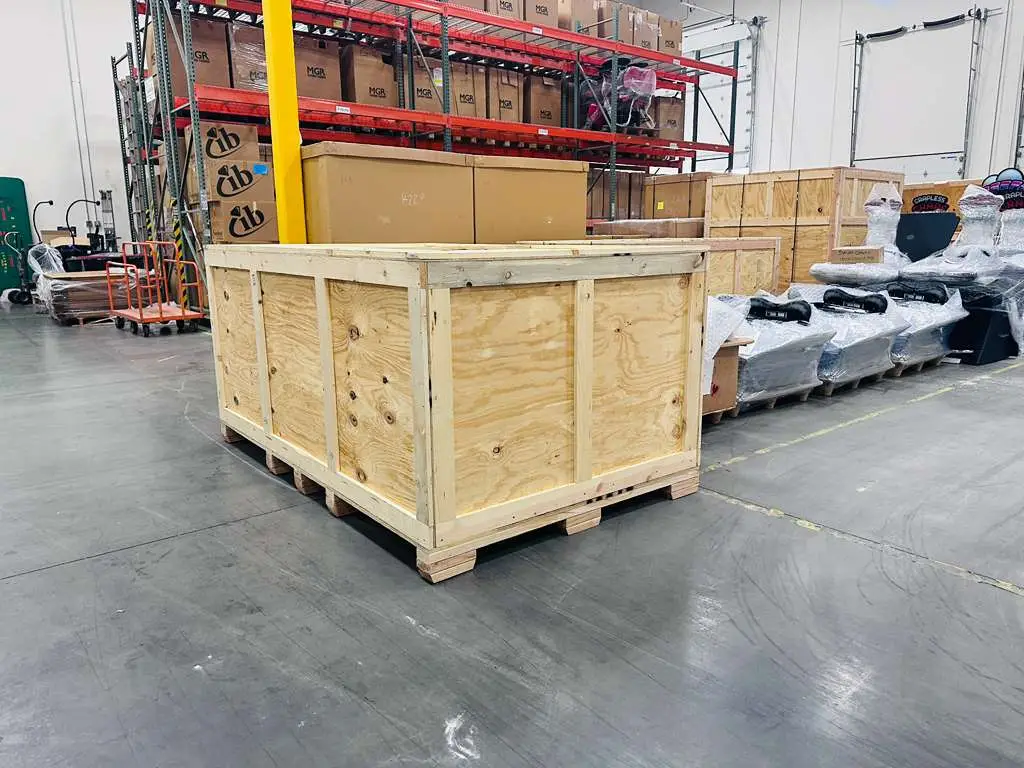

Shipping damage prevention
How Logistics Companies Reduce Shipping Damage
Shipping damage can begin with a missed detail: an unsupported component, a load that shifts, an unsuitable lifting method, or a package exposed to conditions it was never designed to handle. Reducing those risks requires cooperation between the item owner, packing team, carrier, and receiver.
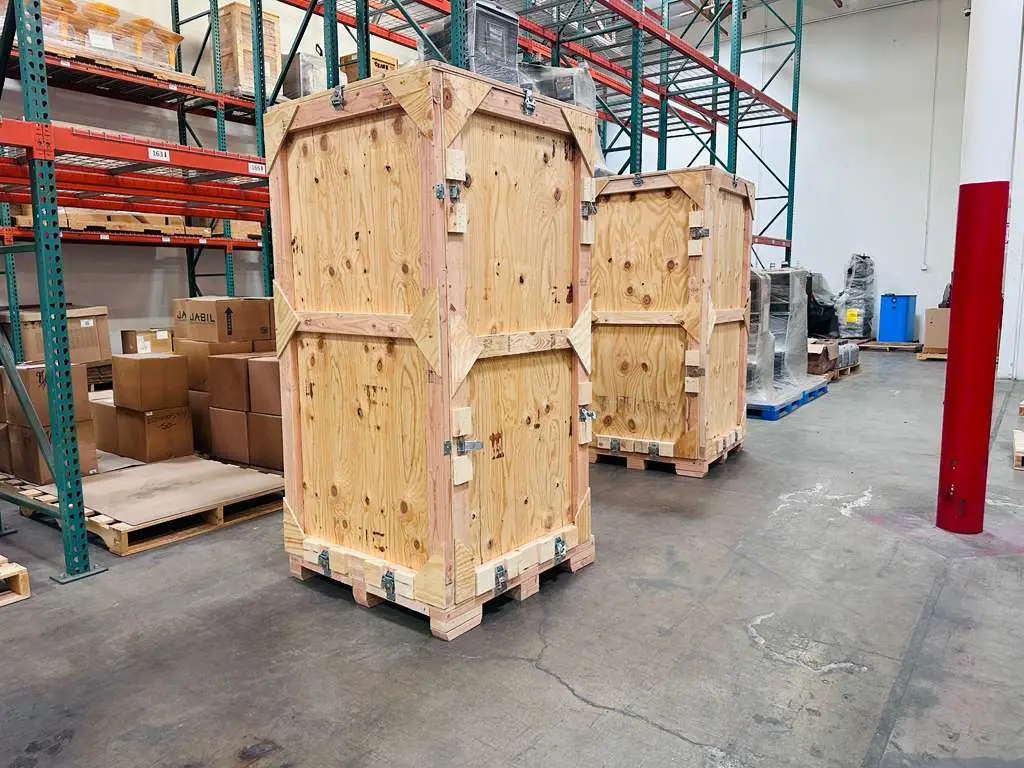
Custom crating is one part of that process. The most useful approach combines a clear shipment assessment, suitable internal protection, careful handling, and records that show how the goods were packed and received. Here is how those steps fit together for freight leaving Las Vegas.
Build the protection plan around the actual item
Begin with verified dimensions, weight, condition, and manufacturer instructions. Identify the item's fragile parts, load-bearing areas, and handling restrictions. A solid-looking machine may contain delicate instruments, while a lightweight display can have large surfaces that are easy to damage.
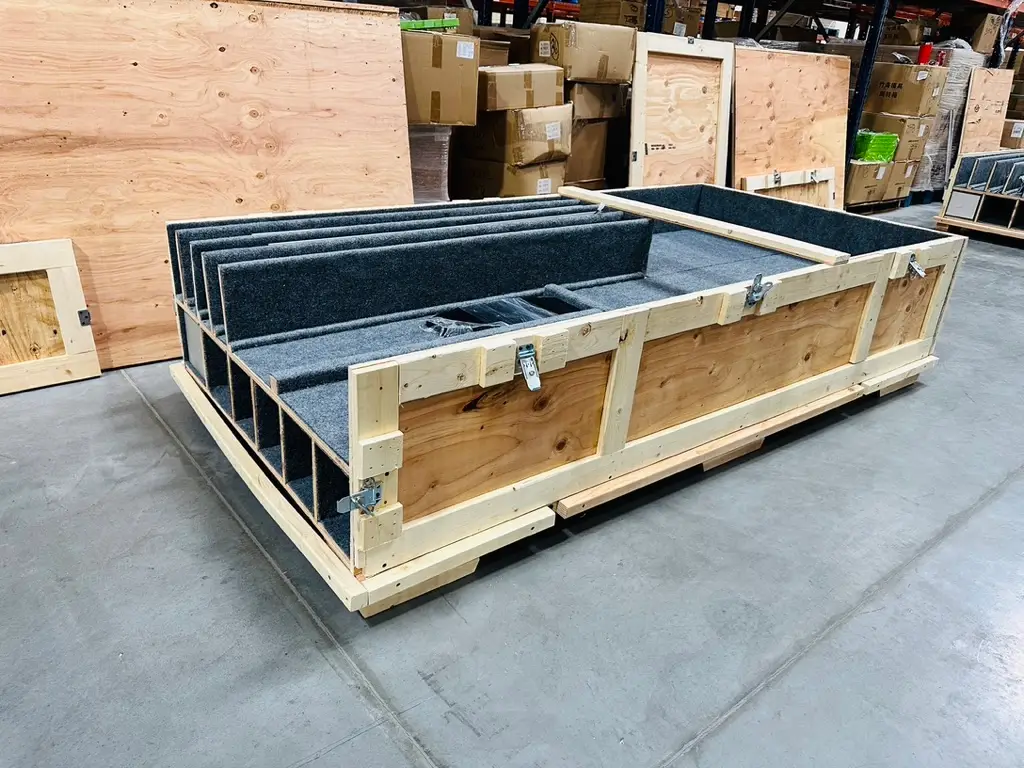
The crate's base and frame need to carry the load through the planned handling process. Internal blocking and bracing keep the item in position, and cushioning is selected for the surfaces or assemblies that need it. For oversized equipment, confirm the center of gravity and approved lifting points with the owner or manufacturer.
- Record the complete shipment, including removable parts and accessories.
- Identify projections, loose components, and surfaces that cannot take pressure.
- Confirm loading and unloading equipment at both ends.
- Match the finished package's dimensions and weight to the freight booking.
- Provide clear opening and repacking instructions where the crate will be reused.
A fitted crate can make handling more predictable, but protection depends on the complete design. A larger shell or more padding does not automatically address the most important failure mode.
Select cushioning and barriers for a defined purpose
The outer enclosure protects against contact with other freight and some handling hazards. Internal materials perform more specific tasks: separating components, controlling abrasion, supporting delicate parts, and limiting transmitted shock.
Choose foam and other cushioning according to the item's load, fragility, and route. Materials that compress under a heavy machine may be unsuitable even if they cushion a small instrument well. Keep loose accessories in separate supported locations so they cannot move into the main item.
For electronics, identify any electrostatic-discharge requirements before choosing packing materials. For artwork and sensitive finishes, confirm that contact materials are appropriate. Moisture barriers, corrosion-protection measures, insulation, and temperature-controlled transport also serve different purposes and need a shipment-specific assessment.
Avoid assuming that heat-treated wood makes the contents resistant to humidity. An enclosed crate does not establish an active environmental-control system. If temperature or humidity limits matter, put them in the shipping brief and confirm which provider will meet them.
Check export wood requirements before dispatch
An international shipment can be delayed or refused when its regulated wood packaging fails destination requirements. Review the packaging materials and route with the supplier and customs broker before pickup rather than discovering a problem at the port.
The IPPC's ISPM 15 standard addresses plant-pest risks in raw-wood packaging, including dunnage. It excludes certain processed-wood materials. Where the standard applies, confirm that the regulated components have the required treatment and official marking.
Keep marks visible and check reused crates for repairs, contamination, and damaged components. Ask the supplier to assess a repair before assuming the old mark still covers the altered packaging. Wood-packaging compliance is only one part of export preparation; the goods themselves and their documentation may have additional requirements.
Reduce unnecessary handling with coordinated on-site work
Building or packing a crate at the item's location can avoid an extra move of unprotected goods. That can be useful for machinery, large displays, artwork, or other items that are difficult to transport to a packing facility.
The site still needs a workable plan. Confirm access routes, floor and loading constraints, available workspace, and the equipment required for safe handling. Agree on who will disconnect or prepare the item and who will rig, pack, lift, and load it.
Give the packing team the carrier's requirements before the work begins. An otherwise suitable crate can create problems if its forklift openings, gross weight, or loading orientation do not match the next handling step. Photograph important packing stages so the receiver has a record of supports and component locations.
On-site work can reduce some handling exposure; it does not remove the need for qualified personnel, suitable lifting equipment, or a coordinated pickup.
Adapt the plan for the shipment's purpose
Trade shows and repeated journeys
Exhibits often move through several teams and return after the event. Use a repeatable packing layout, keep closures and cushioning with the crate, and provide instructions that the booth team can follow. Confirm receiving, empty-container storage, and move-out arrangements with the event contractor.
Artwork and fragile collectibles
Condition, surface sensitivity, and the object's construction should guide the packing treatment. Consult the appropriate art-handling or conservation specialist for vulnerable objects, and document the condition before and after transport. A general “museum-quality” label cannot replace agreed requirements for that object.
Machinery and oversized equipment
Load support, approved lifting points, and unloading access are central concerns. Securement within the crate and securement of the package to the vehicle are separate tasks. The carrier should apply the relevant requirements described in the FMCSA cargo-securement rules.
These shipment types may share materials, but they should not share an unexamined packing design. Reassess the plan whenever the item, route, or handling method changes.
Use testing and monitoring to answer specific questions
Testing can help evaluate whether a product-and-package combination is suited to its intended route. Agree on what is being tested, the expected hazards, and the acceptance criteria before commissioning a program. ISTA's design and testing guidance emphasizes understanding the actual distribution environment when selecting a test.
Shock, temperature, or humidity recorders can provide useful evidence for sensitive shipments. Their value depends on placement, limits, data access, and a response plan. A recorder documents conditions; it does not cushion a load or control its environment. Real-time alerts also depend on the device and communications available.
Reusable systems and alternative materials may be worth evaluating, but protection should be assessed before making environmental or cost-saving claims. Design software, automation, or a new material should support a demonstrated requirement rather than replace inspection and judgment.
Inspect, document, and improve the next shipment
Before pickup, inspect closures, supports, labels, and the package's condition. Retain photographs, the packing list, and relevant handling instructions. Confirm who the receiver should contact if there is visible damage or an unloading problem.
At delivery, document concerns and follow the carrier's reporting requirements promptly. Keep packaging and records available for an investigation. Compare any damage pattern with the packing and handling plan so the next shipment addresses the actual cause.
Cargo coverage and carrier liability should be reviewed separately with the responsible providers. Neither coverage nor monitoring substitutes for suitable packaging, and neither should be described as a guarantee of a damage-free delivery.
PLAN YOUR CRATING
Discuss a damage-reduction plan for your shipment
Send Crates of Las Vegas photographs, dimensions, weight, destination, and details of any fragile parts or previous shipping problems. Include the transport method and any on-site packing requirements.
Contact Crates of Las Vegas to discuss custom crating and protective packing for your item.
Discuss your shipmentMORE CRATING GUIDES