

Freight Packaging Comparison
Custom Wooden Crates vs. Pallets: Which Is Better for Las Vegas Freight?
Choosing between a pallet and a custom wooden crate starts with the cargo. A stable load of boxed commercial goods has different needs from an exposed machine, a delicate exhibit, or an artwork with vulnerable surfaces.
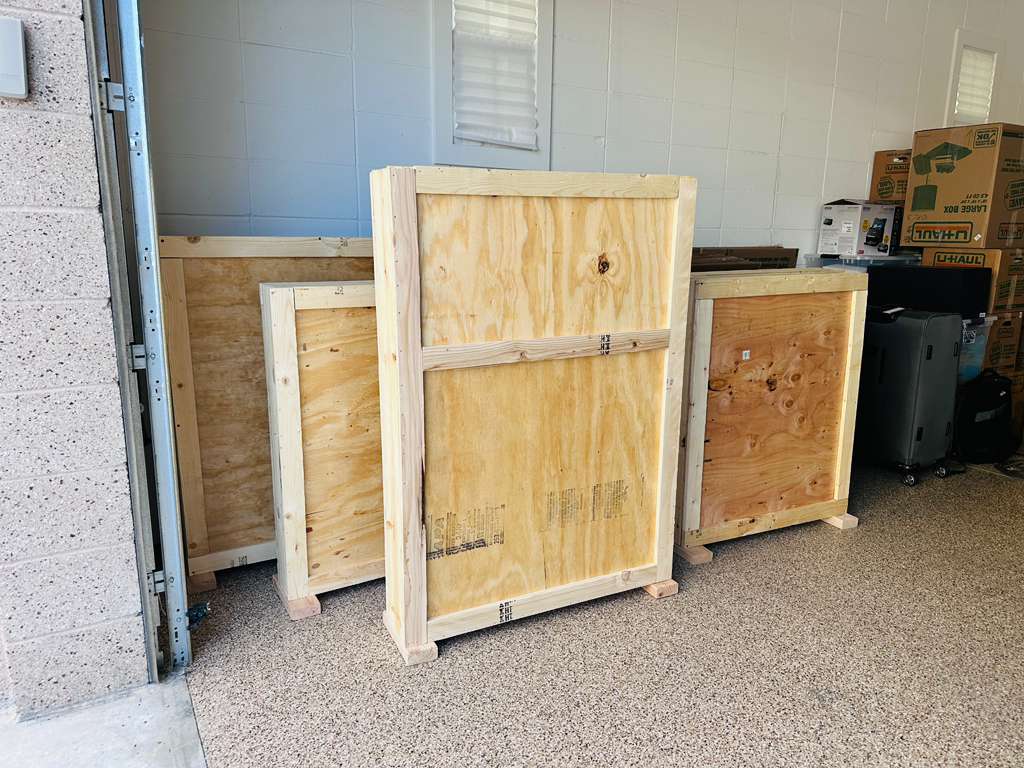
Both options can support a well-planned shipment. The right choice depends on the item's shape, weight, fragility, value, route, and handling requirements. For Las Vegas freight, it is also worth considering loading access, show or delivery deadlines, and whether the packaging will be used again.
What a Pallet Does Well
A pallet provides a base that allows a load to be handled with suitable equipment. It can be an efficient option for uniform, durable goods that can be stacked and secured with an appropriate combination of wrapping, banding, or other restraints.
Palletized freight is often straightforward to load and unload when the carrier and receiving facility have compatible forklifts or pallet jacks. Standardized dimensions can also simplify storage and handling, provided the pallet is suitable for the actual load.
The base alone offers little protection to exposed sides or the top. The surrounding packaging and restraints must address shifting, contact, and environmental exposure. Stretch wrap should not be treated as a rigid protective enclosure.
Check that the pallet is in sound condition, has adequate capacity, and supports the cargo without overhang. UPS's freight packaging guidelines identify overhanging freight and damaged pallets as avoidable packaging problems. Confirm current acceptance requirements with the carrier you choose.
When a Custom Wooden Crate Adds Protection
A crate adds a surrounding structure and space for item-specific interior protection. That can be useful where exposed surfaces, irregular shapes, fragile components, or handling risks make an open pallet arrangement unsuitable.
The protective system may include:
- A base designed for the weight and support points of the cargo
- Blocking and bracing to limit movement
- Cushioning selected for the item's sensitivity
- Clearances around protruding or delicate parts
- Panels and framing suited to the intended handling conditions
- Specified barriers or covers where environmental protection is required
The shell and interior need to work together. A strong box with an inadequately restrained item can still allow damage. Conversely, a tightly packed item may be exposed to pressure on surfaces that cannot tolerate it.
An ordinary wooden crate is not automatically waterproof, climate controlled, theft-proof, or suitable for stacking. Define those requirements with the builder and carrier. FedEx's freight guidance discusses crates, handling bases, and cushioning as parts of preparing a shipment for transit.
Compare the Whole Shipping Cost
A pallet can have a lower initial packaging cost, particularly for straightforward loads. A custom crate adds design, materials, and assembly, and can increase the shipment's dimensions and weight. Those differences should be included in the freight quote.
Compare more than the purchase price of the packaging:
- Packing labor and any equipment needed at pickup
- Freight charges based on the completed shipment
- Loading, unloading, and access requirements
- The consequences of damage, replacement, or a missed delivery
- Return transport, storage, and inspection of reusable packaging
- Repacking time for the next shipment
For valuable equipment or repeat shipments, stronger item-specific packaging may justify a higher upfront cost. That is a project-specific judgment, not a guaranteed saving. A crate does not replace the carrier's terms, a suitable insurance arrangement, or the need to document the condition of the cargo.
Reusable crates can be useful for trade shows, inter-facility transfers, and equipment that returns to the same origin. Discuss access hardware and repeat packing instructions before construction. Include the cost of bringing an empty crate back and keeping it in suitable storage.
Export Requirements Apply to Both Options
ISPM 15 can apply to regulated solid-wood packaging whether it takes the form of a crate, pallet, skid, or dunnage. Choosing a crate does not create an automatic compliance advantage, and international shipping does not universally require crating.
The IPPC's ISPM 15 standard addresses plant-pest risk associated with raw-wood packaging. It does not establish the protective performance of the cargo package or guarantee customs clearance.
Confirm the destination requirements before ordering. USDA APHIS export guidance explains how U.S. exporters can obtain appropriately treated and marked wood packaging. A crate with plywood panels may still contain regulated solid-wood framing or runners, so have the complete design reviewed.
Your forwarder or broker should also confirm the shipment's other documentation and import requirements. Packaging compliance is one part of the export plan.
Match the Packaging to Your Cargo
A Pallet May Be Suitable When
- The goods are durable and already have appropriate individual packaging
- The load has a stable footprint and can be restrained without damaging it
- Exposed areas have the protection they need for the route
- The shipment fits the pallet's capacity and the carrier's handling requirements
- The receiver has compatible unloading equipment
A pallet can also carry high-value freight if the complete packaging system meets its needs. Value alone does not determine the answer.
Consider a Custom Crate When
- Fragile or exposed surfaces need an additional protective enclosure
- An irregular item needs tailored supports or restraints
- Sensitive equipment requires a carefully designed interior
- Multiple handling stages make contact and movement risks a concern
- A trade show display or other asset needs a repeatable packing arrangement
- Special access, environmental protection, or unpacking requirements must be built into the package
For oversize or heavy cargo, discuss the alternatives rather than assuming a closed crate is always practical. A purpose-built skid, support frame, or other arrangement may be more appropriate for some loads.
Discuss load-specific base options with our purpose-built pallets and skids service.
Combine a Crate With a Handling Base
Crates and pallets are often part of the same package. A crate can have an integrated skid base or be secured to a suitable pallet so equipment can move the enclosed load.
The important question is whether the complete system supports the cargo, allows safe handling, and fits the route. Confirm lifting clearances and the receiver's equipment before selecting the final design.
What to Confirm With Your Crating Provider
Ask the provider to explain the proposed design, packing materials, finished dimensions, and handling arrangements. Share the cargo's weight, vulnerabilities, approved support points, destination, and intended reuse.
At Crates of Las Vegas, custom crating is built around the item and its shipping requirements. Discuss whether a pallet, custom base, or enclosed crate best addresses your project. Have the quote identify what is included in fabrication, packing, collection, and freight coordination.
PLAN YOUR CRATING
Get a Quote for Your Las Vegas Freight
Send photographs, dimensions, weight, pickup and delivery details, and your required date. If the shipment is going overseas or will make repeated trips, include that information at the start.
Contact Crates of Las Vegas to compare the practical packaging options for your cargo and request an item-specific quote.
Request a Crating QuoteMORE CRATING GUIDES



