


LAS VEGAS · CRATING GUIDE
Custom Wood Crates for Shipping: A Local Buyer’s Guide
A custom wood shipping crate should be designed around the load it carries and the journey ahead. For machinery, sensitive equipment, artwork or exhibit components, that means considering the base, internal supports and protective materials together.
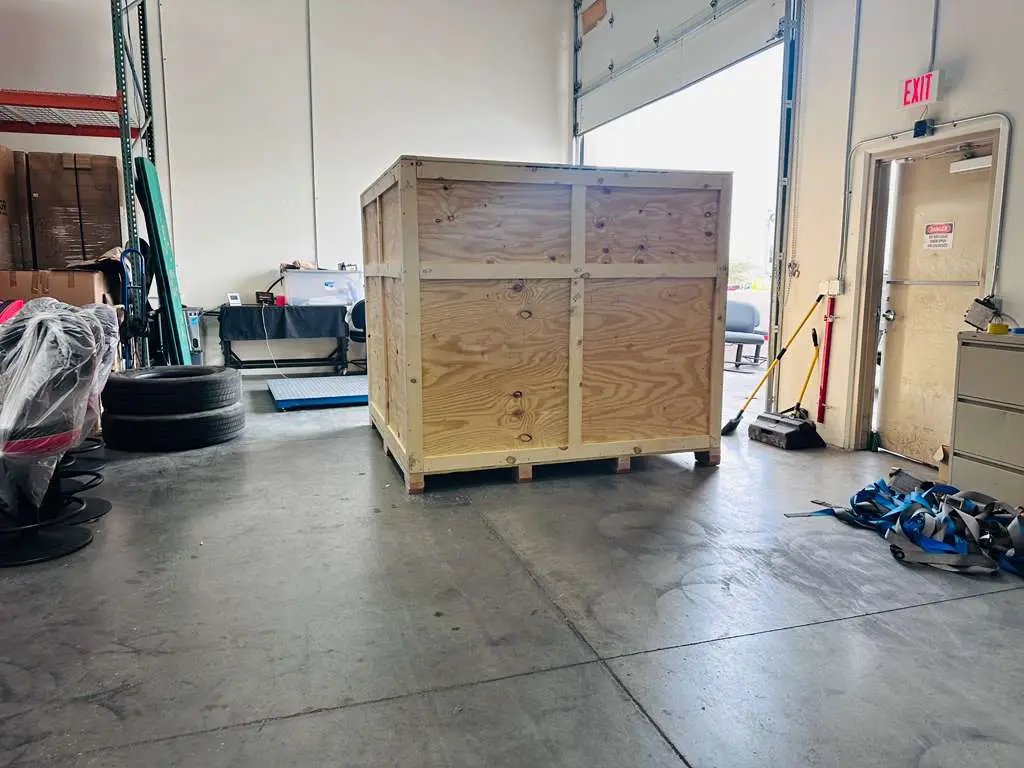
When comparing local providers, ask how the proposed construction addresses your item’s actual needs. This guide covers the main components, useful preparation steps and questions to raise before a crate is built.
Begin with the item’s physical profile
Measure height, width and length, including handles, feet and projections that will remain attached. Supply a reliable weight and photographs showing the base and vulnerable areas. Explain which surfaces can carry a load and which must not be touched by braces or packing.
For equipment, provide manufacturer instructions, approved lifting points and any known center-of-gravity information. Those details help the provider plan the supports and handling access. A crate does not correct an unknown or unsuitable lifting method.
Inspect the base and framing proposal
Heavy loads need a base that distributes weight appropriately. Ask how the runners, deck, framing and fasteners will work with your item and the handling equipment available along the route.
Avoid choosing by lumber thickness alone. Connections, geometry, material condition and load placement all affect the finished structure. The provider should explain the proposed load limits and any stacking restrictions rather than applying a general capacity to every wood crate.
Consider the destination as well as pickup. A package that can be loaded at a warehouse may still be difficult to unload at a residence, gallery or small workshop. Confirm receiving access before finalizing the outside dimensions.
Choose interior support and cushioning together
Blocking and bracing restrain cargo at suitable structural points. Cushioning reduces transmitted forces when selected and arranged for the item. Depending on the shipment, the interior may use supports, partitions or fitted foam to keep components separated and protect delicate areas.
More foam is not automatically better. The material, contact area and available space need to suit the load. Do not press directly on a fragile finish, exposed control or artwork surface merely to achieve a tight fit.
For medical equipment and electronics, follow the manufacturer’s packing requirements. Confirm whether static-sensitive parts need specific protective materials and whether inspection or calibration is required after delivery.
Plan environmental protection separately
Wooden panels provide an enclosure, but they do not create a controlled climate. Discuss the duration of the journey, storage periods and likely exposure before choosing extra protection.
- Vapor-barrier packaging and desiccants may be appropriate for a defined moisture-control need.
- Corrosion-inhibiting materials must be compatible with the metals and other materials enclosed.
- Exterior wrapping may help manage exposure, but seams, punctures and trapped moisture still matter.
- Temperature-sensitive items may require a suitable transport or storage service.
The original item’s condition and materials are important. For valuable or fragile art, obtain conservation advice about safe contact materials and environmental needs rather than assuming a standard felt lining is suitable.
Match the design to the application
Industrial machinery often places the greatest demand on base support, securement and handling. Laboratory and medical equipment can require special transport preparation and protection for sensitive assemblies.
Fine art and antiques need attention to surfaces, condition and safe support points. Trade show equipment may benefit from removable panels, labeled packing positions and hardware intended for repeated access. The right interior will differ even when these items use similar outer crates.
Check the local provider’s scope
Ask whether the provider will measure and pack onsite or receive the item at a facility. Confirm who handles the initial move, whether the work area is accessible, and what is included in the price.
For export, review the destination’s requirements and the entire wood assembly. ISPM 15 distinguishes regulated raw wood from processed materials. Solid-wood runners and framing still need consideration when the panels are plywood.
Before the crew arrives, identify loose accessories, arrange any necessary technician preparation and clear the working area. Keep a packing inventory and agree who will retain the opening and repacking instructions.
Wood-crate questions
Can the wood crate be built before the item is inspected?
Sometimes measurements and drawings are enough to begin planning. Ask the builder what must be checked before committing to construction, especially for irregular items.
Does heat-treated wood make the crate weatherproof?
No. Pest-treatment requirements and weather protection serve different purposes. Discuss the protective system needed for the route separately.
What should be checked before reuse?
Have the base, panels, fasteners, hardware and internal supports checked for damage or changes. Reuse should match the original load and packing plan unless the design is reassessed.
PLAN YOUR CRATING
Plan your custom wood crate
Contact Crates of Las Vegas with dimensions, weight, photographs, destination and shipping date. Include the item’s preparation instructions and whether onsite work is needed so the proposed crate and packing scope can be reviewed together.
Request a custom crating quote.
Request a Crating QuoteMORE CRATING GUIDES



