

LAS VEGAS · CRATING GUIDE
Custom Crates for International Shipping: Protection and Compliance
International shipping brings together cargo protection, carrier requirements and destination rules. A custom crate may help address the physical shipment, but no enclosure establishes compliance with every part of the journey.

Begin with the item and route, then assign the packing, wood-treatment and documentation responsibilities. This keeps the crate proposal connected to the broader export plan.
Define the load and transport conditions
Provide dimensions, weight and photographs in the item's shipping configuration. Identify approved support and restraint points, delicate surfaces and any manufacturer handling instructions.
Tell the provider how the shipment will travel and where transfers or storage may occur. Air, road and ocean movements can involve different carrier limits and handling arrangements. Confirm the finished crate dimensions and gross weight before freight is booked.

Check whether the wood packaging needs ISPM 15 compliance
The standard addresses plant-pest risk associated with regulated wood packaging, including relevant crates, pallets and dunnage. Qualifying processed-wood packaging has exclusions; assess the whole package rather than just its panels.
Have the destination requirements checked and arrange applicable approved treatment and authorized marking. APHIS export guidance explains U.S. routes for obtaining compliant wood packaging.
The mark is not a general safety certificate for the contents. Treatment does not establish sterility, eliminate every organism permanently or guarantee customs release.
Specify physical and environmental protection
A suitable base carries the load; internal supports and cushioning protect appropriate contact areas and control movement. Compartments can separate accessories, while removable panels may improve unloading access.
For electronics, textiles or moisture-sensitive cargo, discuss environmental protection explicitly. Wood alone is not waterproof, and a crate is not an active temperature-controlled system. Have the packing and transport arrangements assessed against the item's requirements.
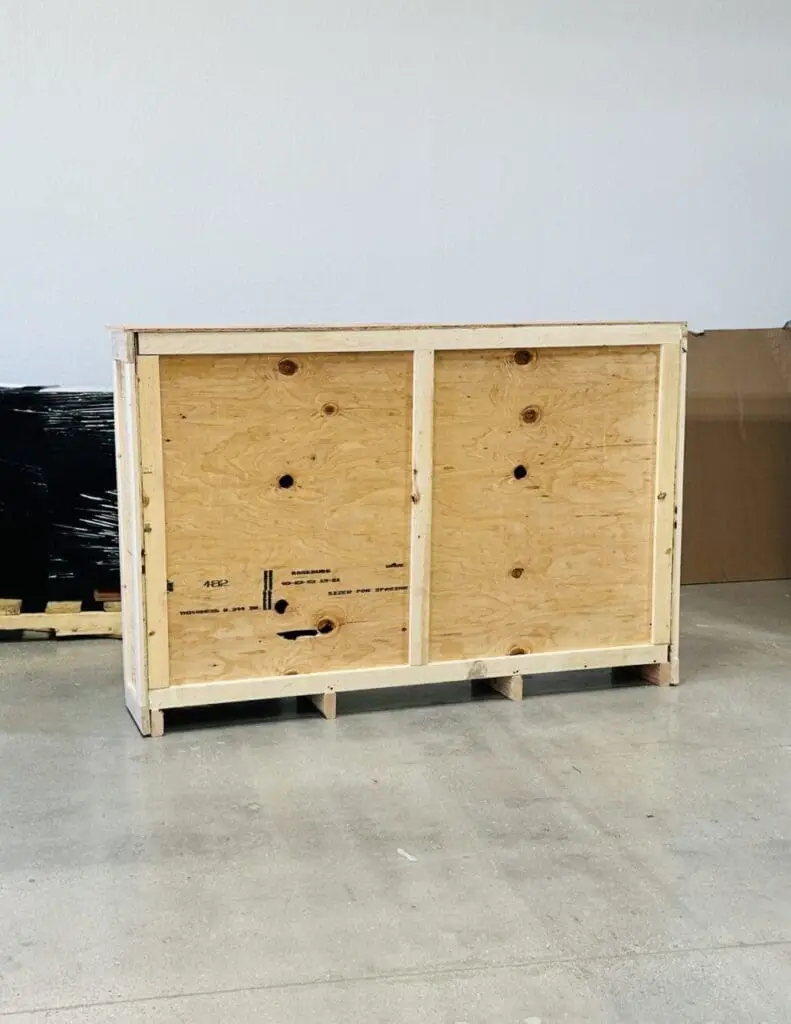
Choose a provider who explains the boundaries
- What load and handling information is needed before design?
- Which interior materials and environmental features are included?
- Who supplies compliant wood packaging and checks the marks?
- Is on-site packing available and suitable for the access conditions?
- Who coordinates the carrier, cargo documents and destination handoff?
Confirm each service rather than assuming a crate quotation covers complete international logistics. The exporter or broker should check product restrictions, customs documents and any separate permits.
Complete a final handoff check
- Match the item and accessory inventory to the agreed packing scope.
- Record the packed arrangement and closed crate.
- Keep required marks and handling labels visible.
- Share external dimensions, gross weight and package identifiers.
- Give the receiver unloading and opening instructions.
- Retain contact details for packing, freight and documentation questions.
For reuse or repairs, ask the appropriate provider to reassess the crate's suitability and treatment/marking status. A previous export does not settle a changed shipment's requirements.
PLAN YOUR CRATING
Prepare an international-crating request
Discuss export wood-packaging options with Crates of Las Vegas. Bring the destination, cargo specifications and schedule so the proposal can clearly separate protection, treatment and shipping responsibilities.
Discuss your crating projectMORE CRATING GUIDES




