Choosing a provider
Choosing the Right Custom Crate Manufacturer in Las Vegas
A useful crating quote explains how the package will support the load, protect vulnerable components and fit the planned journey. Price matters, but so do the measurements, materials, internal packing and services included in that price.
When comparing custom crate manufacturers in Las Vegas, give each provider the same shipment information. That makes it easier to judge the proposed solution instead of comparing quotes with different assumptions.
Evaluate Relevant Experience
Look for experience with loads similar to yours. A provider's work on a large machine may be more relevant to industrial equipment than a general claim about years in business; artwork or sensitive instruments can require a different approach.
Ask for examples that show the packing problem and how it was addressed. Useful questions include:
- What information is needed before the design can be confirmed?
- How are the weight, center of gravity and support points established?
- Which parts of the item are considered vulnerable?
- How will the crate be opened and the item removed?
- What information will the receiving team need?
Distinguish demonstrated experience from unsupported titles or superlatives. If an engineering review or specialist qualification is required for your project, ask who will provide it and what the scope covers.
Check Materials and Construction
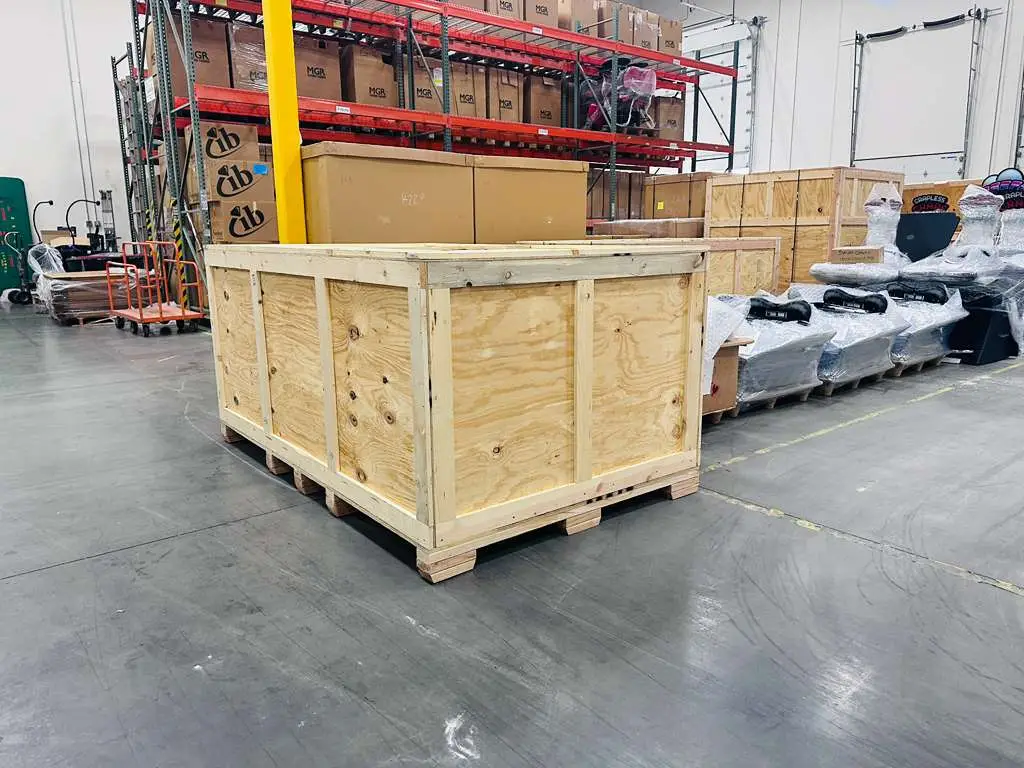
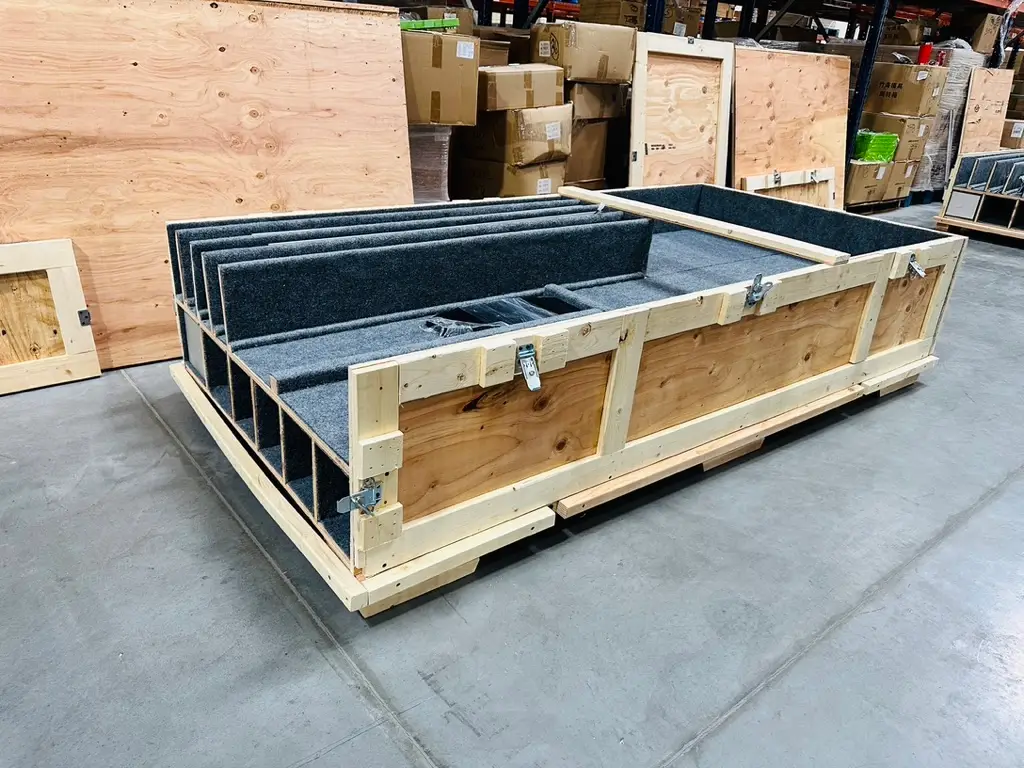
Ask the manufacturer to explain the proposed base, framing, panels, fasteners and interior supports. Material thickness or wood species alone does not establish a safe load capacity.
FedEx's crate construction guidance emphasizes suitable lumber, sound construction and fasteners matched to the total load. The selected carrier's actual requirements and the item's needs should inform the design.
Clarify whether the quote includes:
- Load restraint and appropriate attachment points
- Cushioning or surface protection
- Forklift or other handling access
- Removable panels and reusable hardware
- Any agreed stacking capability or restriction
- Inspection before the crate leaves the provider
If sustainably sourced materials or a particular material certification matter, request the relevant evidence. Do not assume those attributes follow from the use of wood.
Assess Customization and Design Details
A custom crate should reflect more than external dimensions. The item may have delicate protrusions, a heavy base, an uneven center of gravity or an opening sequence that affects the enclosure.
Discuss any required features, such as:
- Separate compartments for accessories
- A reusable packing arrangement
- Hinged or removable access panels
- Suitable ramps or loading aids, where appropriate
- Moisture protection specified for the item and route
- Clear identification and packing instructions
Have the provider confirm which features are included, feasible or separately priced. Do not assume the use of CAD software, a ramp, a vapor barrier or “weatherproof” construction without a specific explanation.
For manufacturer-controlled equipment, provide the official transport instructions. Unresolved technical limits should be referred to the equipment maker or responsible specialist before the crate is finalized.
Confirm Schedule and Logistics Responsibilities
A fabrication completion date is different from a carrier pickup or delivery date. Ask for each relevant milestone and the information needed to keep it achievable.
Confirm whether the quoted scope includes measurement, packing, collection, loading, storage or delivery coordination. These are separate services and should not be inferred from the word “crating.”
For on-site work, supply access details and check the completed crate's exit route. For warehouse work, agree on protection during the initial transfer and the receiving appointment.
For an international shipment, identify who will confirm destination requirements and supply treated, officially marked wood packaging when required. The APHIS treatment-program guide explains the U.S. authorization framework. General claims of export experience should be supported by a clear process for the actual job.
Review Reputation and Customer Support
Look at relevant, specific feedback rather than a star rating alone. Recent examples involving communication, packing quality or problem resolution can be useful, but a review is not a guarantee of future results.
Ask who will be your contact when dimensions change, collection moves or the receiving team has a question. A useful proposal records assumptions and explains how changes affect price and timing.
Keep important decisions in writing, including the item list, packing scope, delivery arrangements and any services excluded from the quote. This reduces disagreement over what was expected at each handover.
Compare the Team and Written Proposal
Know who is responsible for measurement, design, fabrication, packing and final inspection. A small team can provide a suitable service; elaborate job titles are not a substitute for clear responsibility.
For complex loads, confirm whether riggers, conservators, equipment service technicians or other specialists are needed and who arranges them. Do not assume a crate builder performs every specialist task.
Compare proposals using the same questions:
- Is the complete load and accessory list included?
- Are support, restraint and cushioning described?
- Are final packed dimensions and weight available for freight planning?
- Are handling and receiving conditions understood?
- Are export requirements and any required evidence addressed?
- Are the price, schedule and change process clear?
PLAN YOUR CRATING
Request a Comparable Crating Quote
Send Crates of Las Vegas your item dimensions, weight, photos, destination, handling details and required collection window. Request a custom crating quote with the proposed packing scope so you can make an informed comparison.
Discuss your shipmentMORE CRATING GUIDES