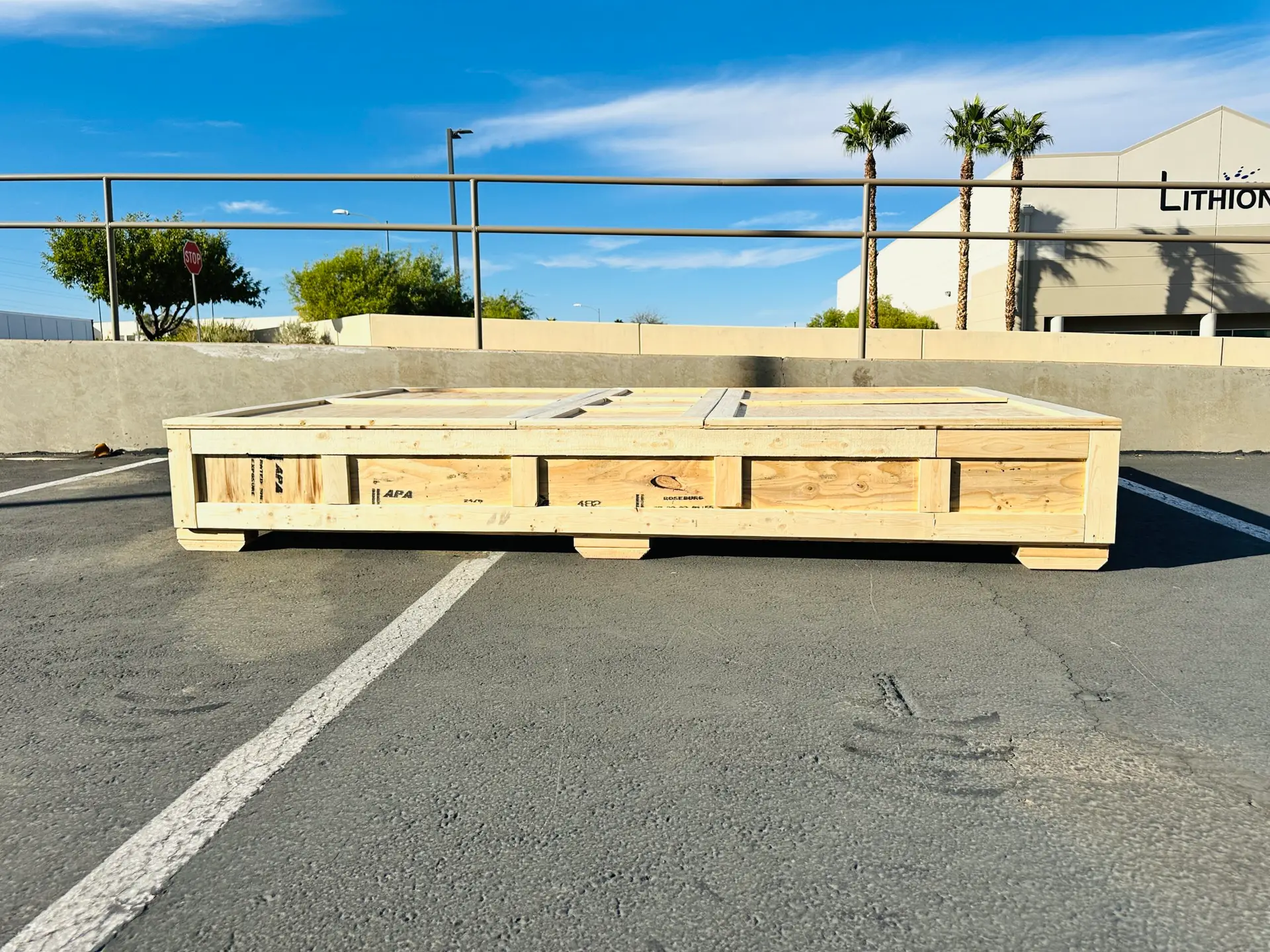
Use the shipment record for each crate, then add an inventory row for every item or group packed inside it.
Give every crate and item an identity
A crate packing list connects the contents to the outside package. It helps the packing team close the right items into the right crate, and helps the receiver reconcile what arrives. For repeat shipments, it also gives the next packing team a record of the original arrangement.
Use one crate ID per physical crate and an item ID for each component or group. Keep the IDs consistent across the inventory, internal labels and packing photographs. A simple sequence such as CR-01 and ITEM-01 is enough when everyone uses it consistently.
This is a packing record. It does not replace a carrier's shipping label, a bill of lading, a commercial invoice or any required export documents.
Copy the shipment and crate record
| Field | Fill in for this crate |
|---|---|
| Shipment reference and preparation date | ________________ |
| Crate ID and total number of crates | ________________ |
| Origin contact and destination contact | ________________ |
| Finished outside dimensions: length × width × height; units | ________________ |
| Gross packed weight; units and how verified | ________________ |
| Opening instructions and required tools | ________________ |
| Handling restrictions confirmed for this shipment | ________________ |
| Packed by; checked by; photo folder/reference | ________________ |
Record finished outside dimensions and gross weight after packing. Keep preliminary item measurements clearly labeled as estimates until verified.
Copy the contents inventory
| Item ID / description | Quantity / location | Condition / photo / notes |
|---|---|---|
| ________________ | ________________ | ________________ |
| ________________ | ________________ | ________________ |
| ________________ | ________________ | ________________ |
| ________________ | ________________ | ________________ |
Add rows for detached hardware, cables, accessories, inserts or tools that travel with the item. Keep sensitive serial numbers, values and ownership information in an appropriate internal record when they do not belong on public-facing labels.
For a hotel or exhibit project, include the room, booth area or installation zone in the internal location notes. Keep destination assignments separate from the carrier routing label.
Illustrative example: a display packed in two crates
Example only; this is not a customer shipment or a recommended crate design. A team uses crate CR-01 for a display panel and CR-02 for its stand and accessory box. The inventory below shows how the IDs connect the parts to photos.
| Crate / item | Quantity / contents | Packing record |
|---|---|---|
| CR-01 / PANEL-01 | 1 display panel | Photo P01 before packing; P02 showing supported position. |
| CR-02 / STAND-01 | 1 stand | Photo P03; use the approved packing orientation. |
| CR-02 / ACC-01 | 1 labeled accessory box | Contents list inside; photo P04 before closure. |
The finished dimensions and weights would be entered from the actual packed crates. On arrival, the receiver checks each ID against the list and records any discrepancy.
Use the record through packing, receiving and return
- Before packing: reconcile the inventory with the equipment owner and identify missing preparation instructions.
- Before closure: photograph item condition, support points, internal arrangement and separately packed accessories.
- At release: verify piece count, finished dimensions, gross weight and the current destination labels.
- At receiving: compare the contents with the list and use the receiving inspection checklist to document observations.
- Before return: inspect the crate and inserts, update the inventory and confirm the new routing instructions.
Keep a copy accessible to the receiver before the crate arrives. If a copy travels inside the crate, place it where it can be found using the agreed opening procedure. Remove or replace outdated routing labels according to carrier instructions.
PLAN YOUR NEXT SHIPMENT
Turn your inventory into a quote request
Send the item list with photos, dimensions, weight, origin, destination and timing when requesting custom crating. For exhibits, include the trade show return packing requirements. For machinery, assign responsibilities using the equipment shipping checklist.
Request a crating quote and identify whether you need a crate only, packing at your location, or packing and shipping coordination.
Request a crating quote