

CRATING & PACKAGING GUIDES
Seasonal Storage with Wooden Crates in Las Vegas
A seasonal storage plan should make items easier to protect, identify, and retrieve. Custom wooden crates can organize a recurring exhibit kit or support an awkward object, but the enclosure does not replace a suitable storage facility. Plan the crate and storage conditions together.
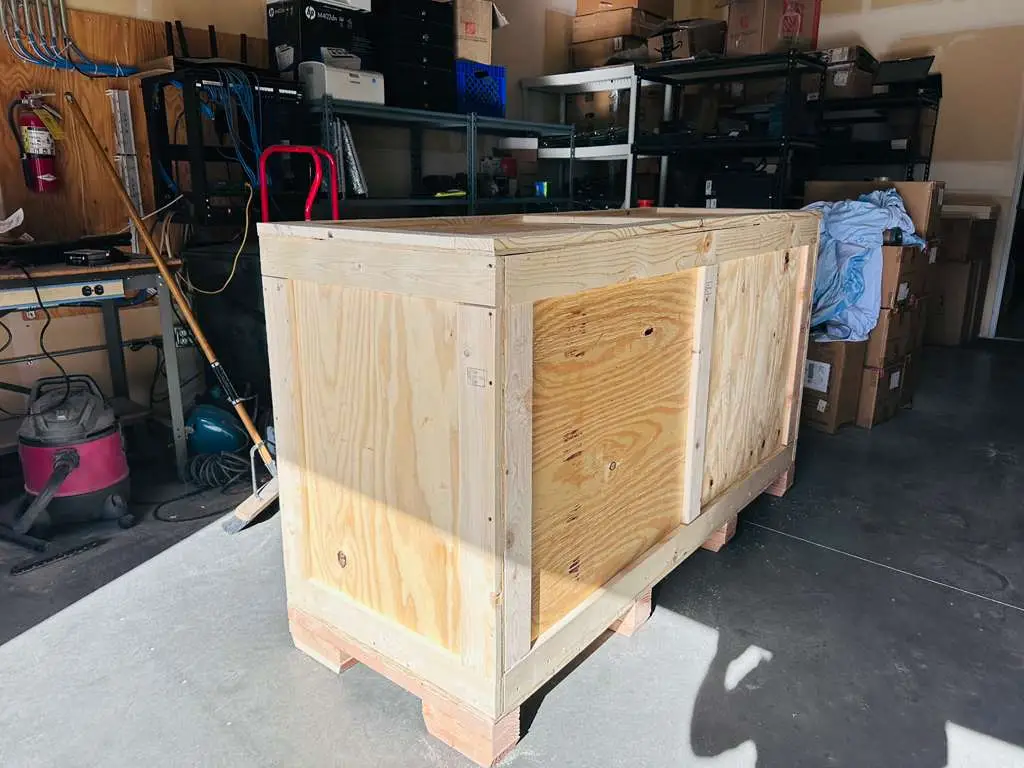
Define what you are storing and when you need it back
Make an inventory with photographs, dimensions, weight, condition, and special handling instructions. Identify items that will remain untouched for months and those that must be accessed during storage. Record the earliest possible retrieval date as well as the expected one.
- Trade show components: keep graphics, hardware, and assembly instructions associated with the correct kit.
- Seasonal retail stock: distinguish active inventory from display equipment.
- Artwork and antiques: identify condition and environmental concerns with a conservator where appropriate.
- Medical and industrial equipment: follow manufacturer storage and recommissioning instructions.
Choose the environment before choosing moisture controls
Ask the facility what “climate-controlled” actually means: temperature management, humidity management, monitoring, and the location of the unit or warehouse space. State the item’s requirements rather than assuming every controlled building offers the same conditions.
A wooden crate does not maintain a set temperature or humidity. Insulation, barriers, and desiccants have specific roles, and inappropriate drying can harm some materials. For art, the Canadian Conservation Institute guidance supports matching packing and environmental protection to the object and exposure.
Review dust, water exposure, pests, access, and security with the storage provider. Do not assume a crate is sealed, waterproof, or pest-proof unless those features have been specifically designed and verified.
Match the container to the storage task
| Option | Useful role | Limit to check |
|---|---|---|
| Fitted wooden crate | Support for irregular or fragile items and repeat handling | Weight, access, crate condition and transport plan |
| Suitable reusable tote or case | Organized smaller components | Actual load rating, closure and material compatibility |
| Shelving or palletized storage | Accessible robust inventory | Restraint, dust protection and safe stacking |
| Controlled storage environment | Conditions suited to sensitive contents | Defined conditions and monitoring; packing still matters |
Wooden crates are not automatically stackable. Have the builder specify permitted loads and orientation, and confirm that the storage facility will follow those instructions. Keep identifiers visible without moving a heavy stack.
Build repeatable packing into the design
Removable dividers, labeled compartments, replaceable pads, and accessible closures can simplify the next seasonal cycle. Keep a photograph of the packed layout and a contents list outside the private or valuable contents’ direct view where appropriate.
For large items, plan on-site crating and the complete exit route. Include the added size of the base and enclosure. Art requires suitable contact materials; equipment needs approved support points. Generic foam and wrapping should not be assumed safe for every finish.
Document the storage handoff and retrieval scope
- Inspect and photograph the item before packing.
- Record the crate identifier, inventory, packed weight and handling notes.
- Confirm collection, receiving appointment and storage location.
- Keep condition and acceptance records at the handoff.
- Confirm retrieval notice, access procedures, charges and delivery tasks.
- Inspect after retrieval and perform any required service checks before reuse.
Ask who supplies packing, transport, storage, unpacking, and installation. Crates of Las Vegas lists crating and packing services; confirm storage arrangements and any specialist delivery separately. Do not infer that a crate supplier owns a climate-controlled warehouse.
Compare seasonal cost and reuse
Include the crate, packing labor, transport, storage footprint, retrieval charges, and repairs. Reuse can reduce replacement purchases when the crate is returned and remains fit for purpose. Record actual cycles instead of assuming a standard lifespan or guaranteed savings.
Domestic seasonal storage alone does not automatically require ISPM 15 treatment. If the same crate may later travel internationally, discuss the route and regulated solid-wood components with the builder early. Have repairs reviewed before export use.
PLAN YOUR CRATING
Plan a seasonal storage crate
Share the inventory, dimensions, weight, photographs, storage duration, access needs, and anticipated retrieval dates. Identify the storage provider and any stated environmental requirements so the packaging plan can be coordinated. Contact Crates of Las Vegas to discuss the scope, availability, and quote.
Discuss your crating projectMORE CRATING GUIDES




