

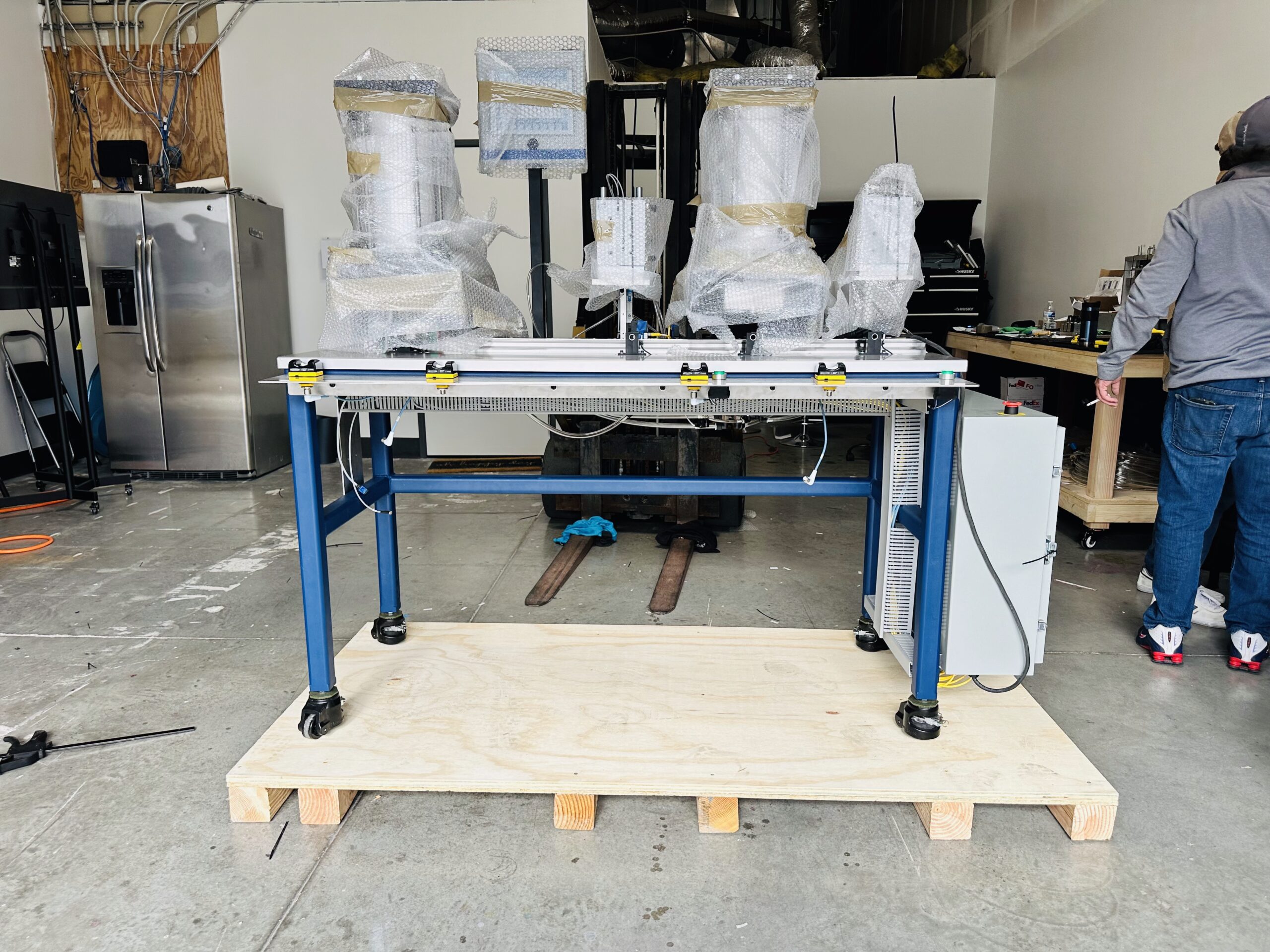
This worksheet helps you gather useful quotation information. The crating team should confirm the final clearances, cushioning, supports and outer crate dimensions. For a broader overview, see our guide to choosing the right crate size.
Define the shipping configuration first
Identify which parts remain attached during transit. A machine with its control arm folded can have a different footprint from the same machine in operating position. Ask the equipment manufacturer which components may be removed, secured or transported separately. Do not remove a part simply to make the measurements smaller.
Record the model, configuration and number of pieces. If accessories will share the crate, list them individually so the packer can plan separate protection and prevent them from contacting the main item.
Measure the complete outside envelope
Record length, width and height at the widest, deepest and tallest points in the approved shipping position. Include feet, casters, lifting eyes, cable connectors and other projections. Label the axes on a simple sketch, and use the same units throughout.
- Length: the full end-to-end measurement, including projections.
- Width: the widest side-to-side measurement.
- Height: the distance from the supporting surface to the highest attached point.
- Separate components: dimensions and weights for each loose item.
- Uncertainty: mark anything that could not be measured accurately.
For example, a hypothetical cabinet might have a 40-by-30-inch body and a 3-inch projection on one side. Reporting only the body width hides a fit issue. Photograph the projection and explain where it sits instead of assuming that a general packing allowance will cover it.
Verify weight and load-support information
Use a documented equipment weight or a suitable weighing method arranged by qualified personnel. Tell the crating team whether the figure includes accessories, fluids, batteries or an existing base. An estimate should be labeled as an estimate.
Provide the manufacturer's handling instructions, approved lifting points and any restrictions on tilting or clamping. If the center of gravity is documented, include it. Do not infer safe lifting points from convenient-looking handles or exposed frame members. Base design and restraint decisions require more than overall dimensions.
Photograph what a drawing misses
Take clear views of all sides, the top and the base where safely accessible. Add close-ups of fragile surfaces, control panels, protrusions and existing damage. Include a ruler or another useful scale reference without covering the feature you want to show.
A short note beside each image is more useful than a folder of unlabeled photographs. Identify which surfaces cannot accept pressure, which parts can move and which areas must remain accessible for inspection.
Record pickup and delivery constraints
The finished crate must fit the route as well as the equipment. Note doorway and elevator restrictions, dock access, stairs, available handling equipment and whether packing must happen on site. For Las Vegas convention or commercial deliveries, provide the receiving location's instructions and appointment requirements.
Ask the selected carrier to confirm current size, weight and packaging conditions for the actual service. FedEx's crate guidance is a useful general reference, but acceptance requirements depend on the shipment and carrier.
Your quote-ready measurement checklist
- Item name, model, quantity and intended shipping configuration.
- Overall measurements, units and a labeled sketch.
- Verified weight, its source and any excluded components.
- Photographs of every side and vulnerable features.
- Manufacturer handling and orientation requirements.
- Origin, destination, shipment date and access restrictions.
- Any unknowns that require an on-site assessment.
These details help the packer separate the item's dimensions from the finished shipping dimensions. They also make it easier to compare quotes on the same scope.
PLAN YOUR SHIPMENT
Plan the crate around the equipment
Review our crating services, then contact Crates of Las Vegas with your measurements, photos and shipment details. Ask the team to confirm the packing approach and final external dimensions before arranging transportation.
Discuss your crating requirements



